Additive identity
Possible source pathways
The finished molecule can be identical across feedstocks. The Halal ruling follows the pathway, not the code alone.
E1404 Possible source pathways
- plant Halal Typical Botanical identity. No animal tissue is required for standard food grade.
What decides the answer
-
Authorised E1404–E1452
Halal plant starch -
Wheat-based grades: gluten allergy still applies
-
Finished sauce: still check gelatin and emulsifiers
Where you'll find it
- Sauces, gravies, and baby food
- Drink clouding (OSA starch)
Why this ruling
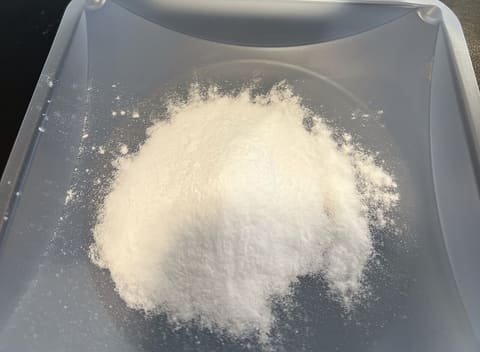
Modified starches are ordinary plant starches that have been treated to work better in food: to thicken without turning gluey, to survive freezing, or to hold oil and water together. The EU authorises a list of them under E1404–E1452, and they are Halal.[3][5] On US labels they usually appear simply as "modified food starch".[2]
"Modified" does not mean genetically modified
The word refers to what is done to the starch after it is extracted, not to the plant. The starch comes from maize, waxy maize, potato, tapioca, wheat or rice, and is then treated with heat, acids, oxidising agents or food-grade reagents so its chains behave differently. None of those treatments uses an animal or alcohol, which is why certifier E-number lists treat the group as plant additives.[6]
The common codes
- E1404 – oxidised starch – used in batters and coatings.
- E1412, E1414, E1442 – cross-linked starches (distarch phosphates) – thickeners that stay stable in hot, acidic or frozen foods: fruit pie fillings, ready meals, gravies.
- E1420, E1422 – acetylated starches – give a clear, smooth set in sauces, soups and yoghurts.
- E1440 – hydroxypropyl starch – keeps chilled and frozen desserts from weeping.
- E1450 – starch sodium octenyl succinate (OSA starch) – an emulsifying starch that holds flavour oils evenly in soft drinks and protects vitamins in powders.[1]
Wheat is an allergy question, not a Halal one
When the starch is made from wheat, the label must say so for people with coeliac disease. That changes nothing about its Halal status.
What to read on the rest of the pack
A modified starch is often a sign the product is built to be stable and cheap to make, and the Halal questions sit elsewhere: gelatin in desserts and yoghurts, emulsifiers such as E471, and meat stock in sauces and soups. Related plant thickeners include maltodextrin, cornstarch and cellulose (E460).
How to verify
- Match E1404–E1452 or 'modified starch'.
- Halal plant starch.
- Wheat grades still matter for gluten.
- The sauce may still hide gelatin or E471.
Quick checks
- Modified starches are corn, potato, tapioca, wheat or rice starch treated to behave better in cooking: Halal.
- Modified starch often replaces gelatin in yoghurts and desserts, but some products use both; read the whole list.
- Wheat-based modified starch must be declared as wheat for allergy; that is not a Halal issue.
Frequently asked questions
Is modified starch Halal?
Does “modified” mean genetically modified?
Is modified starch gluten-free?
What is E1450 in drinks?
Scholarly view
Modified starch folklore about 'chemicals therefore haram' is not how certifiers read E1404–E1452. Animal-derived starch is not the Union-list identity.
Sources
Named Islamic, certifier, manufacturer, and regulatory sources used on this page. Inline markers like [1] jump here. Retrieval dates show when we last checked the live URL. Editorial methodology.
Certifier / jurisdiction
Regulatory / labelling
-
EFSA — Re-evaluation of modified starches (E1404 and related)
European Food Safety Authority Retrieved
Substance identity—not a Halal certificate for a finished pack.
-
21 CFR § 172.892 food starch-modified
U.S. eCFR Retrieved
U.S. identity / GRAS or colour-additive listing—not a Halal ruling.
-
Regulation (EC) No 1333/2008 on food additives
European Union Retrieved
Union-list identity—not a Halal certificate.
-
-
-
U.S. Food and Drug Administration Retrieved
US identity / labelling context—not a Halal ruling.
People also check
Related ingredients and products for this item.