Additive identity
Possible source pathways
The finished molecule can be identical across feedstocks. The Halal ruling follows the pathway, not the code alone.
E214 Possible source pathways
- synthetic Halal Typical Synthetic or mineral identity. No animal tissue in the finished additive.
What decides the answer
-
E214/E215/E218/E219
Halal -
Cosmetic parabens are out of scope for this food page
Where you'll find it
- Surface treatment of dried meat in limited EU uses
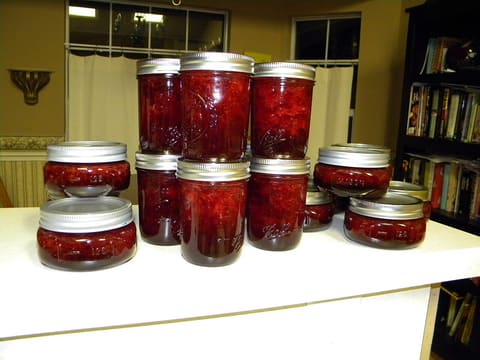
- Some jams and fillings
Why this ruling
Parabens are preservatives made from p-hydroxybenzoic acid. Four are permitted in EU food: ethyl paraben (E214) and its sodium salt (E215), and methyl paraben (E218) and its sodium salt (E219). They are made synthetically, with no animal or alcohol source, and they are Halal.[2][4] US rules list methylparaben as a generally recognised preservative,[1] and certifier lists put the group with the additives that need no check.[5]
Where they are used
In food, parabens are uncommon. EU rules limit them to a few specific uses, including:
- the jelly coating on some meat products, like pork pies and pâtés,
- the surface of dried meat products,
- cereal- and potato-based snacks and coated nuts,
- some sweets.
You are far more likely to meet parabens in liquid medicines, syrups, creams and cosmetics than in food. On everyday drinks and sauces, the common preservatives are benzoates and sorbates.
Propyl and butyl parabens
Propyl paraben (formerly E216) and its salt were removed from the EU food list in 2006 after a safety review, and butyl paraben was never permitted in EU food. The debate about parabens in cosmetics is mostly about these longer-chain ones. It is a health question, and it does not change the Halal ruling on the food additives.
The food still decides
A paraben in a jelly coating tells you nothing about the pie under it. Meat products that use them need the usual meat and gelatin check; see gelatin.
How to verify
- Match E214, E215, E218, E219 or methylparaben/ethylparaben.
- Halal as a food additive.
- Finished jams still need a full label read.
Quick checks
- Food parabens are synthetic esters: Halal.
- In the EU they are mainly allowed on meat jelly coatings and dried meat surfaces, so the meat and the aspic (often gelatin) are the real checks.
- Propylparaben (E216) was removed from the EU list in 2006; it is also synthetic.
Frequently asked questions
Are parabens Halal in food?
Where are parabens used in food?
Is propylparaben still allowed?
Why do cosmetics say “paraben-free”?
Scholarly view
Parabens are not a porcine pathway. Shopper lists that dump all 'benzoate-sounding' names together mix chemistry with fiqh.
Sources
Named Islamic, certifier, manufacturer, and regulatory sources used on this page. Inline markers like [1] jump here. Retrieval dates show when we last checked the live URL. Editorial methodology.
Certifier / jurisdiction
Regulatory / labelling
-
21 CFR § 184.1490 methylparaben
U.S. eCFR Retrieved
U.S. identity / GRAS or colour-additive listing—not a Halal ruling.
-
Regulation (EC) No 1333/2008 on food additives
European Union Retrieved
Union-list identity—not a Halal certificate.
-
-
-
U.S. Food and Drug Administration Retrieved
US identity / labelling context—not a Halal ruling.
People also check
Related ingredients and products for this item.