
Additive identity
Possible source pathways
The finished molecule can be identical across feedstocks. The Halal ruling follows the pathway, not the code alone.
E284 Possible source pathways
- mineral Halal Typical Mineral or inorganic identity. Not meat, wine, or insect colour.
What decides the answer
-
E284 / E285 as listed salts
Halal mineral -
Caviar carrying them still needs a seafood read
Where you'll find it
- Limited EU caviar preservation
Why this ruling
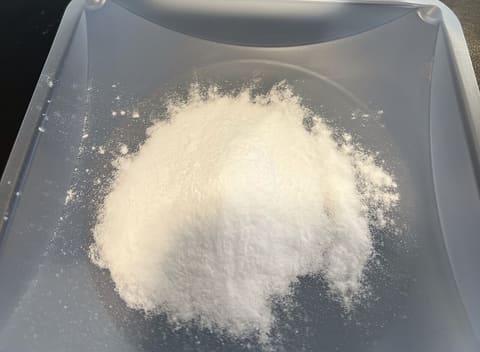
Boric acid (E284) and sodium tetraborate, or borax (E285), are simple boron salts, mined as minerals. As substances they have no animal or alcohol source, so on the Halal question they are Halal.[2][4]
Only one permitted use
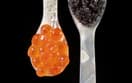
These are among the most restricted additives in the EU. After EFSA's safety review,[1] they are permitted only in sturgeon caviar, in small amounts, as a preservative that also slightly sweetens the eggs. You will not find them in other foods sold legally in Europe. Certifier lists treat the salts themselves as Halal,[5] and the caviar is judged separately; see caviar.
Illegal use elsewhere
Borax is banned as a food additive in most countries because of its toxicity. It still turns up illegally in some markets, added to noodles, meatballs, crackers and fish balls to make them springy or to preserve them. That is a food-safety and fraud problem, not a Halal one, and food authorities test for it. Buying from registered producers and shops is the protection.
Not to be confused with
How to verify
- Match E284, E285, boric acid, or borax.
- The salt is Halal.
- Caviar still needs a seafood ruling.
Quick checks
- Boric acid and borax are minerals: Halal.
- In the EU they are allowed only in sturgeon caviar, and caviar has its own page.
- Borax found in noodles, meatballs or crackers, where it is not permitted, is a food-safety problem, not a Halal one.
Frequently asked questions
Is borax Halal in food?
Where are borates used in food?
Is borax in noodles or meatballs a Halal problem?
Is sturgeon caviar Halal?
Scholarly view
A boron salt is not a fish ruling. Shoppers asking about caviar should open that page for species and slaughter-adjacent debates.
Sources
Named Islamic, certifier, manufacturer, and regulatory sources used on this page. Inline markers like [1] jump here. Retrieval dates show when we last checked the live URL. Editorial methodology.
Certifier / jurisdiction
Regulatory / labelling
-
EFSA — Re-evaluation of boric acid and borates (E284–E285)
European Food Safety Authority Retrieved
Substance identity—not a Halal certificate for a finished pack.
-
Regulation (EC) No 1333/2008 on food additives
European Union Retrieved
Union-list identity—not a Halal certificate.
-
-
-
U.S. Food and Drug Administration Retrieved
US identity / labelling context—not a Halal ruling.
People also check
Related ingredients and products for this item.