Are Carbonates Like Baking Soda (E500–E504) Halal?
Yes — this one is Halal.
Sodium carbonates (including bicarbonate), potassium, ammonium, and magnesium carbonates are inorganic salts used as raising agents and acidity regulators.
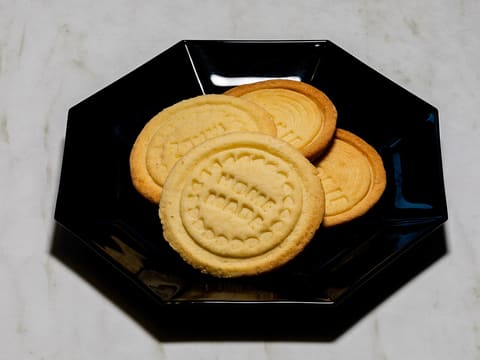
Photo: Dietmar Rabich · CC BY-SA 4.0
Additive identity
Possible source pathways
The finished molecule can be identical across feedstocks. The Halal ruling follows the pathway, not the code alone.
E500 Possible source pathways
- mineral Halal Typical Mineral or inorganic identity. Not meat, wine, or insect colour.
What decides the answer
-
E500–E504
Halal mineral salts -
Finished bakery: still check fats and E920
Where you'll find it
- Baking powder and biscuits
- Cocoa alkalisation
Why this ruling
Sodium carbonates (E500), potassium carbonates (E501), ammonium carbonates (E503) and magnesium carbonates (E504) are mineral salts, and all four are Halal.[3][5] Baking soda, bicarb and sodium bicarbonate are the kitchen names for one of them, E500(ii).
What each code does in food
The group covers four related salts, each with a different job:
- E500 – sodium carbonates. E500(ii), sodium bicarbonate, is the raising agent in baking powder, scones and soda bread. It releases carbon dioxide when it meets an acid and heat.[1] E500(i), washing soda, is used in smaller amounts to adjust acidity.
- E501 – potassium carbonates. Used to "Dutch" (alkalise) cocoa so it tastes milder and looks darker, and, with sodium carbonate, in the alkaline water that gives ramen and other wheat noodles their springy bite.
- E503 – ammonium carbonates. Baker's ammonia, the traditional raising agent for very crisp, thin biscuits such as Scandinavian cookies and German Lebkuchen.
- E504 – magnesium carbonates. An anti-caking agent that keeps table salt and powdered mixes flowing.
Why there is nothing to check
All four are made industrially from minerals: salt, limestone, trona ore, ammonia and carbon dioxide. No animal, insect or wine stage is involved, which is why US rules list sodium bicarbonate as a plain food substance and certifier E-number lists put the group with the uncontroversial minerals.[2][6]
One old name causes confusion: baker's ammonia is still sold in German-speaking countries as Hirschhornsalz, "hartshorn salt", because it was once distilled from deer antler. Modern E503 is synthesised from ammonia and carbon dioxide; the name is historical, not an ingredient.
Where the real question sits
A carbonate on the label never makes a product doubtful, but it does not clear the rest of the recipe either. In a biscuit or cake the Halal questions are the fat (butter, lard or vegetable oil), emulsifiers such as E471, flavourings carried in alcohol, and, in bread, L-cysteine (E920). In alkalised cocoa, it is the chocolate's other ingredients, not the E501.
How to verify
- Match E500–E504: sodium bicarbonate (baking soda) is E500, baker's ammonia is E503.
- Sodium, potassium, ammonium and magnesium carbonates are minerals: Halal.
- In biscuits, cookies and cakes, check the fats, flavourings, fillings and gelatin instead.
Frequently asked questions
Is baking soda Halal?
Is ammonium carbonate Halal?
What does 'raising agent (500)' mean on a label?
Is baking powder Halal?
Scholarly view
Bicarb is not a hidden emulsifier. Bakery Halal questions stay with fats, cysteine, and chocolate coatings.
Sources
Named Islamic, certifier, manufacturer, and regulatory sources used on this page. Inline markers like [1] jump here. Retrieval dates show when we last checked the live URL. Editorial methodology.
Certifier / jurisdiction
Regulatory / labelling
-
EFSA — Re-evaluation of sodium carbonates (E500) and related carbonates
European Food Safety Authority Retrieved
Substance identity—not a Halal certificate for a finished pack.
-
21 CFR § 184.1736 sodium bicarbonate
U.S. eCFR Retrieved
U.S. identity / GRAS or colour-additive listing—not a Halal ruling.
-
Regulation (EC) No 1333/2008 on food additives
European Union Retrieved
Union-list identity—not a Halal certificate.
-
-
-
U.S. Food and Drug Administration Retrieved
US identity / labelling context—not a Halal ruling.
People also check
Related ingredients and products for this item.