Additive identity
Possible source pathways
The finished molecule can be identical across feedstocks. The Halal ruling follows the pathway, not the code alone.
E338 Possible source pathways
- mineral Halal Typical Mineral or inorganic identity. Not meat, wine, or insect colour.
What decides the answer
-
E338–E343 / E450–E452
Halal mineral salts -
E542 bone phosphate is a different, animal page
Where you'll find it
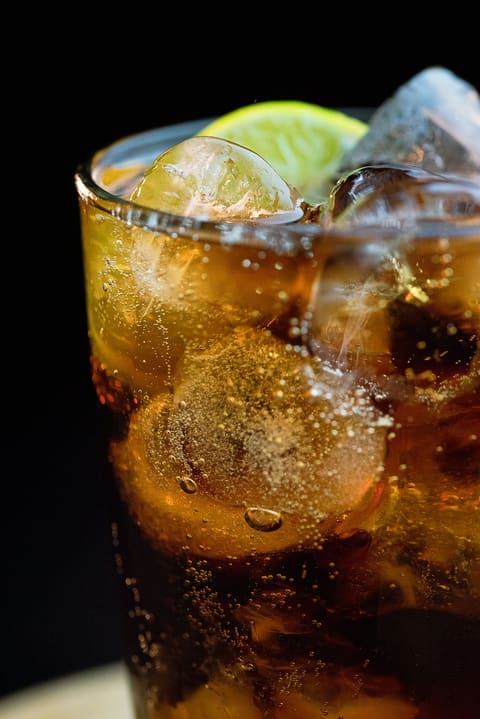
- Cola acidity
- Processed cheese and meat moisture
Why this ruling
Phosphoric acid (E338) and the phosphate salts (E339–E343, E450–E452) are mineral additives, and they are Halal.[3][5] They give colas their tang, help baking powder rise, and keep processed cheese smooth.
One acid, many salts
Food-grade phosphoric acid is refined from phosphate rock. React it with sodium, potassium, calcium or magnesium and you get the salts that carry the other codes:[1]
- E338 – phosphoric acid. The sharp acidity in colas and some fruit drinks.
- E339 and E340 – sodium and potassium phosphates. Emulsifying salts that stop processed and sliced cheese from separating when it melts.
- E341 – calcium phosphates. Raising acids in baking powder and self-raising flour, and anti-caking agents in powders.
- E450 – diphosphates. Sodium acid pyrophosphate is the slow-acting acid in many baking powders and in ready-made batters.
- E451 and E452 – triphosphates and polyphosphates. Help injected meats, prawns and frozen fish hold water.
US rules list phosphoric acid as a generally recognised food substance, and certifier E-number lists put the group with the minerals that need no source check.[2][6]
Not to be confused with bone phosphate
The one animal route in this family has a different code. Edible bone phosphate, E542, is made from animal bones and needs a source check; it has its own page. A label that lists E338–E343 or E450–E452 is not bone phosphate.
Where the real question sits
Phosphates are often a sign of a processed product, and it is the rest of that product that matters. In a cola, look at the brand's flavouring statement; in a cheese slice, the rennet; in a ham, sausage or injected chicken, the meat itself and whether it was slaughtered Islamically. The phosphate is never the reason a product is doubtful.
How to verify
- Match E338–E343, E450–E452, phosphoric acid, or diphosphates.
- Halal.
- Read meat slaughter and drink flavours separately.
Quick checks
- Phosphoric acid and phosphates are minerals: Halal.
- E542 (edible bone phosphate) is from animals and is not on this page.
- Phosphates in chicken, ham and processed cheese are fine; the meat's slaughter and the cheese's rennet are the real checks.
Frequently asked questions
Is phosphoric acid in cola Halal?
Why are phosphates added to chicken and ham?
Are phosphates in processed cheese Halal?
Are diphosphates the same as bone phosphate?
Scholarly view
Phosphates are not bone phosphate (E542). That retired animal code has its own page.
Sources
Named Islamic, certifier, manufacturer, and regulatory sources used on this page. Inline markers like [1] jump here. Retrieval dates show when we last checked the live URL. Editorial methodology.
Certifier / jurisdiction
Regulatory / labelling
-
EFSA — Re-evaluation of phosphoric acid and phosphates (E338–E343, E450–E452)
European Food Safety Authority Retrieved
Substance identity—not a Halal certificate for a finished pack.
-
21 CFR § 182.1073 phosphoric acid
U.S. eCFR Retrieved
U.S. identity / GRAS or colour-additive listing—not a Halal ruling.
-
Regulation (EC) No 1333/2008 on food additives
European Union Retrieved
Union-list identity—not a Halal certificate.
-
-
-
U.S. Food and Drug Administration Retrieved
US identity / labelling context—not a Halal ruling.
People also check
Related ingredients and products for this item.