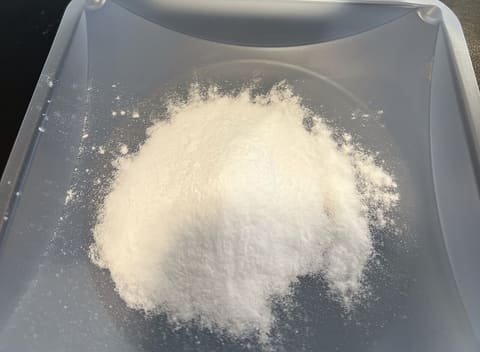
Additive identity
Possible source pathways
The finished molecule can be identical across feedstocks. The Halal ruling follows the pathway, not the code alone.
E542 Possible source pathways
- animal Halal if verified Typical Made by extracting phosphate from animal bones. Beef or other Halal-slaughtered bones can be Halal after audit; pork bones are haram; unspecified bone is mashbooh.
- undisclosed Halal if verified Typical Legacy and some non-EU labels may still say bone phosphate or E542 without species.
How to verify
- Match bone phosphate, edible bone phosphate, E542, or INS 542.
- Do not assume it is the same as E341 (mineral calcium phosphates).
- Ask species: pork vs bovine vs mixed.
- Prefer mineral phosphates or Halal-certified calcium salts when the code appears.
Quick checks
- Bone phosphate (E542) is made from animal bones: pork bone is Haram, and unnamed bone is unverified.
- It is not on the EU's current additive list, so you are most likely to meet it on imported products.
- Calcium phosphates (E341) are normally mineral, not bone.
What decides the answer
-
Halal-slaughtered, audited bovine (or other Halal species) bone
Halal -
Pork-bone phosphate
haram -
Unspecified bone phosphate / E542
Halal if verified -
Not an authorised EU food additive today — identity is Codex/legacy
-
Mineral calcium phosphates (E341) are a different, typically Halal additive
Why this ruling
Bone phosphate – edible bone phosphate, INS 542, and E542 on older European lists – is calcium phosphate recovered from animal bones, which are cleaned, heated and ground. It was used as an anti-caking agent, a mineral supplement and an emulsifying salt.[3]
Not permitted in EU food today
E542 is not on the current EU list of food additives,[1] so a food legally sold in the EU should not list it. You may still meet it on older labels, imported products, some supplements outside the EU, and in technical specifications that use the Codex number.[4]
How it is judged
Although it is a mineral salt, it comes from bone, so it is judged like other bone-derived ingredients such as gelatin:
- From pork bone → not Halal.
- From the bone of a Halal-slaughtered animal, with a clean, audited process → Halal.
- Bone of unstated origin → Halal if verified.
No specific fatwa is attached to this code; the ruling follows the bone.
Not the same as mineral phosphates
Calcium phosphates (E341), used as anti-caking agents, raising agents and calcium sources, are normally made from mined phosphate rock, not bone, and they are a different additive. Do not apply the bone-phosphate question to E341 unless a specification says bone.
Where bone turns up elsewhere
Bone products appear in a few other places: gelatin, bone broth and stocks, and bone char, which some sugar refiners have used to filter and whiten cane sugar. Bone char is a processing aid rather than an ingredient; for colours and their sources, see E100, and for other anti-caking agents, which are minerals, see E551.
Where you'll find it
- Legacy anti-caking and mineral fortification (non-EU / older specs)
- Some dietary calcium supplements historically labelled bone phosphate
Frequently asked questions
Is E542 still legal in the EU?
Is bone phosphate the same as gelatin?
Is E341 Halal?
Scholarly view
E542 is documented here because Codex still numbers bone phosphate as INS 542 and older or extra-EU labels may keep the E-code. It is not an authorised Union-list additive in current EU law (Regulation 1333/2008 as amended).
That legal fact is not a Halal permission. Fiqh follows the bone: pork is haram; other species need Halal slaughter and processing, same family of questions as gelatin. No named fatwa is invented for a retired code.
Sources
Named Islamic, certifier, manufacturer, and regulatory sources used on this page. Inline markers like [1] jump here. Retrieval dates show when we last checked the live URL. Editorial methodology.
Regulatory / labelling
-
Regulation (EC) No 1333/2008 on food additives
European Union Retrieved
Current Union list — bone phosphate / E542 is not an authorised entry.
-
European Commission — Food additives
European Commission Retrieved
EU additive literacy hub for what is authorised today.
-
FAO / WHO Codex Retrieved
INS 542 bone phosphate remains in the Codex numbering system.
-
FAO / WHO JECFA Retrieved
Toxicological identity for bone phosphate—not a Halal ruling.
People also check
Related ingredients and products for this item.