

What decides the answer
-
Plain, sea, rock, or table salt
Halal -
Iodised salt (salt plus potassium iodide or iodate)
Halal -
Salt with anti-caking agents (E535, E536, E551)
Halal -
Seasoned salt, celery salt, or garlic salt
read the blend's other ingredients -
Salted meat or fish
judged on the meat, not the salt
Where you'll find it
- Table and cooking salt
- Crisps, snacks, and seasoning blends
- Bread, cheese, and cured products
- Tinned and processed foods
- Brines and pickles
Why this ruling
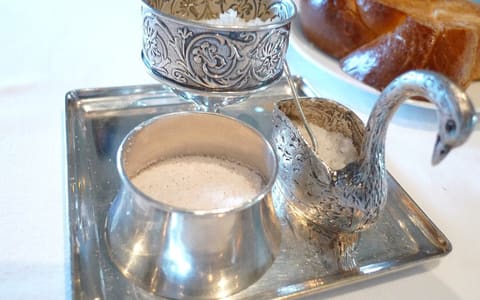
Salt is the most common ingredient in processed food and one of the least complicated. It is sodium chloride: a mineral, taken from seawater, from underground rock deposits, or from natural brine. There is no animal in it, nothing is fermented to make it, and no processing step introduces either.
Why the ruling is straightforward
The categories that make a food Haram are specific — carrion, blood, swine, what is slaughtered without the name of Allah, and intoxicants. Every one of them is an animal or fermentation category. A mineral cannot fall into any of them.
Beyond that, the governing principle runs in salt's favour. IslamQA 231261 sets it out, citing Ibn Taymiyah that “in principle all things, of various types and categories, are generally permissible for human beings, and that they are pure,” and Shaykh al-‘Uthaymeen that the basic principle for all foods and drinks is permissibility unless evidence shows otherwise (IslamQA 231261, retrieved 25 August 2026).[1]
Salt needs no verification. It carries no hidden catch to check for.
The only thing worth reading
What can vary is not the salt but what sits beside it in the tub:
- Iodine. Iodised salt carries a small amount of potassium iodide or iodate, added as a public-health measure. Mineral compounds; no change to the ruling.
- Anti-caking agents. So the salt pours rather than clumps, manufacturers add silicon dioxide (E551) or a ferrocyanide (E535, E536). These are mineral or synthetic additives authorised under the EU framework, where only substances assessed as safe for their proposed uses reach the list (European Commission — Additives, retrieved 25 August 2026).[2] None is animal-derived.
- Blends. Seasoned salt, celery salt, garlic salt, and finishing blends are mixtures. The salt is still salt; the flavourings, colours, and carriers alongside it are the part to read — see natural flavors.
Two things people confuse
Salted meat or fish is judged on the meat. Salt beef, salted cod, and cured products raise questions about slaughter and species. The salt is never the issue, and treating a cured product as doubtful because of the salt misplaces the question entirely.
Sea salt is not more Halal than table salt. They differ in trace minerals, crystal size, and price. Permissibility is identical. Packaging that leans on "natural" is making a marketing claim, not a fiqh one.
If a scan leaves salt unmatched
That is a gap in our index rather than a doubt about the ingredient. Salt appears on more labels than almost anything else, which is exactly why it should resolve cleanly — and why an unresolved list full of ordinary staples makes the genuinely uncertain entries harder to spot.
How to verify
- Treat plain, sea, rock, and iodised salt as Halal.
- On a blend, read the other ingredients — seasoned and celery salts are mixtures.
- Anti-caking agents in salt are mineral or synthetic and raise no separate question.
- Salted meat or fish is judged on the meat, never on the salt.
Quick checks
- Plain, sea, rock, and iodised salt are all Halal.
- Anti-caking agents in salt are mineral or synthetic.
- Only seasoned blends need their other ingredients read.
Frequently asked questions
Is salt Halal?
Is iodised salt Halal?
What about anti-caking agents in salt?
Is sea salt better than table salt for Halal purposes?
Why is salt sometimes flagged when I scan a label?
Scholarly view
Salt sits about as far from a fiqh problem as an ingredient can. The categories that render a food Haram — carrion, blood, swine, what is slaughtered without the name of Allah, and intoxicants — are all animal or fermentation categories, and a mineral belongs to none of them.
IslamQA 231261 sets out the governing principle, citing Ibn Taymiyah that "in principle all things, of various types and categories, are generally permissible for human beings, and that they are pure," and al-Uthaymeen that the basic principle for all foods and drinks is permissibility unless evidence shows otherwise.
Notably the same answer holds that where a label gives an incomplete listing such as "spices," the default principle still applies and a shopper need not investigate exhaustively without evidence of a prohibited component. That does not license ignoring a named risky ingredient, but it does mean plain salt requires no verification at all.
Sources
Named Islamic, certifier, manufacturer, and regulatory sources used on this page. Inline markers like [1] jump here. Retrieval dates show when we last checked the live URL. Editorial methodology.
Islamic / scriptural
-
IslamQA 231261 — Everything Is Permissible in Islam Until Proven Prohibited
IslamQA Retrieved
Cites Ibn Taymiyah that in principle all things are permissible and pure, and al-Uthaymeen that the basic principle for foods and drinks is permissibility absent evidence. Also holds that an incomplete listing such as "spices" does not by itself oblige exhaustive investigation.
Regulatory / labelling
-
European Commission Retrieved
Only additives assessed as safe for their proposed uses appear on the EU list, following review by the Scientific Committee on Food and/or EFSA. Context for the anti-caking agents carried in table salt — not a Halal ruling.
People also check
Related ingredients and products for this item.
.jpg)