
Additive identity
Possible source pathways
The finished molecule can be identical across feedstocks. The Halal ruling follows the pathway, not the code alone.
E430 Possible source pathways
- plant Halal Typical Fatty acids from palm, soy, sunflower, coconut, or other vegetable oils.
- animal Halal if verified The same esters can be split from tallow or lard. Pork or non-zabiha fat is haram; audited zabiha tallow is accepted after audit.
- undisclosed Halal if verified Typical Most labels print only the E-number or US chemical name. Treat as mashbooh until a plant, vegan, or Halal claim settles the fat.
How to verify
- Match polysorbate 20/40/60/65/80, Tween 20/60/80, polyoxyethylene stearate, E431–E436, or INS 431–436.
- Vegetarian/vegan or Halal marks settle the fat.
- The letter or Tween number names the fatty acid, not a different religious ruling.
- E430 (polyoxyethylene (8) stearate) is a retired related code with the same fat question.
Quick checks
- Polysorbates (E432–E436, Tween 20–85) and E431 carry one question: is the fatty acid plant or animal?
- They are common in ice cream, whipped toppings and some supplements.
- A vegetarian, vegan or Halal mark settles it; without one it is Halal if verified.
What decides the answer
-
Plant-fat or vegan/vegetarian-labelled polysorbate / E431–E436
Halal -
Halal-certified product
Halal -
Pork or non-zabiha animal fatty acid
haram -
Unspecified Tween / polysorbate / E431–E436
Halal if verified
Why this ruling
Polysorbates are the food industry’s hydrophilic emulsifiers for ice cream, sauces, and oil-soluble vitamins. EU packs print E432–E436; US packs print polysorbate 20 / 40 / 60 / 65 / 80 or older Tween names. E431 (polyoxyethylene (40) stearate) is the related ethoxylated stearate. Those strings are one source-pathway family.[1][2]
The chemistry is sorbitol (from hydrogenated glucose) or a polyoxyethylene chain, esterified with a fatty acid. Sorbitol and ethylene oxide are not the Halal issue. Lauric, palmitic, stearic, and oleic acids may be vegetable or tallow. EFSA’s re-evaluation of E432–E436 is a safety identity, not a Halal certificate.[2] Codex lists the INS numbers on the same identities.[4]
Plant-fat lots are Halal. Animal-fat lots follow slaughter; pork is haram. Unspecified Tween 80 is mashbooh—Halal if verified. Named certifier mashbooh lists treat the family that way.[5] A vegetarian or vegan claim, a Halal mark, or a manufacturer answer to “plant or animal fatty acid?” settles it. Retired E430 (polyoxyethylene (8) stearate) is the same question if it still appears on an old spec.
Where you will find it
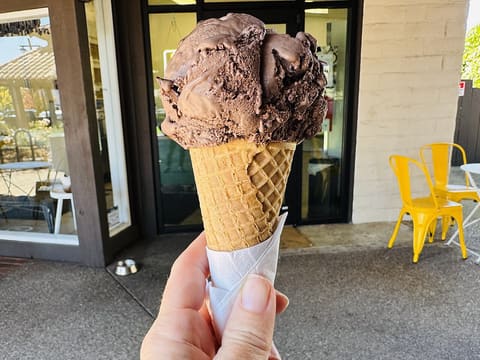
- Ice cream and frozen desserts – polysorbate 80 keeps the fat in small droplets, so the texture stays smooth and resists melting.
- Whipped toppings and coffee creamers – for body and stability.
- Pickles, sauces and dressings – to disperse oils and flavourings such as dill oil evenly through the liquid.
- Vitamin drops, gummies and capsules – to carry oil-soluble vitamins in water-based products.
In each case the question is the same: plant or animal fatty acid. A tub of ice cream with E433 and a Halal mark has already answered it.
Frequently asked questions
Is Tween 80 the same as E433?
Are E432 and E435 different rulings?
What about E431?
Scholarly view
Fiqh follows the fatty-acid feedstock. Plant oleate or stearate is Halal; pork or non-zabiha animal fat is haram. Named certifier mashbooh lists treat unspecified polysorbates that way. Ethylene oxide here is a processing reactant, not khamr.
Sources
Named Islamic, certifier, manufacturer, and regulatory sources used on this page. Inline markers like [1] jump here. Retrieval dates show when we last checked the live URL. Editorial methodology.
Certifier / jurisdiction
-
SANHA Retrieved
Source-dependent additives listed mashbooh pending origin.
Regulatory / labelling
-
Regulation (EC) No 1333/2008 on food additives
European Union Retrieved
Union-list identity—not a Halal certificate.
-
EFSA — Re-evaluation of polysorbates (E432–E436)
European Food Safety Authority Retrieved
Identity of the polysorbate family. Safety opinion, not Halal.
-
-
People also check
Related ingredients and products for this item.