
Is E472a–f (Esters of mono- and diglycerides) Halal?
It depends on what the label says.
E472a–f are esters of mono- and diglycerides (the E471 fat backbone) with food acids.
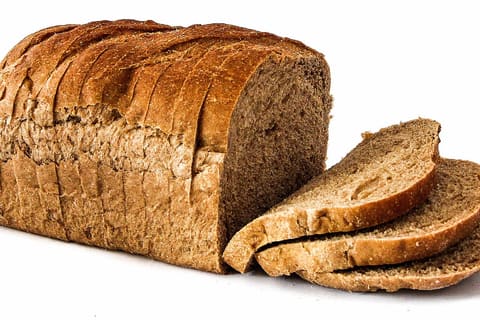
Photo: FranHogan · CC BY-SA 4.0
Additive identity
Possible source pathways
The finished molecule can be identical across feedstocks. The Halal ruling follows the pathway, not the code alone.
E472a Possible source pathways
- plant Halal Typical The mono- and diglyceride backbone is made from palm, soy, or other vegetable oils, then esterified with acetic, lactic, citric, or tartaric acid. Vegetarian/vegan claims confirm this route.
- animal Halal if verified The same esters can be built on tallow or lard glycerides. Pork or non-zabiha fat is haram.
- undisclosed Halal if verified Typical EU packs often show only E472e (DATEM) in bread. US packs may say 'DATEM' or 'diacetyl tartaric acid esters of mono- and diglycerides' without a fat source.
How to verify
- Match E472a–f, DATEM, CITREM, LACTEM, ACETEM, or 'diacetyl tartaric acid esters of mono- and diglycerides'.
- Treat the whole letter series as one source-pathway family.
- Vegetarian bread claims or Halal bakery marks settle the fat.
- Compare letters on the family compare view; they are not different religious rulings.
Quick checks
- E472a–f are E471 glycerides joined to a food acid; the letter names the acid, not the ruling.
- The glyceride fat can be plant or animal; a vegetarian, vegan or Halal mark settles it.
- DATEM (E472e) is common in supermarket bread; artisan bread often skips it.
What decides the answer
-
Plant-fat E472a–f, or vegetarian/vegan bakery claim
Halal -
Halal-certified bread/margarine
Halal -
Pork or non-zabiha glycerides
haram -
Unspecified DATEM / E472e / E472c
Halal if verified
Why this ruling
The E472 letter series is what bakeries mean when they talk about DATEM and CITREM. Each code is an ester of mono- and diglycerides of fatty acids—the same backbone as E471—with a food acid: acetic (E472a, ACETEM), lactic (E472b, LACTEM), citric (E472c, CITREM), tartaric (E472d), mono- and diacetyltartaric (E472e, DATEM), or mixed acetic and tartaric (E472f). EU and Codex list them separately because the acids behave differently in dough and margarine. For Halal purposes they are one family.[1][2]
EFSA’s re-evaluation states that the mono- and diglycerides may be of vegetable or animal origin. That is the ruling. Plant DATEM is Halal. Animal DATEM follows slaughter. Unspecified E472e on a supermarket loaf is mashbooh—Halal if verified—exactly like unlabeled E471.[2][5]
US ingredient lists rarely say “E472e”. They say DATEM or the long chemical name. Both belong here. So do INS 472a–f. The compare view lays the six letters side by side; none of them is a shortcut around checking the fat.
Practical checks match E471: Halal bakery certification, a vegetarian/vegan suitability claim, or a miller’s statement that DATEM is vegetable. Artisan breads with short formulas often skip the whole family.
The six letters
| Code | Common name | Where it appears |
|---|---|---|
| E472a | ACETEM | Food coatings, some fats |
| E472b | LACTEM | Whipped toppings, cake mixes |
| E472c | CITREM | Margarine, chocolate |
| E472d | Tartaric acid esters | Rarely used; some baking fats |
| E472e | DATEM | Industrial bread, pastries |
| E472f | Mixed acetic and tartaric esters | Bakery emulsifier blends |
The acid differs; the fat source question is the same for every row.
Where you'll find it
- DATEM (E472e) in industrial bread and rolls
- CITREM (E472c) in margarine, sauces, and infant formula emulsifier systems
- LACTEM / ACETEM in cake and whipped toppings
- Mixed tartaric/acetic esters (E472f) in bakery fats
Frequently asked questions
Is DATEM Halal?
Does the letter (a–f) change the ruling?
Is E472c the same as E331?
Why is DATEM on so much supermarket bread?
Scholarly view
The six letters are technological variants of one fat-source question. DATEM is the highest-volume bakery code; it is not a separate fiqh category. Named certifier mashbooh lists group unspecified E471/E472 together. Istihalah arguments that would bless all transformed fats are not how those lists treat unlabeled DATEM.
Sources
Named Islamic, certifier, manufacturer, and regulatory sources used on this page. Inline markers like [1] jump here. Retrieval dates show when we last checked the live URL. Editorial methodology.
Certifier / jurisdiction
-
SANHA Retrieved
Unspecified E471/E472-type emulsifiers treated as mashbooh / source-dependent.
Regulatory / labelling
-
Regulation (EC) No 1333/2008 on food additives
European Union Retrieved
Union-list identity for E472a–f.
-
European Food Safety Authority Retrieved
Identity: esters of mono- and diglycerides of fatty acids that may be of vegetable or animal origin.
-
-
People also check
Related ingredients and products for this item.