Is Gochujang Halal?
It depends on what the label says.
Gochujang is a fermented Korean chilli paste made from chilli powder, glutinous rice, fermented soybean powder, barley malt and salt, so there is no meat or animal ingredient to worry about.
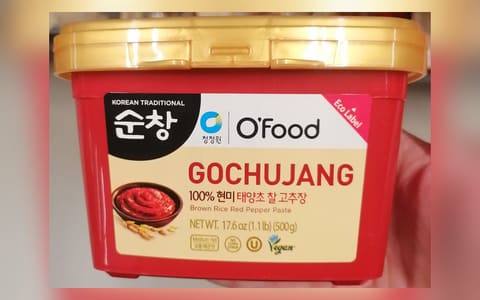
Photo: Open Food Facts contributors · CC BY-SA 3.0
How to verify
- Read the ingredients for 'alcohol', 'ethanol', 'ethyl alcohol', 'spirit' or 'rice wine'.
- Pastes that list none, such as Amoy and Tesco on Open Food Facts, avoid the question.
- A Halal mark from a certifier you trust settles it.
- In restaurant dishes, ask which paste they use, and check the rest of the sauce for mirin or soju.
Quick checks
- No meat or animal ingredients in the basic recipe.
- Many brands add alcohol or ethanol: read the label.
- Amoy and Tesco pastes list no alcohol.
What decides the answer
-
Gochujang with no alcohol, ethanol or rice wine listed
Halal -
Halal-certified gochujang
Halal -
Alcohol or ethanol listed as an ingredient
depends on your scholar's view of added alcohol
Why this ruling
Gochujang is a fermented Korean chilli paste, savoury, sweet and spicy, made from chilli powder, glutinous rice, fermented soybean powder, barley malt powder and salt.[1] None of that raises a Halal question. What does is an ingredient many brands add.
Added alcohol
Several tubs on UK shelves list alcohol. O'Food lists "alcohol",[3] Sun Hee lists "ethanol",[4] Ajumma Republic lists "ethyl alcohol"[5] and Lidl's Vitasia lists ethyl alcohol too.[6] Others don't: Amoy's paste[7] and Tesco's[8] list no alcohol at all.
Does it matter?
Scholars differ on food with added alcohol. Darul Iftaa Chicago permits alcohol in food only when it isn't from dates or grapes, can't intoxicate, and serves a valid purpose such as a solvent rather than being "used as a direct ingredient".[9] Dar al-Ifta al-Misriyyah holds that minute quantities that cannot intoxicate are lawful.[10] If you'd rather not weigh that, buy a tub that lists no alcohol. The same label check applies to soy sauce, and restaurant sauces may also add mirin.
Where you'll find it
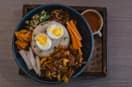
- Bibimbap, tteokbokki and stews
- Marinades for chicken and beef
- Dipping sauces and glazes
Frequently asked questions
Is gochujang Halal?
Does gochujang have alcohol in it?
Is the alcohol in gochujang a problem?
Is tteokbokki Halal?
Is gochujang vegan?
Scholarly view
Gochujang's ingredients are Halal; only added alcohol raises a question. Darul Iftaa Chicago, in its soy sauce ruling, permits food containing alcohol when the alcohol is not from dates or grapes, the product cannot intoxicate, the food rather than the alcohol is consumed, and the alcohol serves a valid purpose such as a solvent rather than being added as a direct ingredient; it treats mirin added to food as impermissible.
Dar al-Ifta al-Misriyyah holds that minute quantities of an intoxicant that cannot intoxicate are lawful. Whether ethanol listed as a gochujang ingredient meets those conditions is for your scholar; a paste without it avoids the question.
Sources
Named Islamic, certifier, manufacturer, and regulatory sources used on this page. Inline markers like [1] jump here. Retrieval dates show when we last checked the live URL. Editorial methodology.
Islamic / scriptural
-
Is soy sauce halal? The ruling on alcohol in soy sauce
Darul Iftaa Chicago (via IslamQA.org) Retrieved
Food containing alcohol is permissible if the alcohol is not derived from dates or grapes, the product does not intoxicate, the food rather than the alcohol is consumed, it is not an attribute of open sinners, and 'the alcohol serves a valid purpose, such as a solvent, and it is not used as a direct ingredient'. Mirin and food containing it are not permissible; soy sauce is.
-
Food mixed with alcohol: is it permissible?
Dar al-Ifta al-Misriyyah Retrieved
Minute quantities of an intoxicant that cannot intoxicate are lawful.
Manufacturer / product
-
-
O'Food Gochujang Brown Rice Red Pepper Paste
Open Food Facts Retrieved
Tapioca syrup, water, brown rice, red pepper powder 12%, salt, alcohol, soybean, garlic, onion.
-
Sun Hee Gochujang Korean Hot Chili Paste
Open Food Facts Retrieved
Wheat flour, corn syrup, seasoning (red chilli pepper powder, water, salt, garlic, onion), water, salt, red chilli pepper powder, ethanol, hydrolysed wheat protein.
-
-
Vitasia (Lidl) Korean Style Gochujang Paste
Open Food Facts Retrieved
Ingredients (Dutch) include ethylalcohol, also in the fermented soya paste.
-
Open Food Facts Retrieved
Glucose syrup, water, fermented soybean paste (water, soybean, rice, salt), chilli powder, rice vinegar, onion powder, salt, garlic powder. No alcohol listed.
-
Open Food Facts Retrieved
Water, fermented yellow beans, rice vinegar, sugar, dark soy sauce, onion purée, cornflour, garlic purée, cayenne pepper, dried red pepper, lemon juice, habanero, salt, acetic acid. No alcohol listed; labelled suitable for vegans.
Context / background
-
Wikipedia Retrieved
'Gochujang or red chili paste is a savory, sweet, and spicy fermented condiment popular in Korean cooking. It is made from gochugaru (red chili powder), chapssal (glutinous rice), meju (fermented soybean) powder, yeotgireum (barley malt powder), and salt.' Cites a 2024 study in which '57% of products contained alcohol levels exceeding 1%', for cottage-industry products.