
Is Kimchi Halal?
It depends on what the label says.
Kimchi is Halal in principle as fermented vegetables.
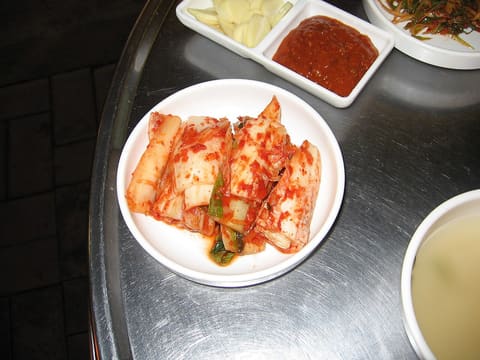
Photo: Johannes Barre, iGEL · CC BY-SA 3.0
How to verify
- Prefer vegan or Halal-certified kimchi when you want no seafood or paste checks.
- Traditional pastes: fish sauce is fine; salted shrimp paste is majority-Halal, Hanafi shellfish caution optional.
- At Korean BBQ, watch shared tongs and pork banchan cross-contact.
- Trace fermentation alcohol: follow named fatwas on natural non-intoxicating food alcohol (e.g. IslamWeb 96550)—kimchi is not khamr.
What decides the answer
-
Homemade or vegan kimchi (no animal products)
Halal -
Traditional kimchi with fish sauce/salted shrimp — per the majority; Hanafis apply their shellfish view to shrimp-paste versions
Halal -
Halal-certified kimchi (Korean brands export it) — no further checks
Halal -
Trace fermentation alcohol: permitted under named fatwas on natural non-intoxicating food alcohol (e.g. IslamWeb 96550)—not khamr
-
Restaurant kimchi: the kimchi is usually fine - cross-contact with pork dishes is the practical question
Why this ruling
Kimchi - Korea's fermented cabbage (and radish, and cucumber...) seasoned with chili, garlic, ginger, and fish sauce - has ridden the Korean food wave into kitchens worldwide, bringing its halal questions along. They sort into two piles: the fermentation and the recipe.
Fermentation is the one point to consider. Lacto-fermentation generates trace ethanol—the same chemistry seen in bread, soy sauce, and ripe fruit. Named evidence such as IslamWeb fatwa 96550 permits naturally occurring alcohol in a food that does not intoxicate; kimchi cannot intoxicate at any ordinary serving.[1] Fatwa 85292 discusses alcohol formed while soy sauce ferments, with a transformation caveat; the same reasoning carries over to vegetable ferments.[2] Kimchi does not become Haram merely by being alive.
The recipe pile has real contents. Traditional seasoning pastes include fish sauce (fermented anchovies - halal under universal fish rules) and often saeujeot, salted fermented shrimp: halal for the Shafi'i, Maliki, and Hanbali majority, while Hanafis applying their school's non-fish seafood position may prefer versions without shrimp paste. Commercial kimchi adds the usual packaged-food scan for additives. And the restaurant context matters more than the dish: Korean menus are proudly pork-forward, banchan dishes and tongs circulate the table, and stews get customized - the kimchi is rarely the problem, the kitchen traffic sometimes is.
The clean paths are wide open. Vegan kimchi - fish-free by design - is stocked at mainstream groceries and is halal by composition. Korean producers export halal-certified kimchi under KMF and similar marks, built for Gulf and Southeast Asian demand. Halal Korean restaurants are multiplying in Western cities, serving kimchi jjigae with zabiha beef. And homemade kimchi puts every variable in your hands - cabbage, salt, chili, garlic, fish sauce you chose yourself - which is how Korea's grandmothers would tell you to do it anyway.
Label reading and commercial packs
Jarred kimchi in Western groceries ranges from fully vegan (cabbage, chili, garlic, ginger, salt) to traditional pastes with fish sauce or salted shrimp. Scan for fish sauce and shellfish pastes if you follow a stricter seafood position. Fermentation chemistry produces tiny self-generated alcohol comparable to bread or soy sauce—mainstream scholars do not treat that as drinkable khamr. Background on Korean kimchi as cultural heritage is summarized by UNESCO’s listing materials at unesco.org (retrieved 20 July 2026) and general fermented-food safety notes at fda.gov (retrieved 20 July 2026).
Restaurant and travel practice
Korean menus are often pork-forward. The kimchi banchan itself is usually fine; shared utensils, grill brushes, and stew customizations are the practical questions. Halal Korean restaurants and certified export kimchi (KMF and peers) remove the guesswork. Homemade kimchi lets you pick fish-sauce-only or vegan seasoning. Pair with tofu and rice for an easy Halal Korean-style plate when meat sourcing is unclear.
Where you'll find it
- Banchan (side dish) with Korean meals
- Kimchi jjigae (stew) and fried rice
- Kimchi pancakes and dumplings
- Topping for noodles and bowls
Frequently asked questions
Does kimchi contain alcohol from fermentation?
Is the fish sauce in kimchi halal?
Is restaurant kimchi in Korea or Korean BBQ places halal?
Is there certified halal kimchi?
Scholarly view
Lacto-fermentation can leave trace self-generated ethanol. IslamWeb fatwa 96550 permits naturally occurring alcohol in a food that does not intoxicate; fatwa 85292 discusses fermentation-path alcohol in soy sauce with a transformation caveat. This site treats kimchi like other vegetable ferments under that named evidence—not as a universal school-by-school survey.
Fish sauce is Halal fish for mainstream practice; salted shrimp paste is majority-Halal with optional Hanafi shellfish caution. Restaurant pork cross-contact remains the practical risk.
Sources
Named Islamic, certifier, manufacturer, and regulatory sources used on this page. Inline markers like [1] jump here. Retrieval dates show when we last checked the live URL. Editorial methodology.
Islamic / scriptural
-
Alcohol existing in food naturally (Fatwa 96550)
IslamWeb Retrieved
Natural fermentation alcohol in a food that does not intoxicate may be permissible—supports kimchi-style lacto-ferment traces, not added liquor.
-
Alcohol changed in soy-sauce production (Fatwa 85292)
IslamWeb Retrieved
Named discussion of fermentation-path alcohol in a condiment; analogy used on this site for vegetable ferments—not a blank cheque for every school.
-
Qur'an Retrieved
Intoxicants prohibition—distinguishes khamr drinks from non-intoxicating food ferments.
Certifier / jurisdiction
-
Portal Halal Malaysia (MYeHALAL)
JAKIM Retrieved
Lookup for Halal-certified export kimchi when a mark is present.
Regulatory / labelling
-
U.S. FDA Retrieved
Fermented-food labelling/safety context for commercial kimchi packs.
People also check
Related ingredients and products for this item.
Browse this topic
Open the parent category hub for more foods in the same group.