

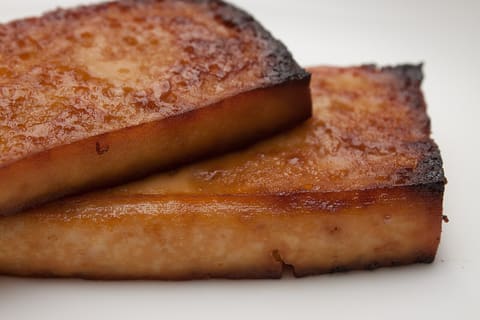
What decides the answer
-
Plain tofu (firm, soft, silken) — as soy plus mineral coagulant
Halal -
Marinated/flavoured tofu: check for mirin, sake, or wine in the marinade
-
Restaurant fried tofu (agedashi etc.): check the dashi/sauce and shared fryers
-
Fermented tofu (furu) and stinky tofu: check brine ingredients—some use alcohol
Where you'll find it
- Stir-fries and curries
- Miso soup and Asian soups
- Silken tofu in smoothies and desserts
- Fried tofu (agedashi, karaage-style)
- Meat substitute in vegan cooking
Why this ruling
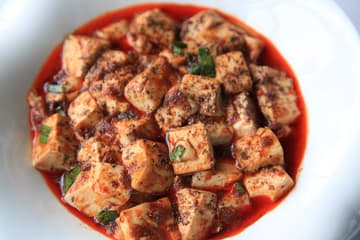
Tofu is soy milk curdled with a mineral salt and pressed—a three-ingredient food (soybeans, water, coagulant) that has anchored East Asian cooking for two millennia and modern plant-based eating for decades. Plain tofu is Halal as ordinary plant food: SeekersGuidance answers that there is nothing in tofu that would make it impermissible (islamqa.org/.../168582, retrieved 15 August 2026). Not every school has published a ruling on tofu, and plain tofu does not need one.
Coagulants are not cheese rennet
The coagulants deserve a clear sentence because they draw the cheese comparison. Where cheese often curdles with rennet (an animal enzyme with sourcing questions), tofu sets with nigari (magnesium chloride drawn from seawater), gypsum (calcium sulfate—a mineral listed as GRAS in 21 CFR § 184.1230, retrieved 15 August 2026), or glucono-delta-lactone (plant-derived). No animal touches the standard process, which is why tofu never inherited cheese’s fiqh complications. General food-labelling literacy helps when scanning packs (fda.gov, retrieved 20 July 2026).
Where scrutiny actually belongs
Scrutiny belongs to what factories and kitchens do downstream:
- Flavoured and marinated tofu—“teriyaki,” “Japanese-style,” “five-spice”—can carry mirin, sake, or wine
- Agedashi tofu’s dipping sauce classically includes mirin
- Fried tofu may share oil with non-Halal items in mixed kitchens
- Chinese fermented tofu (furu) sometimes brines in rice wine
- Processed tofu hot dogs and nuggets need ordinary processed-food label scans
Alcohol-free flavoured brands abound; plain blocks remain the safest default.
Restaurant and home practice
For Muslims eating plant-forward—or navigating Asian menus without Halal meat—plain tofu is a cornerstone protein: plant-plus-mineral, endlessly adaptable, and requiring exactly one restaurant question (“any mirin or sake in the sauce?”) that you were often asking anyway. At home, press firm tofu, marinate with soy, garlic, and citrus, and skip wine-based glazes. Pair with soy sauce checks (Darul Iftaa Chicago on fermentation alcohol) and other plant proteins such as tempeh and seitan.
Certification and markets
Halal marks from bodies such as JAKIM (MYeHALAL, retrieved 20 July 2026) are useful for multi-ingredient tofu products in Muslim markets, but they are not a prerequisite for plain curd. Prefer certified lines when you buy flavoured cups, ready meals, or restaurant-supply packs with long ingredient lists.
Label literacy and travel notes
When you travel, flavoured tofu formulas change by market even under the same brand name. A teriyaki pack sold in Tokyo may list mirin while a Gulf-market pack is alcohol-free and Halal-marked. Reset assumptions at each airport shop and supermarket. For home cooks building a weekly protein rotation, keep a plain block in the fridge and season it yourself with soy, garlic, ginger, citrus, and chili—this avoids factory marinades entirely.
Silken tofu in desserts is usually just soy and coagulant; the risk appears when dessert sauces add liqueur or non-Halal gelatin toppings. Restaurant “crispy tofu” bowls deserve the same fryer question you ask for fries: shared oil with non-Halal meat items is a real kitchen practice.
If a server cannot answer, choose steamed or braised tofu instead of deep-fried. Finally, remember that vegan labelling answers animal ingredients, not alcohol—vegan mirin-style seasonings can still be wine-based. Halal certification remains the strongest shortcut for multi-ingredient ready meals, while plain tofu stays the everyday default.
How to verify
- Plain tofu needs no checks.
- Read flavoured packs for mirin, sake, wine, or alcohol.
- At Japanese/Chinese restaurants, ask about agedashi sauce and shared fryers.
- Check fermented tofu (furu) brine for rice wine.
- Treat tofu hot dogs/nuggets as ordinary processed foods—scan flavourings separately.
Frequently asked questions
Is tofu Halal in all schools?
What coagulates tofu—is it animal rennet?
Is agedashi tofu at Japanese restaurants Halal?
Is fermented or 'stinky' tofu Halal?
Do I need Halal certification for plain tofu?
Scholarly view
SeekersGuidance (Shaykh Yusuf Weltch / Faraz Rabbani check) treats plain tofu as permissible—soy milk set like cheese but without animal rennet. Darul Iftaa Chicago’s soy-sauce ruling remains the named source for fermentation-alcohol in related condiments.
Coagulant identity: calcium sulfate is a listed US GRAS mineral (21 CFR 184.1230). Not every school has published a ruling on tofu, and plain tofu does not need one.
Sources
Named Islamic, certifier, manufacturer, and regulatory sources used on this page. Inline markers like [1] jump here. Retrieval dates show when we last checked the live URL. Editorial methodology.
Islamic / scriptural
-
SeekersGuidance — is tofu permissible (halal) to eat?
SeekersGuidance (via islamqa.org) Retrieved
Hanafi desk: tofu is permissible; nothing in tofu that would make it impermissible. Not a four-school census.
-
Darul Iftaa Chicago — soy fermentation alcohol (related condiment logic)
Darul Iftaa Chicago Retrieved
Named source for fermentation alcohol in soy condiments (mirin/sake/soy sauce adjacent).
-
Qur'an 5 (general lawful foods context)
Retrieved
Certifier / jurisdiction
-
Retrieved
Regulatory / labelling
-
21 CFR § 184.1230 — calcium sulfate
U.S. eCFR Retrieved
GRAS identity for gypsum/calcium sulfate used as a firming agent—including tofu coagulant use in US food law. Not a Halal certificate.
-
Retrieved
People also check
Related ingredients and products for this item.

Halal-conscious recipes
A substitution-led recipe that uses this analysis.
Browse this topic
Open the parent category hub for more foods in the same group.

.jpg)