
What decides the answer
-
Plain tempeh (soy + culture + water)
Halal -
Halal-certified tempeh products
Halal with audit assurance -
Wine/mirin marinades or pork-seasoned restaurant prep
avoid -
Shared deep-fryers with non-Halal meat
separate kitchen check
Where you'll find it
- Stir-fries, bowls, and sandwiches
- Indonesian tempeh goreng and sambal dishes
- Plant-based meat substitute in stews
- Baked or grilled marinated slices
Why this ruling
Tempeh is a traditional Indonesian fermented soybean cake. Cooked soybeans are inoculated with Rhizopus mold (often R. oligosporus), which binds the beans into a firm, sliceable block with a nutty, mushroom-like flavour. Unlike tofu, tempeh keeps the whole bean, so it is higher in fiber and has a chewier bite. The Halal question for plain tempeh is straightforward: soy and mold culture are plant foods.
On the shelf
Plain tempeh has three ingredients. Tiba's original tempeh lists "Organic soya beans, water, culture (rhizopus)",[4] and The Tofoo Co.'s lists water, soya beans and a culture; both are labelled vegan.[3]
Why plain tempeh is Halal
Islamic dietary law does not ban fermented plant proteins. Tempeh’s process is solid-state fermentation on beans—not distillation or brewing of an intoxicating drink. Commercial plain packs typically list soybeans, water, and tempeh culture; some add a splash of vinegar as a pH aid, which follows ordinary vinegar rulings. Food-composition references and producer education pages describe tempeh as fermented soy (see overview materials via FDA Food for fermented soy foods and Indonesian food-culture summaries, retrieved 20 July 2026). None of that chemistry introduces pork.
| Form | Typical Halal read |
|---|---|
| Plain refrigerated/frozen tempeh | Halal |
| Pre-marinated / “BBQ” / “bacon” style | Read sauce ingredients |
| Restaurant fried tempeh | Check oil + glaze |
| Halal-certified tempeh products | Clearest retail option |
Flavoured packs and restaurant reality
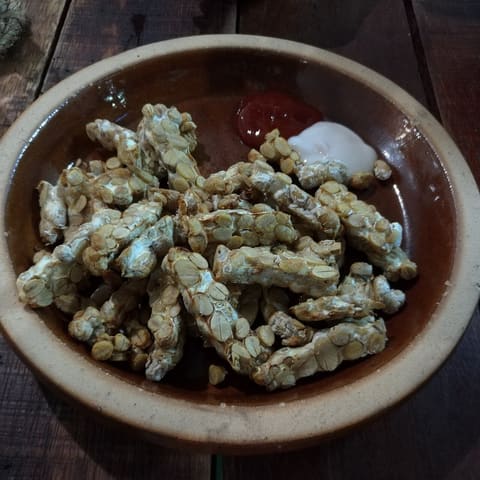
Western grocery tempeh is often sold ready-marinated. Those sauces can be fine (soy, garlic, maple) or problematic (mirin, wine, Worcestershire with anchovy/alcohol issues). The base cake stays Halal; the glaze decides the plate. Indonesian tempeh goreng in a Muslim-run kitchen is usually safe; the same dish in a mixed bar kitchen may share fryers with bacon or non-zabiha meat.
Tempeh vs other soy foods
- Tofu — coagulated soy milk; softer, different process, same plant-base Halal default.
- Soy sauce — liquid ferment; separate alcohol-add check (soy sauce).
- Seitan — wheat gluten, not soy (seitan).
Do not assume “vegan” equals “no further checks.” Vegan rules out animal gelatin but does not prove a wine reduction is absent.
Markets and certification
In Indonesia and Malaysia, tempeh is everyday food and finished products may carry national Halal marks. For Malaysian listings, use JAKIM’s Portal Halal / MYeHALAL (retrieved 20 July 2026). In the US/UK/EU, many plain blocks have no Halal logo; ingredient simplicity is usually enough for the category ruling. Organic or “sprouted” claims do not change the Halal answer.
Realistic verification
- Buy plain tempeh when you want the simplest Halal path.
- For marinated products, scan for alcohol words the same way you would for teriyaki.
- At restaurants, ask about oil and sauce—not whether soybeans are Halal.
- Re-check multi-packs and frozen nuggets when brands reformulate seasonings.
- Prefer certified products only if your personal standard requires marks on all packaged foods.
How to verify
- Prefer plain tempeh listing soybeans, culture/Rhizopus, and water (sometimes vinegar or rice).
- Read flavoured or pre-marinated packs for wine, mirin, alcohol extracts, or non-Halal meat seasonings.
- In restaurants, ask what the tempeh was fried in and what glaze was used.
- Choose Halal-certified tempeh products when you want a full formula audit.
Frequently asked questions
Is tempeh Halal?
Does fermentation alcohol make tempeh Haram?
Is tempeh the same as tofu for Halal?
Can I eat tempeh bacon or BBQ tempeh?
Is there Halal-certified tempeh?
Scholarly view
Tempeh fermentation is a solid-state mold culture on beans, not brewing of an intoxicating beverage. Trace metabolites from fermentation are not treated like drinking khamr in mainstream practice. The practical Halal work is the same as other plant proteins: verify added sauces, shared fryers, and any animal-derived seasonings on value-added packs.
Sources
Named Islamic, certifier, manufacturer, and regulatory sources used on this page. Inline markers like [1] jump here. Retrieval dates show when we last checked the live URL. Editorial methodology.
Certifier / jurisdiction
-
Retrieved
Manufacturer / product
-
The Tofoo Co. tempeh (5034467000872)
Open Food Facts (pack record) Retrieved
Record updated September 2026; labelled vegan. Ingredients: 'Tempeh (Water, Soya beans (44%), Culture (Inoculum)'.
-
Tiba Tempeh Original (8718868006004)
Open Food Facts (pack record) Retrieved
Record updated July 2026; V-label vegan. Ingredients: 'Organic soya beans, water, culture (rhizopus)'.
Regulatory / labelling
-
Retrieved


Browse this topic
Open the parent category hub for more foods in the same group.