Additive identity
Possible source pathways
The finished molecule can be identical across feedstocks. The Halal ruling follows the pathway, not the code alone.
E507 Possible source pathways
- mineral Halal Typical Mineral or inorganic identity. Not meat, wine, or insect colour.
What decides the answer
-
These mineral codes
Halal -
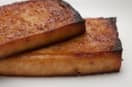
Tofu gypsum / chloride
Halal coagulant -
Cheese still needs rennet
Why this ruling
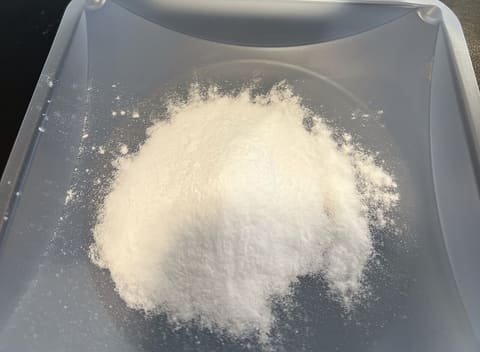
This page covers the plain mineral additives: acids, chlorides, sulphates, hydroxides and oxides that are made from salt, rock, lime and simple chemistry. They are inorganic, with no animal or alcohol source, and they are Halal.[2][4] Certifier lists put them with the additives that need no check.[5] "Chemical-sounding" is not the same as doubtful.
What they are and what they do
| Code | Name | Typical use |
|---|---|---|
| E507 | Hydrochloric acid | Making glucose syrup and hydrolysed proteins |
| E508 | Potassium chloride | Low-sodium salt |
| E509 | Calcium chloride | Firming tinned vegetables; helping milk set in cheesemaking |
| E511 | Magnesium chloride (nigari) | Setting firm tofu |
| E513–E517 | Sulphuric acid and sulphates | Acidity control; calcium sulphate (gypsum) sets tofu |
| E524, E525 | Sodium and potassium hydroxide | The lye bath on pretzels; alkalising cocoa |
| E526 | Calcium hydroxide (slaked lime) | Treating corn for tortillas and masa |
| E528–E530 | Magnesium hydroxide and oxides | Acidity control, anti-caking |
US rules list hydrochloric acid as a generally recognised food substance.[1]
Where you have met them
- Tofu is set with calcium sulphate or magnesium chloride; see tofu.
- Pretzels get their dark crust from a sodium hydroxide bath; see pretzel.
- Tortillas and tamales use corn soaked in calcium hydroxide; see tamales.
- Dutch-process cocoa is alkalised with potassium hydroxide or carbonate; see cocoa.
What they do not settle
Calcium chloride in cheese helps the milk set, but it is not what sets it: rennet does that, and rennet has its own question; see cheese. A mineral additive on any label settles only itself. For the raising agents in the same number range, see sodium bicarbonate (E500).
How to verify
- Match E507–E517, E524–E530, calcium chloride, or gypsum.
- Halal.
- Read tofu coagulants vs animal rennet on cheese.
Quick checks
- Mineral acids, chlorides, sulphates, hydroxides and oxides are inorganic: Halal.
- Calcium sulphate (gypsum) and magnesium chloride (nigari) set tofu.
- Calcium chloride in cheese is fine; the cheese's rennet is the question.
Frequently asked questions
Is calcium sulphate in tofu Halal?
Is sodium hydroxide Halal?
Is calcium chloride Halal?
Is magnesium chloride (nigari) Halal?
Scholarly view
These are not 'chemicals therefore mashbooh'. Inorganic identity is Halal unless something else on the pack fails.
Sources
Named Islamic, certifier, manufacturer, and regulatory sources used on this page. Inline markers like [1] jump here. Retrieval dates show when we last checked the live URL. Editorial methodology.
Certifier / jurisdiction
Regulatory / labelling
-
21 CFR § 184.1057 hydrochloric acid
U.S. eCFR Retrieved
U.S. identity / GRAS or colour-additive listing—not a Halal ruling.
-
Regulation (EC) No 1333/2008 on food additives
European Union Retrieved
Union-list identity—not a Halal certificate.
-
-
-
U.S. Food and Drug Administration Retrieved
US identity / labelling context—not a Halal ruling.
People also check
Related ingredients and products for this item.