

Halal-conscious recipe
Beef bulgogi
Korean beef bulgogi marinated in soy, grated pear, garlic and sesame, with no mirin, soju or rice wine, and Halal beef sliced thin.
Each method follows published technique for the dish, and every Halal substitution is checked against the ingredient pages we cite. Photographs come from our ingredient library rather than the finished dish.
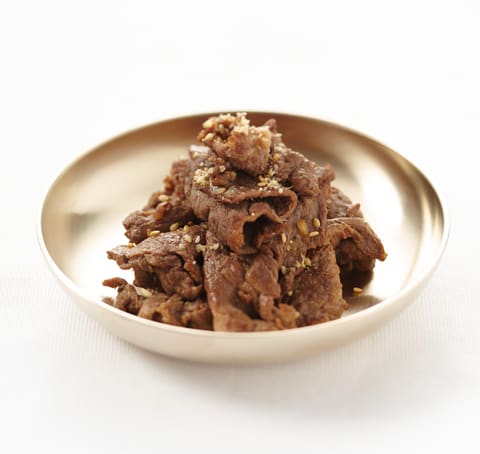
Photo: 국립국어원 · CC BY-SA 2.0 kr

Why Halal checks matter here
Many bulgogi marinades add mirin, soju or rice wine, pork bulgogi exists, and Korean table grills often cook pork belly on the same plate.
Bulgogi means fire meat: thin slices of beef soaked in a sweet soy marinade and seared fast over high heat. It is one of the first Korean dishes most people try, and one of the easiest to cook at home in a heavy frying pan.
Three things can make a bowl of bulgogi a problem. Many marinades add mirin, soju or rice wine. Pork bulgogi exists, especially the spicy version. And in Korean barbecue restaurants the same grill often cooks pork belly. At home only the first needs a swap. Grated Asian pear gives the sweetness and tenderises the meat that rice wine is added for, and a teaspoon of rice vinegar gives the lift. Read the soy sauce label too: naturally brewed soy sauce is generally accepted, but some bottles add alcohol.
The beef is Halal beef, part-frozen so it slices thin. Ribeye has the fat to stay juicy; sirloin works too.
Cook it in small batches in a very hot pan so it browns rather than stews, and serve with rice and lettuce leaves for wrapping. The bulgogi page covers what to ask at a Korean restaurant.
Halal-critical ingredients
- Mirin, soju and rice wine Many bulgogi marinades add mirin or soju; both are alcoholic drinks or seasonings, not flavourings used in trace amounts. Leave them out; grated pear, a little sugar and rice vinegar replace them. See Sake.
- Soy sauce, gochujang and ssamjang Naturally brewed soy sauce is generally accepted, but some bottles and some chilli pastes list added alcohol or rice wine. Read the bottle and the tub for alcohol, jujeong or rice wine. See Soy sauce.
- Beef and the grill Pork bulgogi exists, and Korean barbecue restaurants often cook pork belly on the same grill. Halal beef at home; at a restaurant ask what else goes on the grill. See Bulgogi.
Safe substitutes
- Mirin or rice wine → Grated Asian pear plus 1 tsp rice vinegar and a little honey
- Soju in the marinade → Nothing; it is not needed for flavour
- Gochujang with added alcohol → A gochujang with no alcohol on the label, or chilli flakes (gochugaru) with a little honey
Allergens
soy, sesame, gluten (most soy sauce)
Ingredients
Beef
- 600 g (1.3 lb) Halal beef ribeye or sirloin, partly frozen and sliced 3 mm thin
Marinade
- 75 ml (5 tbsp) soy sauce with no added alcohol
- 120 g (½ pear) Asian pear (or a ripe Bosc pear), grated
- 60 g (½ small) onion, grated
- 20 g (4 cloves) garlic, crushed
- 5 g (1 tsp) ginger, grated
- 25 g (2 tbsp) brown sugar
- 15 ml (1 tbsp) honey
- 15 ml (1 tbsp) toasted sesame oil
- 5 ml (1 tsp) rice vinegar
- 1 g (½ tsp) black pepper, ground
To cook and serve
- 15 ml (1 tbsp) neutral oil
- 4 spring onions, cut in 4 cm lengths
- 5 g (2 tsp) toasted sesame seeds
- 600 g (4 cups) short-grain rice, cooked
- 1 (1 head) lettuce leaves, for wrapping
Nutrition per serving
Estimated for 1 of 4 plates with rice.
| Calories | 760 kcal |
|---|---|
| Fat | 41 g |
| of which saturates | 14 g |
| Carbohydrate | 64 g |
| Protein | 33 g |
| Sodium | 1210 mg |
Calculated from the metric quantities in the ingredient list, divided by 4, using USDA FoodData Central values for each raw ingredient. Cooking losses aren't modelled and brands differ, so these are estimates, not a lab analysis.
Sugars not shown: USDA gives no figure for one of the main ingredients.
Fibre not shown: USDA gives no figure for one of the main ingredients.
Where the list offers a choice, the first option is counted.
Rice vinegar is counted as USDA distilled vinegar; USDA has no rice-vinegar entry.
How each ingredient was counted
| Ingredient | USDA food | Counted |
|---|---|---|
| Halal beef ribeye or sirloin | Beef, rib, eye, small end (ribs 10-12), separable lean and fat, trimmed to 0" fat, choice, raw | 600 g |
| soy sauce with no added alcohol | Soy sauce made from soy and wheat (shoyu) | 81.2 g |
| Asian pear | Pears, asian, raw | 120 g |
| onion | Onions, raw | 60 g |
| garlic | Garlic, raw | 20 g |
| ginger | Ginger root, raw | 5 g |
| brown sugar | Sugars, brown | 25 g |
| honey | Honey | 21.5 g |
| toasted sesame oil | Oil, sesame, salad or cooking | 13.8 g |
| rice vinegar | Vinegar, distilled | 5 g |
| black pepper | Spices, pepper, black | 1 g |
| neutral oil | Oil, canola | 14.2 g |
| spring onions | Onions, spring or scallions (includes tops and bulb), raw | 60 g |
| toasted sesame seeds | Seeds, sesame seeds, whole, roasted and toasted | 5 g |
| short-grain rice | Rice, white, short-grain, enriched, cooked | 600 g |
| lettuce leaves | Lettuce, butterhead (includes boston and bibb types), raw | 163 g |
Method
- Slice the beef thin. Freeze the beef for 30–40 minutes until firm, then slice it across the grain as thin as you can, about 3 mm. Thin slices are what let bulgogi cook in a couple of minutes and stay tender. Some Korean and Asian grocers sell ready-sliced bulgogi beef; buy it only with a Halal certificate.
- Mix the marinade without alcohol. Stir together the soy sauce, grated pear, onion, garlic, ginger, sugar, honey, sesame oil, rice vinegar and pepper. Many recipes add mirin or rice wine for sweetness and to soften the meat; the grated pear already does both, and the teaspoon of rice vinegar gives the brightness. Check the soy sauce label for added alcohol.
- Marinate. Toss the beef in the marinade until every slice is coated. Cover and chill for at least 1 hour and up to 12. The enzymes in the pear tenderise the beef; much longer than a day and the texture turns soft.
- Sear fast and hot. Heat a large cast-iron pan or grill plate until smoking, add a little oil and cook the beef in two or three batches, spread out in one layer, for 1½–2 minutes per batch, turning once, until browned at the edges. Add the spring onions to the last batch. Crowding the pan steams the meat.
- Serve. Scatter with sesame seeds and serve with rice and lettuce leaves for wrapping. If you add gochujang or ssamjang, read the tub: some list alcohol (jujeong) as a preservative.
How this recipe was researched
Method specified editorially from Korean bulgogi technique (thinly sliced beef marinated in soy sauce, sugar, grated Asian pear, garlic and sesame oil, then seared fast on high heat) and this site's Bulgogi, Soy sauce and Sake pages. Timings follow published technique rather than a kitchen test.
Technique and ingredient sources
-
Bulgogi — Wikipedia
Retrieved:
Thinly sliced beef marinated in soy sauce, sugar, sesame oil, garlic and pear, then grilled or pan-seared.
-
Bulgogi analysis — isithalal.food
Retrieved:
Pork bulgogi, rice wine in marinades, and shared grills.
-
Soy sauce analysis — isithalal.food
Retrieved:
Brewing traces versus added alcohol on the label.