

Halal-conscious recipe
Haleem
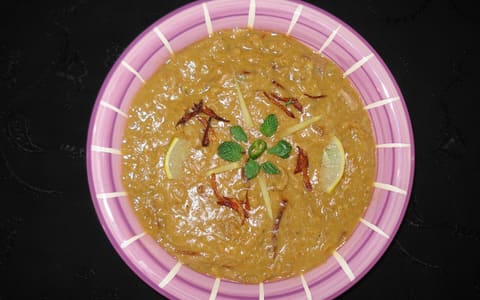
Pakistani haleem: Halal beef slow-cooked with wheat, barley and lentils until it pounds into a thick, spiced porridge, finished with fried onions.
Each method follows published technique for the dish, and every Halal substitution is checked against the ingredient pages we cite. Photographs come from our ingredient library rather than the finished dish.
Why Halal checks matter here
Haleem is mostly grain and lentils, but the meat that gives it body must be Halal, and shop haleem mixes and restaurant ghee still need a look.
Haleem is a slow dish from a long tradition. It descends from harees, the pounded wheat and meat porridge of the Arab world, and in Pakistan it is cooked in huge pots for Muharram, for Ramadan iftar and for weekend family meals. Wheat, barley and four kinds of lentils are cooked until they collapse, beef or mutton is cooked separately until it shreds, and the two are beaten together until the haleem pulls into long, stretchy strands.
Most of the pot is grain and lentils, but the meat is what the Halal question rests on. Use beef or mutton from a Halal butcher. After that, the checks are small: read any boxed haleem mix, fry your own onions in butter ghee or oil, and leave stock cubes out, since the bones give the body.
It takes a day with an overnight soak, but little of that is active. The long beating at the end is the part that cannot be skipped. A stick blender gets the grains most of the way; a wooden spoon or a traditional wooden ghotna does the rest.
The toppings make the bowl: crisp fried onions with some of their ghee, raw ginger, green chilli, mint, coriander and lemon. Haleem keeps for three days in the fridge and freezes well.
Halal-critical ingredients
- Beef or mutton Meat gives haleem its body; outside Pakistan, boneless beef or mutton is often not Halal-slaughtered unless the butcher says so. Buy from a Halal butcher. See Beef and Mutton.
- Shop haleem mix Boxed haleem mixes are usually grains, lentils and spices, but some add flavour enhancers or a meat-stock seasoning. Read the box, or use the dry grains and spices in this recipe.
- Ghee for frying the onions Fried-onion toppings bought ready-made, and restaurant ghee, can use blended fats of unstated origin. Fry the onions yourself in butter ghee or oil. See Ghee.
Safe substitutes
- Uncertified beef → Halal beef, Halal mutton, or Halal chicken thigh (1 hour)
- Shop fried onions → Onions fried at home in butter ghee or sunflower oil
- Beef stock cube → Halal beef bones in the pot
Allergens
gluten (wheat, barley), milk (ghee)
Ingredients
Grains and lentils (soak overnight)
- 150 g (¾ cup) cracked or whole wheat (dalia / gandum)
- 50 g (¼ cup) pearl barley (jau)
- 60 g (⅓ cup) split chickpeas (chana dal)
- 40 g (¼ cup) split red lentils (masoor dal)
- 40 g (¼ cup) split mung beans (moong dal)
- 30 g (3 tbsp) split black gram (urad dal)
- 2 g (½ tsp) ground turmeric
- 2 litres (8½ cups) water for the grains
Meat
- 750 g (1.6 lb) Halal boneless beef (shin or chuck), or Halal mutton
- 300 g (10 oz) Halal beef bones (optional, for body)
- 80 ml (⅓ cup) butter ghee or oil
- 40 g (2½ tbsp) ginger-garlic paste
- 6 g (2 tsp) red chilli powder
- 6 g (1 tbsp) ground coriander
- 2 g (½ tsp) ground turmeric
- 14 g (2¼ tsp) fine salt
- 1.2 litres (5 cups) water for the meat
- 4 g (2 tsp) garam masala
To finish
- 300 g (2 large) onions, thinly sliced and fried crisp in ghee or oil
- 20 g (1½ in piece) ginger, cut into thin matchsticks
- 4 green chillies, sliced
- 20 g (½ cup) fresh mint and coriander, chopped
- 2 lemon wedges
- 3 g (1 tsp) chaat masala (optional)
Method
- Soak and cook the grains. Soak the wheat, barley and all four lentils together overnight. Drain, cover with the 2 litres of fresh water, add the turmeric and simmer, partly covered, for 1½–2 hours, stirring more often as it thickens, until everything is very soft and falling apart. Top up with hot water if it catches.
- Cook the meat. While the grains cook, heat the ghee in a heavy pot and fry the beef and bones with the ginger-garlic paste for 8 minutes. Add the chilli, coriander, turmeric and salt and fry until the oil separates. Add the water, cover and simmer on low heat for 2½–3 hours, until the meat shreds with a spoon. Remove the bones, add the garam masala and shred the meat with two forks.
- Pound together. Blend the grains briefly with a stick blender until thick and mostly smooth. Stir in the meat and all its liquid. Over low heat, beat the pot with a wooden spoon or a traditional ghotna for 20–30 minutes, until the meat threads through the grain and the haleem pulls into long, stretchy strands. That stringiness is the sign it is done.
- Adjust and rest. Haleem should be thick but spoonable; add hot water if it is stiff, and check the salt. Leave it on the lowest heat, covered, for 15 minutes so the flavours settle.
- Serve. Ladle into bowls and top each with fried onions and a spoon of their ghee, ginger matchsticks, green chilli, mint, coriander and a squeeze of lemon. Chaat masala is optional. Serve with naan.
How this recipe was researched
Method specified editorially from Pakistani and Hyderabadi haleem technique (soaked wheat, barley and mixed lentils cooked to a mash, boneless beef or mutton cooked separately with spice until it shreds, both pounded together for a long time and finished with fried onions) and this site's Beef, Mutton and Ghee pages. Timings follow published technique rather than a kitchen test.
Technique and ingredient sources
-
Haleem — Wikipedia
Retrieved:
Wheat, barley, lentils and meat slow-cooked and pounded; its links to the Arabic harees.
-
Beef analysis — isithalal.food
Retrieved:
Slaughter and certification for beef bought outside Muslim-majority countries.
-
Mutton analysis — isithalal.food
Retrieved:
Mutton, goat and lamb labelling and slaughter.