
Is E171 (Titanium dioxide) Halal?
Yes — this one is Halal.
Titanium dioxide (E171, INS 171) is a mineral pigment.
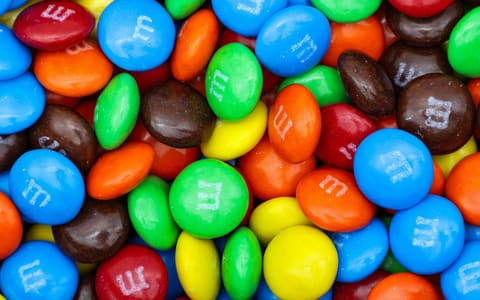
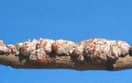
Photo: Chris Woodrich · CC BY-SA 4.0
Additive identity
Possible source pathways
The finished molecule can be identical across feedstocks. The Halal ruling follows the pathway, not the code alone.
E171 Possible source pathways
- mineral Halal Typical Mineral salt or inorganic identity. Not meat, not wine, not an insect colour.
What decides the answer
-
Titanium dioxide / E171 as a mineral pigment
Halal -
Banned in EU food since 2022 — legality is not the Halal ruling
-
Finished candy: still check gelatin, shellac, carmine, flavours
Where you'll find it
- Opacity in confectionery coatings and chewing gum (where still authorised)
- Tablet coatings (often non-food rules)
Why this ruling
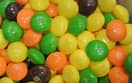
Titanium dioxide – E171, INS 171, TiO₂ – is a white mineral pigment. In food it makes things bright white or opaque: the white base under the colours of sugar-shelled sweets, the white of some icings and chewing gum, and the chalky coat on some tablets. As a mineral it has no animal or alcohol source, so it is Halal.[4][5]
Banned in the EU, still used elsewhere
In 2021 EFSA concluded that E171 could no longer be considered safe as a food additive, because a concern about damage to genetic material could not be ruled out.[2] The EU then removed it from the list of permitted food additives, with the ban applying from 2022.[3] Before that it was listed like any other colour.[1]
Other countries, including the United States, still allow it, so imported sweets, cake decorations and chewing gum can still list it.
Safety is not the Halal question
A ban on safety grounds and a Halal ruling answer different questions:
- E171 is not Haram because the EU banned it.
- A sweet that contains it is not Halal because of it either.
Whether to avoid it for health reasons is a separate, personal decision.
What else is on the same coating
Where E171 is used, the sweet's other ingredients usually decide the answer:
- Shellac (E904, "confectioner's glaze") – see shellac.
- Carmine (E120), the red colour from insects – see carmine.
- Gelatin in chewy centres – see gelatin.
For worked examples, see Skittles and M&M's.
What replaced it in Europe
EU recipes now use other white or opacifying ingredients, such as calcium carbonate (E170), rice starch or simply clear coatings. They are mineral or plant ingredients too; see mineral colours (E170).
How to verify
- Match E171, INS 171, or titanium dioxide.
- Halal: yes, mineral.
- EU packs should not use it in food after the 2022 ban.
- Candy coatings may still use shellac or carmine—check those separately.
Quick checks
- Titanium dioxide (E171) is a mineral pigment: Halal.
- The EU banned it as a food additive in 2022 on safety grounds; that is not a Halal ruling.
- Sweet coatings that used it may also contain shellac or carmine; check those separately.
Frequently asked questions
Is titanium dioxide Halal?
Is E171 banned?
Where is titanium dioxide found?
What replaces E171 in the EU?
Scholarly view
The EU ban is toxicology, not fiqh. Do not tell readers E171 is haram because it is banned, or Halal-certified because a US candy still uses it.
Sources
Named Islamic, certifier, manufacturer, and regulatory sources used on this page. Inline markers like [1] jump here. Retrieval dates show when we last checked the live URL. Editorial methodology.
Regulatory / labelling
-
Regulation (EC) No 1333/2008 on food additives
European Union Retrieved
Union-list identity—not a Halal certificate.
-
EFSA — Titanium dioxide (E171) no longer considered safe as a food additive (2021)
European Food Safety Authority Retrieved
Safety opinion that led to the EU ban. Not a Halal ruling.
-
Commission Regulation (EU) 2022/63 — ban on E171
European Union Retrieved
Removes E171 from the Union list.
-
-
U.S. Food and Drug Administration Retrieved
US identity / labelling context—not a Halal ruling.
People also check
Related ingredients and products for this item.