
Are Malic, Fumaric and Similar Food Acids Halal?
Yes — this one is Halal.
Malic, fumaric, adipic, and succinic acids and their salts are Halal acidity regulators used in sweets and drinks.
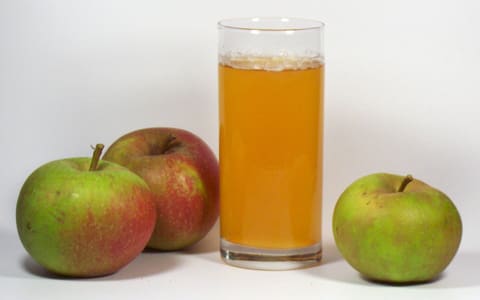
Photo: Metoc · CC BY-SA 3.0
Additive identity
Possible source pathways
The finished molecule can be identical across feedstocks. The Halal ruling follows the pathway, not the code alone.
E296 Possible source pathways
- synthetic Halal Typical Synthetic or mineral identity. No animal tissue in the finished additive.
What decides the answer
-
E296/E297/E350–E357/E363
Halal -
Citric acid is a sister page (E330)
Where you'll find it
- Sweets and powdered drinks
- Bakery acidulants
Why this ruling
Malic acid (E296), fumaric acid (E297), their salts (E350–E352), adipic acid and adipates (E355–E357) and succinic acid (E363) are food acids that give sweets and drinks their tartness. They are made synthetically or by fermentation, and all of them are Halal.[2][4]
Five acids and what each is for
- Malic acid (E296) – named after the Latin malum, apple, because it is the main acid in apples. Food-grade malic acid is made industrially rather than from fruit, and it gives the lingering sourness to sour sweets and fruit drinks.[1]
- Fumaric acid (E297) – a strong, dry acid used in the "sour sanding" on sweets, in jelly and dessert powders, and in some tortillas and baked goods.
- Malates (E350–E352) – the sodium, potassium and calcium salts of malic acid, used as buffers.
- Adipic acid (E355) and adipates (E356–E357) – they do not absorb moisture, which makes them ideal for powdered drink mixes and jelly crystals.
- Succinic acid (E363) – used in small amounts as an acidity regulator and flavour enhancer.
None of these is made from an animal, an insect or wine, and certifier E-number lists put the group with the uncontroversial acids.[5]
A name is not an ingredient list
"Malic acid" does not mean a drink is made from apple juice, and a sour sweet that lists E296 may still contain gelatin or a colour such as carmine. Likewise, adipic acid in a jelly powder is fine, but the jelly's gelling agent is the real question.
Related acids
Citric acid (E330) and acetic acid (E260) are sister pages. Acetic acid is the acid in vinegar, and vinegar has its own discussion; none of the acids on this page is vinegar.
How to verify
- Match E296, E297, E350–E357, E363, malic acid, or fumaric acid.
- Halal.
- Citric acid is on E330.
Quick checks
- Malic, fumaric, adipic and succinic acids and their salts are Halal in any product.
- On sour sweets the acid coating is fine; the gummy underneath may be gelatin.
- E353 and E354 are tartaric-acid based and are covered on the E334 page.
Frequently asked questions
Is malic acid Halal?
Is fumaric acid Halal?
What is the sour powder on sour sweets?
Is succinic acid Halal?
Scholarly view
These acids are not a madhhab dispute. Apple-sounding 'malic' does not mean the drink is juice-only—read sugar and flavour too.
Sources
Named Islamic, certifier, manufacturer, and regulatory sources used on this page. Inline markers like [1] jump here. Retrieval dates show when we last checked the live URL. Editorial methodology.
Certifier / jurisdiction
Regulatory / labelling
-
U.S. eCFR Retrieved
U.S. identity / GRAS or colour-additive listing—not a Halal ruling.
-
Regulation (EC) No 1333/2008 on food additives
European Union Retrieved
Union-list identity—not a Halal certificate.
-
-
-
U.S. Food and Drug Administration Retrieved
US identity / labelling context—not a Halal ruling.
People also check
Related ingredients and products for this item.