
Additive identity
Possible source pathways
The finished molecule can be identical across feedstocks. The Halal ruling follows the pathway, not the code alone.
E626 Possible source pathways
- undisclosed Halal if verified Typical The EU specification identifies the compounds but does not disclose a product's feedstock or manufacturing route.
How to verify
- Match E626–E629, INS 626–629, guanylic acid, disodium guanylate, or GMP.
- Ask the manufacturer or a recognised certifier for the production source.
- Assess any disclosed animal input by species and slaughter.
Quick checks
- Disodium guanylate (E627) is usually made from yeast or by fermentation, but the code does not say how.
- A vegetarian, vegan or Halal mark settles the source.
- It usually sits beside MSG (E621) and inosinate (E631); check those and the flavourings too.
What decides the answer
-
Current Halal certificate or manufacturer-confirmed non-animal production
Halal -
Manufacturer-confirmed animal input
depends on species and slaughter -
Unspecified E626–E629 / disodium guanylate
Halal if verified
Why this ruling
Guanylates are savoury flavour enhancers. E626 is guanylic acid, and its salts are disodium guanylate (E627), dipotassium guanylate (E628) and calcium guanylate (E629). On US and many other labels you will see disodium guanylate, usually right after MSG.[1][2]
What it does
Like its partner, disodium inosinate (E631), guanylate tastes of little on its own but greatly strengthens the savoury taste of MSG (E621). The two are so often used together that they are sold pre-mixed as disodium 5′-ribonucleotides, E635; see E635. Guanylate occurs naturally in dried shiitake mushrooms, which is part of why they taste so deep.
Where the question is
The EU specification defines what the compound is, but not how a particular batch was made.[2] Guanylates can be produced by fermentation or from yeast, which raise no question, but the code alone does not tell you the route. Certifier lists put source-dependent enhancers in the doubtful group,[5] so:
- Manufacturer confirms non-animal production, or the product is Halal-certified → Halal.
- Manufacturer confirms an animal input → depends on the animal and its slaughter.
- Nothing stated → Halal if verified.
Where you will find it
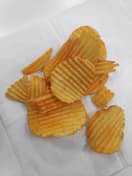
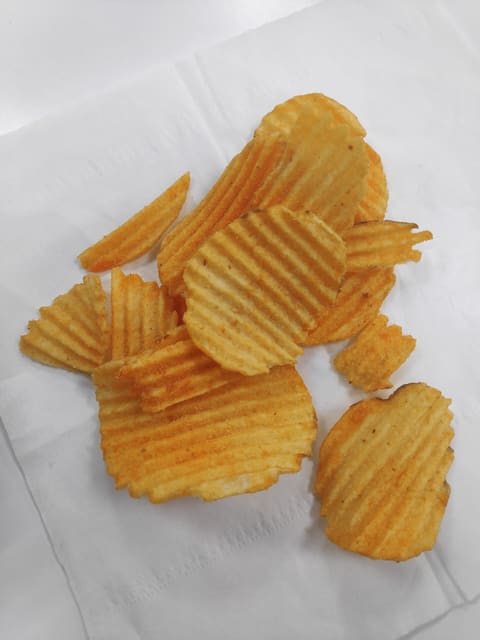
- flavoured crisps and savoury snacks,
- instant noodles and their seasoning sachets,
- stock cubes, gravy granules and packet soups,
- seasoning blends and ready meals.
Settling it
A vegetarian or vegan claim on the pack rules out animal sources, and a Halal certification settles it. Otherwise ask the brand; large snack and noodle makers usually state the source of their flavour enhancers. The rest of the seasoning still counts: meat flavours can contain real meat, and cheese flavours can contain rennet cheese.
Frequently asked questions
Is disodium guanylate Halal?
What is E626?
Where is E627 found?
Is E627 vegan?
Scholarly view
The regulatory specification identifies the compounds, not their manufacturing source. SANHA lists source-dependent E-numbers as mashbooh, so an undisclosed lot needs product-specific verification.
Sources
Named Islamic, certifier, manufacturer, and regulatory sources used on this page. Inline markers like [1] jump here. Retrieval dates show when we last checked the live URL. Editorial methodology.
Certifier / jurisdiction
-
SANHA Retrieved
Source-dependent additives listed mashbooh pending origin.
Regulatory / labelling
-
Regulation (EC) No 1333/2008 on food additives
European Union Retrieved
Union-list identity—not a Halal certificate.
-
Commission Regulation (EU) No 231/2012 — E626–E629 specifications
European Union Retrieved
Defines the chemical identity and purity criteria; it does not establish a product's feedstock or manufacturing route.
-
-
People also check
Related ingredients and products for this item.