
Additive identity
Possible source pathways
The finished molecule can be identical across feedstocks. The Halal ruling follows the pathway, not the code alone.
E620 Possible source pathways
- microbial Halal Typical Produced by fermentation of plant carbohydrates or as a defined microbial metabolite.
- plant Halal Typical The fermentation feedstock is plant.
What decides the answer
-
Standard fermented glutamic acid / MSG / E620–E625
Halal -
Still verify E627/E631/E635 on the same pack
-
Do not confuse MSG with hydrolysed animal protein or meat extracts listed separately
Why this ruling
MSG – monosodium glutamate, E621 – is the sodium salt of glutamic acid, and it is Halal. E620 is glutamic acid itself, and E622–E625 are its potassium, calcium, ammonium and magnesium salts.[1] US labels spell the name out; EU labels usually give the code.
Made by fermentation
Glutamate is the savoury "umami" compound found naturally in tomatoes, parmesan, mushrooms and seaweed. It was first isolated in 1908 by the Japanese chemist Kikunae Ikeda from kombu broth. Modern MSG is not extracted from anything animal: bacteria ferment a plant carbohydrate such as starch, sugar beet or cane molasses, and the glutamic acid they produce is crystallised as its sodium salt.[2] That is why contemporary Halal bodies treat food-grade MSG as Halal, and certifier E-number lists put it with the additives that need no source check.[5]
Certification still has a job here. Fermentation needs a nutrient medium, and in a well-known 2001 case in Indonesia a producer was found to have used a pork-derived enzyme in preparing that medium. The finished MSG contained no pork, but the process was rejected and changed. It is why large Muslim markets buy certified MSG, not a reason to doubt MSG as an ingredient.
Where you will find it
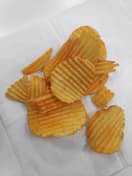
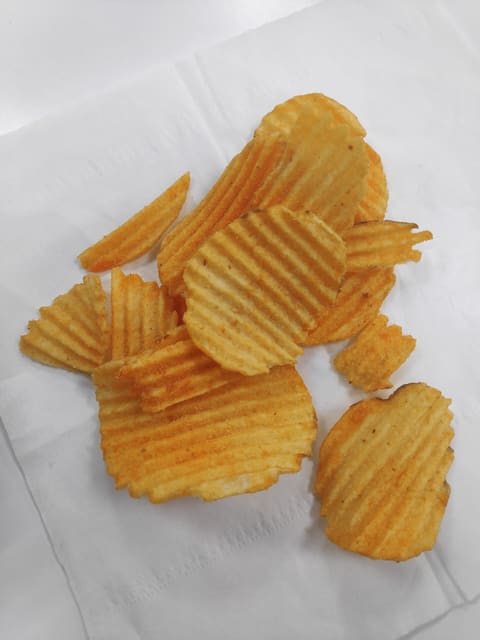
Stock cubes and gravy granules, crisps and flavoured snacks, instant noodles, seasoning blends, ready meals and restaurant cooking in many cuisines. Soy sauce and yeast extract contain glutamate naturally.
What to check on the same pack
- E627, E631 and E635 – disodium guanylate and inosinate, often paired with MSG to boost it. They can come from fermentation or from meat and fish, so they need their own check: see E627, E631 and E635.
- Hydrolysed animal protein and meat extracts – listed separately from MSG and dependent on the animal.
- The meat itself in a stock cube or ready meal.
How to verify
- Match MSG, glutamic acid, E620–E625, or INS 621.
- Treat ordinary glutamates as Halal.
- If the same seasoning lists E627, E631, or E635, verify those nucleotides separately.
Quick checks
- E621 = MSG = fermented glutamate → Halal.
- E620 and E622–E625 are the rest of the glutamate salts.
- Check nucleotide companions separately.
Frequently asked questions
What E number is MSG?
Is MSG Halal?
Is MSG the same as disodium inosinate?
What are E622–E625?
Is flavour enhancer 621 the same as E621?
Scholarly view
MSG is not a Scholarly difference case in the way carmine is. Contemporary Halal bodies treat fermented glutamate as Halal. Older rumours about pork-derived MSG do not match the EFSA/Codex identity of E621 as a fermentation product.
Sources
Named Islamic, certifier, manufacturer, and regulatory sources used on this page. Inline markers like [1] jump here. Retrieval dates show when we last checked the live URL. Editorial methodology.
Certifier / jurisdiction
Regulatory / labelling
-
Regulation (EC) No 1333/2008 on food additives
European Union Retrieved
Union-list identity—not a Halal certificate.
-
EFSA — Re-evaluation of glutamic acid (E620) and glutamates (E621–E625)
European Food Safety Authority Retrieved
Identity of MSG as a glutamate salt; production by fermentation.
-
-
People also check
Related ingredients and products for this item.