
Additive identity
Possible source pathways
The finished molecule can be identical across feedstocks. The Halal ruling follows the pathway, not the code alone.
E630 Possible source pathways
- microbial Halal Typical Yeast or bacterial fermentation of plant sugars is the usual modern route.
- fish Halal Fish-extract routes are Halal under mainstream fish rulings.
- animal Halal if verified Meat-extract routes follow species and slaughter. Pork is haram.
- undisclosed Halal if verified Typical Snack labels rarely name the feedstock.
How to verify
- Match inosinic acid, disodium inosinate, E630–E633, INS 631, or the bare code 631.
- Yeast/fermentation or Halal certification settles it.
- Compare guanylates (E626–E629) and mixed ribonucleotides (E634/E635).
Quick checks
- Disodium inosinate (E631) is usually made by fermentation, but it can come from meat or fish.
- A vegetarian, vegan or Halal mark settles it.
- It usually sits beside MSG (E621) and guanylate (E627); check the flavourings in the same list.
What decides the answer
-
Fermentation / yeast E630–E633, or Halal-certified seasoning
Halal -
Fish-extracted inosinate
Halal under mainstream fish rulings -
Meat-extracted from pork or non-zabiha animals
haram -
Unspecified disodium inosinate / E631 / INS 631
Halal if verified
Why this ruling
Disodium inosinate is the name printed on US crisp packets. The same additive is E631 in the EU, INS 631 in Codex, and sometimes just 631. E630 is the parent acid, inosinic acid, and E632 and E633 are its potassium and calcium salts. They are one family for Halal purposes.[1][4]
What it does
Inosinate is a flavour enhancer. On its own it tastes of little, but alongside MSG (E621) it multiplies the savoury, meaty taste known as umami. That is why it is used in tiny amounts and almost never alone. It occurs naturally in meat and fish: dried bonito flakes, the base of Japanese dashi, are rich in it.
Where it comes from
EFSA's review of the E620–E635 group describes two routes: fermentation, and extraction from materials rich in nucleic acids, such as yeast, fish or meat.[2] The route decides the ruling:
- Fermentation or yeast → Halal.
- Extracted from fish → Halal, as fish is.
- Extracted from meat → depends on the animal and its slaughter; pork is Haram.
- Not stated → Halal if verified.
A label almost never says which route was used. Certifier lists put unsourced E631 in the doubtful group for that reason.[5]
Where you will find it
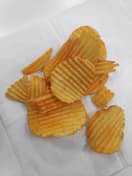
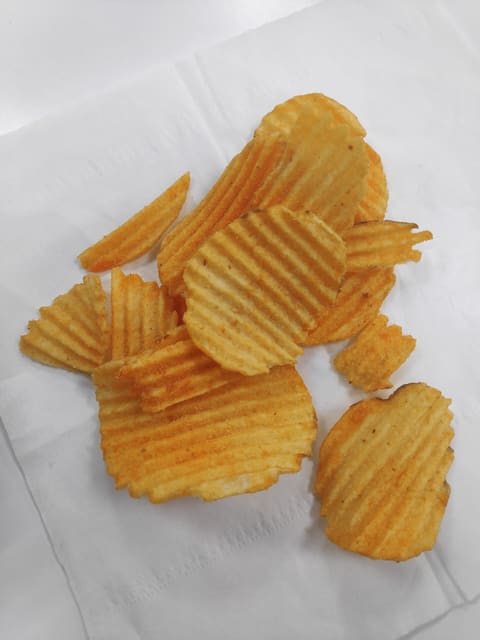
- flavoured crisps and corn snacks,
- instant noodle seasoning sachets,
- stock cubes, gravy granules and packet soups,
- seasoning blends for ready meals and savoury biscuits.
It usually sits next to disodium guanylate (E627). The two are often bought pre-mixed as disodium 5′-ribonucleotides, which is E635.
Settling it
- A vegetarian or vegan claim rules out meat and fish extraction, so the inosinate is Halal.
- A Halal certification on the snack or seasoning settles it.
- Without either, the brand's customer service can say whether their inosinate is fermented. Many large snack makers publish this for each flavour.
The rest of the seasoning still counts: meat-flavoured crisps can contain real meat powder, and some cheese flavours contain cheese made with animal rennet. For a worked example, see Lay's.
Frequently asked questions
Is disodium inosinate Halal?
Where is E631 found?
Is E631 vegan?
Is 631 on Australian labels the same?
Scholarly view
There is no classical madhhab text about inosinate salts. Contemporary certifier practice treats unspecified meat-or-fish nucleotide enhancers as mashbooh and accepts audited fermentation/yeast.
Sources
Named Islamic, certifier, manufacturer, and regulatory sources used on this page. Inline markers like [1] jump here. Retrieval dates show when we last checked the live URL. Editorial methodology.
Certifier / jurisdiction
-
SANHA Retrieved
Source-dependent additives listed mashbooh pending origin.
Regulatory / labelling
-
Regulation (EC) No 1333/2008 on food additives
European Union Retrieved
Union-list identity—not a Halal certificate.
-
EFSA — Re-evaluation of glutamates, guanylates, inosinates and ribonucleotides (E620–E635)
European Food Safety Authority Retrieved
Production by fermentation or extraction from yeast, fish, or meat.
-
-
People also check
Related ingredients and products for this item.