How to verify
- Ask whether the pot includes pork, bacon, or sausage.
- Only accept beef/Halal-meat versions with clear sourcing.
- Otherwise skip traditional restaurant feijoada.
Quick checks
- Ask what meats are in the pot: traditional feijoada uses several pork cuts.
- A beef-only or Halal-meat version must be stated explicitly.
- If the kitchen cannot say, treat it as pork.
What decides the answer
-
Documented Halal beef (or other Halal meat) feijoada
Halal -
Unverified restaurant pot
Halal if verified / treat as non-Halal -
Traditional pork feijoada
Haram
Why this ruling
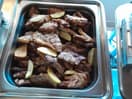
Feijoada is Brazil's national dish: black beans slow-cooked for hours with a heap of salted, smoked and fresh meats, served on Saturdays and at family gatherings with white rice, farofa (toasted cassava flour), sautéed collard greens and slices of orange.[2] In its traditional form it is built on pork, so it is not Halal. A Halal version is possible, which is why this page says "if verified" rather than a flat no.[1]
What goes into a traditional pot
| Ingredient | What it is | Halal? |
|---|---|---|
| Black beans, onion, garlic, bay | Plant | Yes |
| Pork ribs, loin, trotters, ears, tail | Pork | No |
| Linguiça, paio | Smoked pork sausages | No |
| Bacon, pork belly | Pork | No |
| Carne seca, charque | Salted, dried beef | Only from Halal slaughter |
The pork is the point of the classic dish.[3] Portugal's feijoada, made with white or red beans, uses pork and pork sausages too.
The sides
- Rice and orange slices are fine.
- Farofa is cassava flour toasted in butter or oil, but often with bacon or pork fat. Ask.
- Couve, collard greens fried with garlic, is sometimes cooked with bacon.
A Halal feijoada
Beans cooked with Halal beef (dried or fresh), Halal beef or chicken sausages and smoked beef give the same deep, smoky pot. Vegetarian feijoada, with smoked vegetables and tofu, is common in Brazilian cities. If you are offered one, ask exactly which meats went into the pot.
For Brazil's grilled-meat restaurants, see churrasco, and for the region, the Latin America guide.
Frequently asked questions
Is feijoada Halal?
Can feijoada be made Halal?
Is the Portuguese feijoada the same?
Are the sides Halal?
Sources
Named Islamic, certifier, manufacturer, and regulatory sources used on this page. Inline markers like [1] jump here. Retrieval dates show when we last checked the live URL. Editorial methodology.
Islamic / scriptural
Context / background
-
Wikipedia Retrieved
Culinary identity: Bean stew with beef or pork, cooked across the Portuguese-speaking world. Identity context, not a Halal certificate.
-