
Is Food Colouring Halal?
It depends on what the label says.
"Colour" on a label is a category, not a substance.
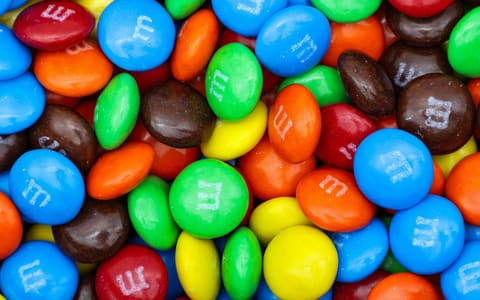
Photo: Chris Woodrich · CC BY-SA 4.0
How to verify
- Find the specific name or E number printed after the word Colour.
- Look that colour up — most are mineral, plant, or synthetic and unproblematic.
- Carmine, cochineal, or E120 is the one that divides scholars.
- On a non-EU pack with no specific colour named, ask the manufacturer.
Quick checks
- "Colour" is a category — read what is named after it.
- Carmine / cochineal / E120 is the one that divides scholars.
- Synthetic colours carry no animal origin; "natural" does not mean safe.
What decides the answer
-
Colour named as a mineral, plant, or synthetic dye
Halal -
Caramel colour (E150)
Halal (heated carbohydrate) -
Carmine, cochineal, or E120
scholarly difference, see that page -
"Colour" with a name or E number given
look it up, the answer is decidable -
"Colour" with nothing named on a non-EU pack
ask the manufacturer
Why this ruling
The word Colour on an ingredient list is a heading, not an ingredient. Under it sit substances with almost nothing in common: ground minerals, plant extracts, heated sugar, laboratory dyes — and one insect.
That range is why this page is rated Halal if verified while most individual colours are simply Halal. The rating describes the word, not the substance.
The label has to name it
This is the part that keeps the question answerable. EU rules require that additives in the listed categories are “designated by the name of that category, followed by their specific name or, if appropriate, E number” (Regulation (EU) No 1169/2011, Annex VII Part C, retrieved 25 August 2026).[1]
So a compliant pack never says only "Colour". It says Colour: E120, or Colour: curcumin. Unlike flavourings — where a whole system can hide behind one word — a colour is always identified. You are never guessing; you are looking something up.
What you will find when you look
| What is named | What it is | Answer |
|---|---|---|
| E100, curcumin | Turmeric extract | Halal — E100 |
| E150a–d | Heated carbohydrate | Halal — E150 |
| E160a, carotenes | Plant/synthetic pigment | Halal — E160a |
| E170 | Calcium carbonate, a mineral | Halal — E170 |
| E102, tartrazine | Synthetic azo dye | Halal — E102 |
| E120, carmine, cochineal | Extracted from insects | Scholarly difference — carmine |
One row in that table is different from the others, and it is the only one worth memorising.
Carmine is the exception that makes the rule
Carmine — also sold as cochineal or E120 — is extracted from the cochineal insect and gives the deep reds and pinks in sweets, drinks, yoghurts, and cake decorations. Scholars differ on insect-derived material, which is why this site rates it a scholarly difference rather than issuing a single verdict. The positions, and the rulings they rest on, are set out on its own page.
"Natural" points the wrong way here
It is worth being blunt about this, because the instinct is so common and so backwards:
- Synthetic colours are made in a laboratory from petrochemical or mineral feedstocks. No animal, no intoxicant.
- "Natural colour" is precisely the phrasing under which an insect-derived colour appears on a pack.
A shopper optimising for the word natural is moving toward the one colour that carries a disagreement, not away from it. Read the E number instead.
Where you'll find it
- Sweets, jellies, and iced products
- Soft drinks and cordials
- Yoghurts and desserts
- Sauces, condiments, and pickles
- Cake decorations and icing
Frequently asked questions
Is food colouring Halal?
Which food colour is the one to watch for?
Are artificial colours worse than natural ones?
Is caramel colour a problem?
My label just says "colour" with nothing after it — what now?
Scholarly view
This page is deliberately rated Halal if verified even though the great majority of food colours are unproblematic, because the rating describes the word on the label rather than any one substance. Mineral colours such as calcium carbonate, plant extracts such as curcumin and the carotenes, and synthetic azo dyes such as tartrazine involve neither animal tissue nor intoxicants.
Caramel colour is heated carbohydrate. Against that sits carmine (E120), extracted from the cochineal insect, on which scholars genuinely differ; this site rates it a scholarly difference rather than issuing a single verdict, and the positions and their sources are set out on the carmine page rather than restated here.
Since the category contains both kinds, a shopper cannot reason from the word alone; but nor is the shopper stuck, because the specific colour must be named.
Sources
Named Islamic, certifier, manufacturer, and regulatory sources used on this page. Inline markers like [1] jump here. Retrieval dates show when we last checked the live URL. Editorial methodology.
Regulatory / labelling
-
Regulation (EU) No 1169/2011 — Annex VII, Part C
European Parliament and Council Retrieved
Requires additives in the listed categories to be designated by the category name followed by their specific name or, if appropriate, E number — so a colour must be identified, not merely categorised. Labelling law, not a Halal ruling.
-
European Commission Retrieved
Only additives whose proposed uses were assessed as safe appear on the EU list, following review by the Scientific Committee on Food and/or EFSA. Establishes the authorisation framework colours sit within.
People also check
Related ingredients and products for this item.
Halal-conscious recipes
A substitution-led recipe that uses this analysis.