
Are Swedish Meatballs Halal?
It depends on what the label says.
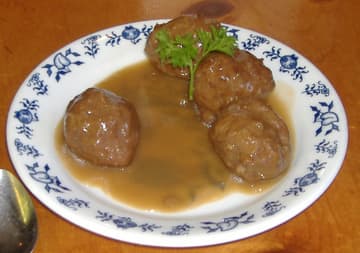
Swedish köttbullar are small fried meatballs, traditionally a beef-and-pork mince with milk-soaked crumbs, served with cream gravy, potatoes, and lingonberry.
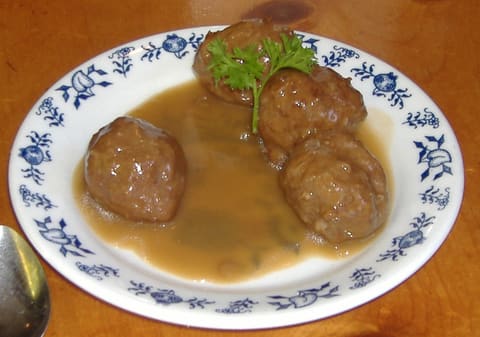
Photo: Kim Scarborough · CC BY-SA 2.5
How to verify
- Ask if the mince includes pork.
- For beef- or veal-only balls, require Halal slaughter.
- Ask what the brown gravy is (meat stock, cream, soy).
- Lingonberry jam is plant—fine.
- Prefer a Muslim kitchen or a labelled Halal mix; do not assume a cafeteria plate is beef-only.
Quick checks
- Traditional köttbullar mix beef and pork: ask what the mince is.
- For beef-only meatballs, ask for Halal slaughter.
- Ask what stock the cream gravy is made with; lingonberry jam is fine.
What decides the answer
-
Halal-slaughtered beef (or other Halal meat), pork-free gravy
Halal -
Unverified cafeteria or restaurant plate
Halal if verified -
Pork in the mince or pork stock gravy
Haram
Why this ruling
Köttbullar, Swedish meatballs, are small, round, pan-fried meatballs made from minced meat, onion and breadcrumbs soaked in milk or cream, served with a brown cream gravy, boiled or mashed potatoes, lingonberry jam and quick-pickled cucumber. The standard Swedish recipe uses a mix of beef and pork.[1]
What is on the plate
| Part | Usually | Halal? |
|---|---|---|
| Meatballs | Beef and pork mince, egg, breadcrumbs, milk, onion | No, if pork is in the mix |
| Cream gravy | Meat stock, cream, flour, soy sauce for colour | Follows the stock |
| Potatoes | Boiled or mashed with butter | Yes |
| Lingonberry jam | Berries and sugar | Yes |
| Pickled cucumber | Cucumber, vinegar, sugar | Yes |
Pork in the mince makes the meatballs Haram,[2] and even beef-only meatballs need Halal slaughter. The gravy is the hidden part: it is made with meat stock, so it follows whatever stock was used. Meatballs are shaped and fried, not stuffed into casings.
In restaurants and cafés
Swedish restaurants and home kitchens mostly use the beef-and-pork mix. The most famous place to eat köttbullar outside Sweden is the furniture-store café, whose standard meatballs also contain beef and pork; its chicken and plant-based balls do not, and some stores in Muslim-majority countries serve Halal versions. Ask locally.
A Halal plate
Swedish meatballs are simple to make with Halal beef or lamb mince, and the cream gravy works with Halal beef stock or vegetable stock. Plant-based meatballs are now widely sold in Scandinavian supermarkets and avoid the meat question, if the gravy is meat-free too.
For how minced meat products are judged in general, see beef, and for Scandinavian food, the Scandinavia guide.
Where you'll find it
- Swedish home husmanskost
- Cafeteria plates with cream sauce and lingonberry
- Halal beef köttbullar in Muslim kitchens
Frequently asked questions
Are Swedish meatballs Halal?
Is lingonberry Halal?
Do they use sausage casings?
Are cafeteria-style (IKEA-style) meatballs different?
Scholarly view
Pork mince is Haram. Beef and veal need Islamic slaughter. Lingonberry does not certify the meat. These balls are pan-fried, not typically stuffed into casings—the gravy is the likelier hidden stock.
Sources
Named Islamic, certifier, manufacturer, and regulatory sources used on this page. Inline markers like [1] jump here. Retrieval dates show when we last checked the live URL. Editorial methodology.
Islamic / scriptural
-
Qur'an Retrieved
Swine prohibition for pork in the mince or stock; slaughter rule for beef.
Context / background
-
Swedish Institute (sweden.se) Retrieved
Official Sweden cultural portal: köttbullar from a minced beef/pork mixture with milk-soaked breadcrumbs, brown cream gravy (stock and cream), potatoes, and lingonberry. Identity context, not a Halal certificate.
Halal-conscious recipes
A substitution-led recipe that uses this analysis.
Browse this topic
Open the parent category hub for more foods in the same group.