Are Propylene Glycol, PEG and Similar Carriers Halal?
Yes — this one is Halal.
E1520 propylene glycol and E1521 polyethylene glycol are synthetic polyols used as carriers.
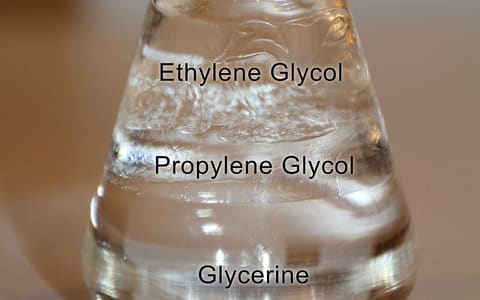
Photo: LHcheM · CC BY-SA 3.0
Additive identity
Possible source pathways
The finished molecule can be identical across feedstocks. The Halal ruling follows the pathway, not the code alone.
E1520 Possible source pathways
- synthetic Halal Typical Synthetic or mineral identity. No animal tissue in the finished additive.
What decides the answer
-
E1520/E1521/E1505/E1519/E459
Halal carriers -
Glycerin E422 remains source-dependent
-
Ethanol flavour extracts are a different page
Where you'll find it
- Flavour and vitamin carriers
- Supplement coatings
Why this ruling
The additives on this page are carriers and solvents: liquids and powders that dissolve flavourings and colours, keep foods moist, or hold aromas until they are released. Several have "glycol" or "alcohol" in their chemical names, which worries shoppers. None of them is an intoxicant, none is made from wine, and all are Halal.[3][5] Certifier lists put them with the additives that need no check.[6]
What is in the group
| Code | Name | What it does |
|---|---|---|
| E1520 | Propylene glycol (propane-1,2-diol) | Solvent for flavourings and colours; humectant |
| E1521 | Polyethylene glycol (PEG) | Tablet coatings and supplements |
| E1505 | Triethyl citrate | Flavour carrier; whipping aid for dried egg white |
| E1519 | Benzyl alcohol | Flavour carrier in small amounts |
| E459 | Beta-cyclodextrin | A ring of starch sugars that traps flavours and aromas |
EFSA has re-evaluated propylene glycol,[1] and US rules list it as a generally recognised food substance.[2]
"Alcohol" in a chemical name
Chemists call a whole family of compounds "alcohols" and "glycols". Only one of them, ethanol, is the intoxicant in drinks. Propylene glycol is a synthetic compound with no intoxicating effect, and benzyl alcohol is an aromatic compound used in tiny amounts. Neither is khamr.
Why propylene glycol matters for flavourings
Flavourings need a liquid to dissolve in. The two common ones are ethanol and propylene glycol. A flavouring carried in propylene glycol, or in glycerol, avoids the alcohol question entirely. See natural flavours and vanilla extract.
Not the same as glycerin
Glycerin (E422) does a similar job but can be made from animal fat, so it has its own source question; see glycerin. The acetylated glycerol carriers are on E1518.
How to verify
- Match E1520, E1521, E1505, E1519, E459, propylene glycol, or PEG.
- Halal.
- Glycerin is E422 with a fat-source question.
Quick checks
- Propylene glycol (E1520) and polyethylene glycol (E1521) are synthetic carriers, not ethanol.
- Triethyl citrate and beta-cyclodextrin are Halal too.
- Glycerol (E422) and triacetin (E1518) are different and have a source question.
Frequently asked questions
Is propylene glycol Halal?
Is PEG Halal?
Is benzyl alcohol in flavourings Halal?
Is propylene glycol the same as glycerin?
Scholarly view
Propylene glycol is not wine. Benzyl alcohol is not drinking alcohol. A chemical name that includes 'alcohol' is not automatically khamr.
Sources
Named Islamic, certifier, manufacturer, and regulatory sources used on this page. Inline markers like [1] jump here. Retrieval dates show when we last checked the live URL. Editorial methodology.
Certifier / jurisdiction
Regulatory / labelling
-
EFSA — Re-evaluation of propane-1,2-diol (E1520)
European Food Safety Authority Retrieved
Substance identity—not a Halal certificate for a finished pack.
-
21 CFR § 184.1666 propylene glycol
U.S. eCFR Retrieved
U.S. identity / GRAS or colour-additive listing—not a Halal ruling.
-
Regulation (EC) No 1333/2008 on food additives
European Union Retrieved
Union-list identity—not a Halal certificate.
-
-
-
U.S. Food and Drug Administration Retrieved
US identity / labelling context—not a Halal ruling.
People also check
Related ingredients and products for this item.