Additive identity
Possible source pathways
The finished molecule can be identical across feedstocks. The Halal ruling follows the pathway, not the code alone.
E1517 Possible source pathways
- plant Halal Typical Usual food grade is vegetable glycerol or plant oil.
- animal Halal if verified Glycerol or fatty acids can be split from tallow. Pork or non-zabiha fat is haram.
- undisclosed Halal if verified Typical Labels rarely name the glycerol. Treat as mashbooh until a plant, vegan, or Halal claim settles it.
How to verify
- Match E1517, E1518, triacetin, or diacetin.
- Prefer vegetable-glycerol or Halal-certified flavour houses.
- See glycerin for the parent question.
Quick checks
- Triacetin and diacetin are glycerol plus acetic acid: the glycerol source is the question.
- They are not ethanol.
- An unmarked label is Halal if verified; a vegan or Halal mark settles it.
What decides the answer
-
Vegetable-glycerol triacetin / Halal-certified flavour
Halal -
Unspecified E1518
Halal if verified -
Animal glycerol: Halal if verified or haram if pork
Why this ruling
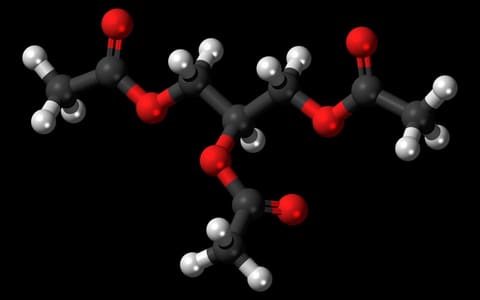
Triacetin (E1518) and diacetin (E1517) are made by joining glycerol to acetic acid, the acid in vinegar. They are clear, slightly oily liquids used as carriers for flavourings and as humectants that keep foods soft.[2][4] US rules list triacetin as a generally recognised food substance.[1]
Where the question is
The acetic acid part raises no question. The glycerol backbone is the same substance as glycerin, and it can be made from vegetable oil, made synthetically, or split from animal fat. So these follow glycerin (E422):
- From vegetable or synthetic glycerol → Halal.
- From the fat of a Halal-slaughtered animal → Halal.
- From pork fat or non-Halal slaughter → not Halal.
- Not stated → Halal if verified.
Where you will find them
- Flavourings, as the liquid the flavour is dissolved in, alongside propylene glycol and ethanol.
- Chewing gum, where triacetin keeps the gum base soft.
- Baked goods and sweets, in small amounts to keep them moist.
Because flavourings rarely list their carrier, triacetin is often invisible on a label. A Halal certification on the product covers the flavourings and their carriers.
Related carriers
The other common carriers, propylene glycol, triethyl citrate and benzyl alcohol, have no source question; see E1520. For the glycerol-based emulsifiers that share the same question, see E472.
Frequently asked questions
Is triacetin Halal?
Is triacetin alcohol?
Where is triacetin used?
Is diacetin different?
Scholarly view
Same ruling family as glycerin: plant glycerol is Halal; undisclosed glycerol is mashbooh.
Sources
Named Islamic, certifier, manufacturer, and regulatory sources used on this page. Inline markers like [1] jump here. Retrieval dates show when we last checked the live URL. Editorial methodology.
Certifier / jurisdiction
Regulatory / labelling
-
U.S. eCFR Retrieved
U.S. identity / GRAS or colour-additive listing—not a Halal ruling.
-
Regulation (EC) No 1333/2008 on food additives
European Union Retrieved
Union-list identity—not a Halal certificate.
-
-
-
U.S. Food and Drug Administration Retrieved
US identity / labelling context—not a Halal ruling.
People also check
Related ingredients and products for this item.