
Is E482 (Calcium stearoyl-2-lactylate) Halal?
It depends on what the label says.
Calcium stearoyl-2-lactylate (E482, CSL) is the calcium salt of the same stearoyl lactylate as E481.
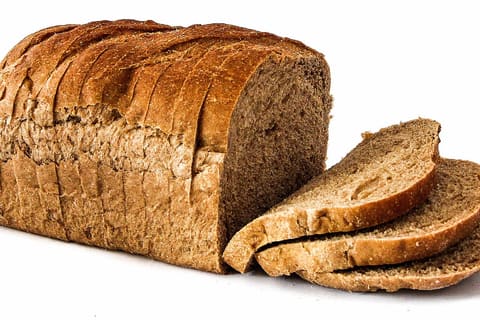
Photo: FranHogan · CC BY-SA 4.0
Additive identity
Possible source pathways
The finished molecule can be identical across feedstocks. The Halal ruling follows the pathway, not the code alone.
E482 Possible source pathways
- plant Halal Typical Stearic acid from palm or soy plus fermented lactic acid, as the calcium salt.
- animal Halal if verified Tallow stearic acid is possible. Pork or non-zabiha fat is haram.
- undisclosed Halal if verified Typical Less common on US labels than SSL (E481), but the same gap applies.
How to verify
- Match calcium stearoyl lactylate, CSL, E482, or INS 482.
- Use the same verification as sodium stearoyl lactylate (E481).
- Vegetarian or Halal bakery marks settle both salts.
- Open the E481 vs E482 compare view for a side-by-side.
Quick checks
- E482 (CSL) and E481 (SSL) share the same stearic-acid question.
- Plant stearate is Halal; stearate from animal fat needs Halal slaughter.
- Supermarket bread and buns often use it; a Halal or vegetarian mark settles it.
What decides the answer
-
Plant-stearate CSL, or vegetarian/vegan bakery claim
Halal -
Halal-certified bread
Halal -
Pork or non-zabiha stearate
haram -
Unspecified E482 / CSL
Halal if verified
Why this ruling
Calcium stearoyl-2-lactylate – CSL, E482, INS 482 – is the calcium version of sodium stearoyl-2-lactylate (E481). Both are made by joining stearic acid, a fatty acid, to lactic acid; E482 is then neutralised with calcium instead of sodium. EFSA assessed the pair together, and records that the stearic acid may be vegetable or animal.[1][2]
The ruling
The metal makes no difference. The ruling follows the stearic acid, exactly as for E481:
- Stearic acid from vegetable oil → Halal.
- From the fat of a Halal-slaughtered animal → Halal.
- From pork or non-Halal slaughter → not Halal.
- Not stated → Halal if verified.
Certifier lists put unsourced CSL in the doubtful group.[5] The lactic acid part is made by fermentation and raises no question.
Where you will find it
CSL is a dough conditioner. It strengthens dough for machine handling and keeps bread soft for longer, so it appears in:
- sliced bread, rolls and burger buns, especially in North America,
- sweet doughs and bakery mixes,
- some whipped toppings, puddings and coffee whiteners.
On US labels it is written out as calcium stearoyl lactylate; EU labels print E482. It often sits next to other dough improvers such as DATEM (E472e) and mono- and diglycerides (E471).
Settling it
A vegan or vegetarian claim, or a Halal certification on the bread, settles E482 together with the other emulsifiers. Otherwise, the bakery or brand can confirm whether the stearate is plant-based. For stearic acid itself, see E570, and for bread in general, bread.
Frequently asked questions
Is E482 Halal?
Why would a bakery use CSL instead of SSL?
Where is E482 used?
How do I check E482?
Scholarly view
EFSA re-evaluated E481 and E482 as one pair. There is no separate madhhab opinion for the calcium salt. Do not treat CSL as 'more Halal' or 'more haram' than SSL.
Sources
Named Islamic, certifier, manufacturer, and regulatory sources used on this page. Inline markers like [1] jump here. Retrieval dates show when we last checked the live URL. Editorial methodology.
Certifier / jurisdiction
-
SANHA Retrieved
Source-dependent emulsifiers treated as mashbooh pending origin.
Regulatory / labelling
-
Regulation (EC) No 1333/2008 on food additives
European Union Retrieved
Union-list identity for E482.
-
EFSA — Re-evaluation of sodium stearoyl-2-lactylate (E481) and calcium stearoyl-2-lactylate (E482)
European Food Safety Authority Retrieved
Joint identity: stearic acid may be vegetable or animal.
-
-
People also check
Related ingredients and products for this item.