
How to verify
- Start with plain salted when you want clarity.
- Confirm the frying oil is vegetable, not animal fat.
- For flavoured bags, read dairy enzymes, cheese powders, and flavourings.
- Do not generalize from one artisan brand to another.
- Prefer Halal-certified kettle crisps when sold in your market.
What decides the answer
-
Plain kettle chips with vegetable oil
Halal -
Cheese and complex seasonings
label-dependent -
Animal fat frying oil
avoid -
Artisan brands vary—check each bag
Why this ruling
Kettle chips (kettle-cooked crisps) are batch-fried potato slices cooked in a vat rather than a continuous fryer. The process yields a thicker, crunchier chip with uneven colour. For Halal purposes the method is almost irrelevant: oil and seasoning decide whether the bag is clear.
Base chip vs flavoured dust
| Style | Typical Halal read |
|---|---|
| Plain / sea salt, vegetable oil | Typically Halal |
| Salt & vinegar (no dairy) | Often Halal—confirm list |
| Cheese / sour cream | Check enzymes and milk powders |
| BBQ / meat rubs | Higher scrutiny |
| Cooked in animal fat / lard | Avoid |
Brand sites for kettle-style lines (for example kettlebrand.com, retrieved 20 July 2026) publish flavour stories and ingredients by market. They are not a global Halal certificate. U.S. packs follow ordinary snack labelling rules (FDA labelling rules, retrieved 20 July 2026).
Why Market-dependent
“Kettle chips” is a category name used by many companies. One sea-salt bag from a major brand is not the same as a small-batch truffle-cheese crisp fried in clarified butter. Declaring the whole category Halal or Haram would be false precision.
Oil deserves a direct look
Most industrial kettle chips use sunflower, canola, or other vegetable oils. Occasional restaurant or farmers-market chips advertise beef tallow or bacon fat for flavour—those are not Halal. If the label only says “oil” without a plant source and the brand is unknown, ask or skip.
Vinegar, cheese, and flavourings
Malt or spirit vinegar powders on salt-and-vinegar crisps are usually acceptable; see also vinegar pages for alcohol-origin debates some consumers track. Cheese seasonings bring the same enzyme questions as other cheese snacks. Flavourings on a meat-concept kettle chip can hide animal derivatives—prefer transparent labels or Halal marks.
In Halal-regulated markets, some kettle and hand-cooked crisp brands carry national marks. Verify current logos and, in Malaysia, JAKIM’s Portal Halal / MYeHALAL (retrieved 20 July 2026). Import gourmet bags into Western stores rarely carry those marks—default to reading the panel.
Deli barrels, farmers markets, and restaurant “house chips”
Unpackaged kettle chips in grocery barrels or farmers-market bags often lack a full allergen-style panel. Ask the seller what oil they fry in and whether any batch uses animal fat for “extra flavour.” If they cannot answer, treat the product as unverified. Restaurant kettle chips fried in the same oil as non-Halal chicken or bacon bits inherit fryer cross-contact concerns even when the potato itself is fine.
Gift tins and “gourmet assortments” may combine several flavours in one box without repeating every seasoning list on the outer sleeve. Open the inner packs. A sea-salt tin that also includes a bacon-cheddar pouch is two products, not one ruling. The same logic applies to subscription snack boxes that rotate kettle brands monthly—each month resets the checklist.
Compared with continuous-fried supermarket chips, kettle marketing leans “artisanal,” which consumers sometimes misread as “cleaner” or “more Halal.” Artisanal only means batch process; it does not mean vegetable oil or transparent seasoning. Prefer dull, complete ingredient panels over rustic storytelling.
Realistic verification
- Brand + flavour name.
- Oil source = vegetable?
- Seasoning list clear of animal enzymes/meat?
- Halal logo if you need audited certainty.
Where you'll find it
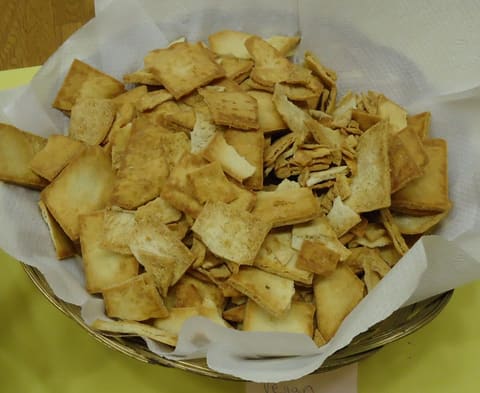
- Thick-cut snack crisps
- Dipping chips for salsa and hummus
- Gourmet flavour rotations
- Side with sandwiches
Frequently asked questions
Are kettle chips Halal?
Is the kettle process different for Halal?
Are salt-and-vinegar kettle chips Halal?
Do small craft brands need more caution?
Where do I find certified kettle crisps?
Scholarly view
Kettle cooking (batch frying at lower temperature for a thicker crunch) does not change fiqh versus continuous-fried chips. Oil source and seasoning decide the ruling. ‘Sea salt’ and ‘sea salt & vinegar’ are usually simpler than cheese; vinegar itself is typically fine—watch dairy dust and meat rubs.
Sources
Named Islamic, certifier, manufacturer, and regulatory sources used on this page. Inline markers like [1] jump here. Retrieval dates show when we last checked the live URL. Editorial methodology.
Certifier / jurisdiction
-
Retrieved
Manufacturer / product
-
Retrieved
Regulatory / labelling
-
Retrieved
Browse this topic
Open the parent category hub for more foods in the same group.