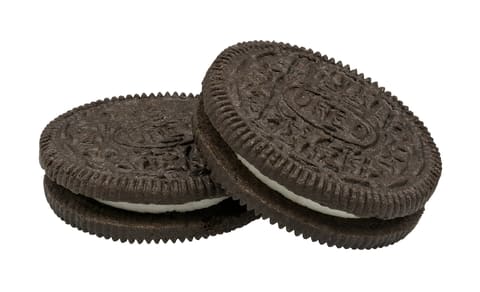
Oreos are Mondelēz/Nabisco chocolate sandwich cookies: two dark wafers around a sweet creme filling, first sold in 1912 and now produced in multiple countries with recipes tuned to local taste. The Halal question is therefore never “the Oreo molecule”—it is which factory, which formula, and which certifier (if any) apply to the package in your hand.
Manufacturer and authority evidence (retrieved 20 July 2026)
Europe / UK — not Halal-certified, with exceptions named. Oreo’s official UK FAQ answers “Is OREO halal?” directly: biscuits produced in Europe are not Halal certified, yet “their composition or production process does not make them unsuitable for Muslim diet,” except for listed products (OREO Strawberry Cheesecake, OREO Choc’o Brownie, OREO Enrobed Milk & White, OREO Cadbury Coated, and OREO Crunchy Bites Dipped). Source: oreo.co.uk/faq (retrieved 20 July 2026). The same FAQ notes most UK Oreos are produced in Spain (with some production in Czechia and Ukraine)—useful context when people assume every Oreo is a U.S. cookie.
United States / Canada — not Halal-certified. Mondelēz/Oreo public answers reported by fact-checkers state that Halal certification depends on country and that Oreos in the US and Canada are not Halal certified, while recommending consumers check labels (Africa Check summary of Oreo/X statements, retrieved 20 July 2026).
Malaysia / Indonesia — national Halal frameworks. JAKIM’s Halal Hub issue notes addressing Oreo rumours state that Oreo products produced by Mondelez Indonesia Manufacturing have been Halal-certified by Indonesia’s BPJPH, which JAKIM recognises as a foreign Halal body (JAKIM SKHBPH materials on Oreo/Cadbury issues, retrieved 20 July 2026). Malaysian Mondelēz operations more broadly operate under JAKIM Halal systems for many chocolate and biscuit lines—confirm the mark on the product you buy rather than assuming every imported novelty flavour is covered.
UAE and other Gulf statements. Media reports of UAE ministry clarifications rejecting “pork in Oreo” rumours address adulteration myths; they are not a substitute for reading the Halal mark on a specific Gulf-market pack.
Why status stays Market-dependent (not Halal or Haram globally)
| Market pattern |
Typical outcome |
| Pack with JAKIM / BPJPH / local Halal logo |
Treat as Halal-certified for that product |
| Europe classic Oreo per UK FAQ |
Not certified; company says the composition is not unsuitable; Halal if verified |
| US / Canada classic Oreo |
Not certified → Halal if verified on this site |
| Named European speciality products on UK exception list |
Do not assume suitability—read that flavour’s label |
Classic EU Oreo packs list soya (and sometimes sunflower) lecithin as the emulsifier, not mono- and diglycerides; flavourings and cross-contact practices still vary. Vegetarian-friendly statements on Oreo FAQs help exclude obvious gelatin, but vegetarian is not identical to Halal-certified.
Realistic verification
- Turn the pack over: find plant country and Halal logo.
- Open the Oreo site for that country if an FAQ exists.
- Treat limited editions as new products.
- If you require certification, buy products that print a recognised mark—especially easy in Malaysia, Indonesia, and many Gulf retailers.