
How to verify
- Look for the brand's own statement on where its taurine comes from (Red Bull publishes one).
- Or look for a Halal certificate on the finished product.
- If neither exists, the source is unconfirmed.
- Judge energy drinks by their other ingredients too: colours, flavours and alcoholic line extensions.
- Taurine that occurs naturally in meat or fish follows the Halal status of that food.
Quick checks
- Synthetic taurine is Halal.
- Check the brand's statement or certificate for its taurine source.
- Audit the rest of the drink, not only the taurine line.
- Natural taurine follows the status of its food source.
What decides the answer
-
Synthetic taurine
Halal -
Natural taurine in Halal meat or fish — as part of that food
Halal -
Red Bull products: the company says its taurine is purely synthetic and not from any animal
-
Taurine with no stated source: check the maker's statement or a Halal certificate
-
Energy drinks: still check the other ingredients and alcoholic brand extensions
Why this ruling
Synthetic taurine is Halal. It is made from chemical feedstocks, with no animal or intoxicant in it. What a label rarely tells you is whether the taurine in a given product is synthetic, so the answer comes from the maker. Red Bull says the taurine in its products "is not derived from bulls or any other animals" and is "a purely synthetic substance produced by pharmaceutical companies".[1] That settles it for Red Bull; other brands need their own statement or a Halal certificate.
Name and myth map
| Claim you hear | What the evidence shows |
|---|---|
| "Taurine comes from bulls" | The name does: taurine was first isolated from ox bile in 1827, and taurus is Latin for bull or ox.[2] |
| "Red Bull contains bull extract" | Red Bull says its taurine is synthetic and not from any animal.[1] |
| Taurine in meat and fish | Natural taurine follows that food's Halal status |
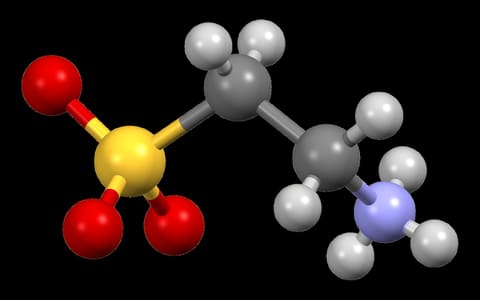
Taurine is an amino sulfonic acid your body makes and uses for bile salts, among other things.[3] Energy drinks add it as an ingredient in its own right.
How synthetic taurine is made
Synthetic taurine is made by ammonolysis of isethionic acid, which itself comes from ethylene oxide and sodium bisulfite.[2] None of those inputs is animal-derived. That is why synthetic taurine is Halal, and why the question for any product is only which kind of taurine it uses.
Short fiqh
- Synthetic taurine: Halal. It has no animal or intoxicant origin.
- Taurine occurring naturally in food: follows the food. Halal fish and zabiha meat carry Halal taurine as a matter of course.
- Taurine with no stated source: unconfirmed. Ask the maker, or look for a Halal certificate on the finished product.
What to check as well
When scanning an energy drink or pre-workout, the rest of the formula matters too:
- Carmine (E120) in red flavours
- Alcohol-carried flavourings
- Alcoholic line extensions with lookalike cans
- A Halal certificate on the finished drink in your market
Supplements and brand extensions
Pre-workouts and amino blends list taurine too; the same test applies: the maker's statement or a certificate tells you the source. Infant-formula fortification is clinical nutrition, so follow paediatric and Halal-certified formula guidance rather than energy-drink lore. Pet-food taurine for cats has no bearing on human rulings.
Where you'll find it
- Energy drinks (Red Bull, Monster, etc.)
- Pre-workout and supplement formulas
- Infant formula (fortification)
- Cat food (essential nutrient for cats)
- Some medical nutrition products
Frequently asked questions
Is taurine Halal?
Is taurine made from bulls?
Is the taurine in energy drinks Halal?
Is naturally occurring taurine in meat and fish Halal?
Should I worry about taurine more than other energy-drink ingredients?
Scholarly view
Fiqh treats a substance by its source. Synthetic taurine has no animal or intoxicant origin, so it is Halal. Taurine taken from an animal would follow that animal's ruling. The open question for any product is which kind it contains, and only the maker or a certifier can answer that.
Sources
Named Islamic, certifier, manufacturer, and regulatory sources used on this page. Inline markers like [1] jump here. Retrieval dates show when we last checked the live URL. Editorial methodology.
Manufacturer / product
-
Is taurine made from bulls' testicles?
Red Bull Retrieved
Says the taurine in Red Bull Energy Drink and other Red Bull products "is not derived from bulls or any other animals" and is "a purely synthetic substance produced by pharmaceutical companies". Covers Red Bull products only.
Regulatory / labelling
-
NIH PubChem Retrieved
Chemical identity of the molecule. It does not say where any product's taurine comes from.
Context / background
-
Wikipedia Retrieved
Names the 1827 isolation from ox bile, and the chemical synthesis by ammonolysis of isethionic acid.
People also check
Related ingredients and products for this item.
Browse this topic
Open the parent category hub for more foods in the same group.