
Is Caffeine Halal?
Yes — this one is Halal.
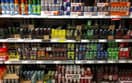
Caffeine is a plant alkaloid found in coffee and cocoa beans, tea leaves, guarana and kola nut, and is also added to colas, energy drinks, and confectionery.
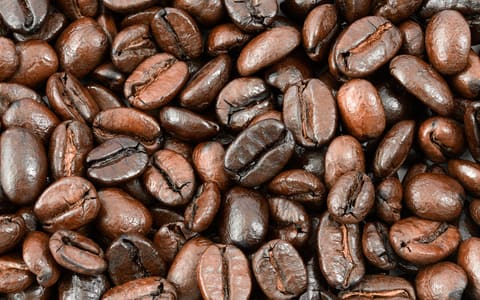
Photo: freestock.ca · CC BY-SA 3.0
What decides the answer
-
Caffeine extracted from coffee, tea, guarana, or kola
Halal -
Synthesised caffeine (caffeine anhydrous)
Halal -
Caffeine in a finished drink
judge that drink's other ingredients -
Caffeinated tablets or gums with gelatin coatings
verify that product -
Intake a doctor has told you to limit
a medical restriction, not a fiqh one
Where you'll find it
- Coffee, espresso, and instant coffee
- Tea, green tea, and matcha
- Cola and other soft drinks
- Energy drinks and energy shots
- Chocolate and cocoa products
- Caffeinated tablets, gums, and pre-workout powders
Why this ruling
Caffeine is the most widely consumed stimulant in the world, and on a Halal label it is one of the least complicated ingredients you will meet. It is a plant alkaloid, it is not an intoxicant, and it comes from neither animal tissue nor alcohol. The word appearing in an ingredient list is not a reason to hesitate.
Where it comes from
EFSA describes caffeine as a naturally occurring compound found in plant constituents such as coffee and cocoa beans, tea leaves, guarana berries and the kola nut, and notes it is also added to baked goods, ice creams, sweets, cola beverages and energy drinks (EFSA — Caffeine, retrieved 25 August 2026).[1]
Commercially, caffeine reaches a product by one of two routes:
- Extracted from plant material — often recovered during decaffeination of coffee or tea.
- Synthesised as caffeine anhydrous, which is chemically the same molecule.
Neither route involves an animal, a slaughter question, or an intoxicant. Manufacturers choose between them on cost and consistency, and the choice does not change the Halal answer.
Stimulant, not intoxicant
This is the distinction that settles the ruling. The prohibition attaches to khamr and to what intoxicates — what clouds the intellect. Caffeine at dietary doses sharpens rather than clouds; it does not produce the effect the ruling is about.
IslamQA 9237 addresses this directly, answering a questioner who argued caffeine should be Haram because it is an alkaloid in the same chemical family as nicotine, cocaine, and morphine. The answer treats coffee and tea as permissible drinks which do not cause harm and are drunk for relaxation, adding that where such refreshments do cause harm they become an extravagance to be avoided (IslamQA 9237, retrieved 25 August 2026).[3] Belonging to a chemical class is not the test; effect is.
Health limits are not Halal limits
Both EFSA and the U.S. FDA converge on roughly 400 mg a day as an amount not associated with safety concerns for healthy adults — about two to three 12-oz cups of coffee (FDA — Spilling the Beans, retrieved 25 August 2026).[2] EFSA additionally puts a single dose of about 200 mg in the same bracket.[1]
These are medical figures. There is no fiqh limit denominated in milligrams. Where intake becomes genuinely harmful for a particular person — and pregnancy, medication, and existing heart conditions are the usual reasons — the general principle against self-harm applies, and that is a conversation with a clinician rather than a change in the ingredient's status.
What still needs checking
Caffeine being Halal settles caffeine. It does not settle the product:
- The rest of the drink. Energy drinks raise separate questions about taurine sourcing and market-specific certification; colas carry their own additive lists. Judge those on energy drinks, Coca-Cola, and Pepsi.
- Tablets, gums, and shots. A caffeine tablet may be coated or capsuled with gelatin, and a gum base may carry animal-derived glycerol. Those are the ingredients to verify, not the caffeine.
- Flavour systems. A label reading “flavourings (contains caffeine)” has disclosed the caffeine and nothing else. The flavouring components remain a separate question.
The molecule is simple. The pack around it usually is not.
How to verify
- Treat caffeine itself as Halal, whether extracted from plants or synthesised.
- Judge the finished drink separately—energy drinks and colas carry their own additive questions.
- Read for gelatin, alcohol-carried flavourings, or animal-derived additives in caffeinated tablets, gums, and shots.
- Health limits (EFSA and FDA both cite 400 mg a day for healthy adults) are a medical matter, not a Halal one.
Quick checks
- Caffeine itself is Halal, extracted or synthesised.
- Judge the finished drink, not the molecule.
- Check gelatin coatings on caffeine tablets and gums.
Frequently asked questions
Is caffeine Halal?
Is synthetic caffeine different from natural caffeine?
Does "flavourings (contains caffeine)" on a label mean anything special?
Are energy drinks Halal because caffeine is Halal?
Is there a Halal limit on how much caffeine I can drink?
Scholarly view
Caffeine is a stimulant, not an intoxicant. The prohibition in the texts attaches to khamr and to what intoxicates, and caffeine at ordinary dietary doses does not produce that effect—it does not cloud the intellect in the way that defines the ruling.
IslamQA 9237, answering a questioner who asked whether caffeine should be grouped with nicotine, cocaine, and morphine as an alkaloid, treats coffee and tea as permissible drinks that usually cause no harm, while cautioning against intake that becomes genuinely harmful to the individual.
That caution is a health judgement resting on the principle of avoiding self-harm, not a reclassification of caffeine as Haram. Neither plant-extracted nor synthesised caffeine involves animal material or alcohol, so no slaughter or carrier question arises for the molecule itself.
Sources
Named Islamic, certifier, manufacturer, and regulatory sources used on this page. Inline markers like [1] jump here. Retrieval dates show when we last checked the live URL. Editorial methodology.
Islamic / scriptural
-
IslamQA 9237 — Ruling on consuming caffeine
IslamQA Retrieved
Answering whether caffeine belongs with nicotine, cocaine and morphine as an alkaloid. Treats coffee and tea as permissible drinks that usually cause no harm, cautioning against intake that is genuinely harmful. Answered by Shaykh 'Abd-Allah ibn Jibreen.
Regulatory / labelling
-
EFSA Retrieved
Describes caffeine as a naturally occurring compound in coffee and cocoa beans, tea leaves, guarana berries and the kola nut, also added to baked goods, ice creams, sweets, colas and energy drinks. Cites 400 mg per day for healthy adults. Food-safety science, not a Halal ruling.
-
Spilling the Beans: How Much Caffeine is Too Much?
U.S. FDA Retrieved
Consumer intake guidance citing 400 mg a day for most adults. Health framing only; the FDA does not rule on Halal status.