
Additive identity
Possible source pathways
The finished molecule can be identical across feedstocks. The Halal ruling follows the pathway, not the code alone.
E234 Possible source pathways
- microbial Halal Typical Fermentation of plant carbohydrates or a defined microbial metabolite.
- plant Halal Typical The feedstock is plant.
What decides the answer
-
E234 / E235 as listed
Halal microbial preservatives -
Cheese carrying them still needs a rennet / starter check
Where you'll find it
- Cheese surface treatment
- Some processed meats
Why this ruling
Nisin (E234) and natamycin (E235) are preservatives made by microbes. Nisin is a small protein produced by Lactococcus lactis, the same kind of bacterium that sours milk. Natamycin is an anti-mould compound produced by the soil bacterium Streptomyces natalensis. Both are made by fermentation, neither involves an animal, and both are Halal.[3][5]
What they do
- Nisin stops certain bacteria, especially spore-formers. It is used in processed and spreadable cheese, some cream desserts, tinned foods and, in some countries, cooked meats. US rules list it as a generally recognised food substance.[2]
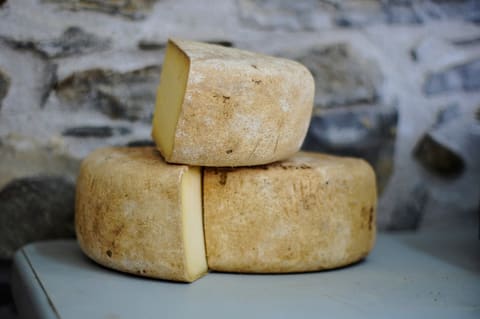
- Natamycin stops moulds and yeasts on surfaces. Its main EU use is on the rind of hard and semi-hard cheeses and on the casing of dry sausages, where it keeps mould off without getting into the food much.
EFSA has reviewed nisin for use across these foods.[1] Certifier E-number lists put both with the additives that need no source check.[6]
"Grown on milk"
Nisin is often produced in a dairy-based fermentation broth, which is why it sometimes appears in discussions about vegan foods. For Halal purposes this changes nothing: milk is Halal, and the preservative is purified from the broth.
The food still decides
These preservatives are almost always found on foods that have their own question:
- Cheese with natamycin on the rind still depends on how it was set. Microbial rennet or rennet from a Halal-slaughtered animal is Halal, pork rennet is not, and rennet from a calf not slaughtered Islamically is a scholarly difference; see cheese.
- Dry sausages with natamycin on the casing depend on the meat and its slaughter; see salami.
- Processed cheese with nisin depends on the cheeses and emulsifying salts in it.
For the everyday preservative in cakes, drinks and dips, see potassium sorbate (E202).
How to verify
- Match E234, E235, nisin, or natamycin.
- The preservative is Halal.
- Read cheese rennet separately.
Quick checks
- Nisin (E234) and natamycin (E235) are made by bacteria: Halal.
- They are often used on cheese; the cheese's rennet is a separate check.
- Natamycin also coats the outside of dried sausages; the meat and casing decide.
Frequently asked questions
Is nisin from milk?
Is natamycin an antibiotic?
Where is natamycin used?
Is nisin in processed cheese Halal?
Is preservative 234 the same as E234?
Scholarly view
A microbial peptide is not gelatin and not an insect colour. Dairy media in fermentation do not turn nisin into a slaughter question for most certifiers.
Sources
Named Islamic, certifier, manufacturer, and regulatory sources used on this page. Inline markers like [1] jump here. Retrieval dates show when we last checked the live URL. Editorial methodology.
Certifier / jurisdiction
Regulatory / labelling
-
EFSA — Re-evaluation of nisin (E234)
European Food Safety Authority Retrieved
Substance identity—not a Halal certificate for a finished pack.
-
U.S. eCFR Retrieved
U.S. identity / GRAS or colour-additive listing—not a Halal ruling.
-
Regulation (EC) No 1333/2008 on food additives
European Union Retrieved
Union-list identity—not a Halal certificate.
-
-
-
U.S. Food and Drug Administration Retrieved
US identity / labelling context—not a Halal ruling.
People also check
Related ingredients and products for this item.