Additive identity
Possible source pathways
The finished molecule can be identical across feedstocks. The Halal ruling follows the pathway, not the code alone.
E400 Possible source pathways
- plant Halal Typical Botanical identity. No animal tissue is required for standard food grade.
What decides the answer
-
E400–E405
Halal seaweed thickeners -
Finished dessert: still check gelatin and E471
Where you'll find it
- Ice cream and dessert gels
- Reformed onion rings and dressings
Why this ruling
Alginates are gelling and thickening agents extracted from brown seaweed, such as kelp. The family is alginic acid (E400) and its salts, sodium (E401), potassium (E402), ammonium (E403) and calcium alginate (E404), plus propylene glycol alginate (E405). They come from algae, not animals, and they are Halal.[3][5]
EFSA has re-evaluated the group,[1] and US rules list alginic acid as a generally recognised food substance.[2] Certifier lists put them with the additives that need no check.[6]
What makes alginate useful
Sodium alginate dissolves in water and sets into a gel the moment it meets calcium, without heating. That trick is used everywhere:
- Popping boba and the pearls in some bubble teas are drops of flavoured liquid set in a thin alginate skin.
- The red pimento stuffing in many green olives is pimento paste set with alginate.
- Bake-stable fillings in pastries and cereal bars hold their shape in the oven.
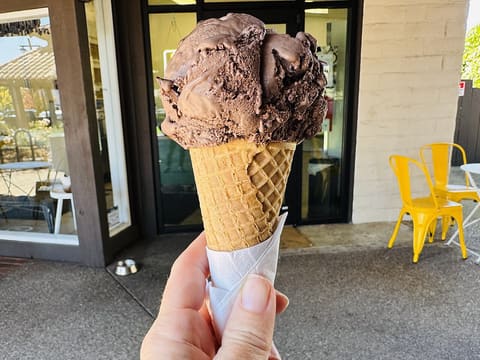
- Ice cream and whipped desserts stay smooth and resist melting.
- Dressings and sauces thicken without starch.
- Beer foam: propylene glycol alginate (E405) stabilises the head on some beers.
It is also the gel in some heartburn remedies and wound dressings.
A Halal alternative to gelatin
Alginates, agar and carrageenan are the seaweed gels that manufacturers use when they want a vegetarian set. If a dessert or sweet lists alginate instead of gelatin, that part of the recipe is settled.
The product still decides
Seaweed in the recipe does not make the product Halal. A dessert may use alginate and also contain gelatin or E471; ice cream has its own checks (see ice cream); and E405 in beer does nothing for the beer, which is still an intoxicant (see beer).
How to verify
- Match E400–E405, sodium alginate, or PGA.
- Halal.
- Ice cream still needs a gelatin and emulsifier read.
Quick checks
- Alginates are made from brown seaweed: Halal.
- Co-extruded alginate sausage casings are seaweed; the sausage meat still needs checking.
- A dessert thickened with alginate may also contain gelatin or E471; read the whole list.
Frequently asked questions
Is sodium alginate from animals?
Is propylene glycol alginate Halal?
Are popping boba Halal?
Is alginate a gelatin replacement?
Scholarly view
Seaweed is not fish in the fiqh sense that would trigger a slaughter debate. Alginate is a Halal gelatin alternative.
Sources
Named Islamic, certifier, manufacturer, and regulatory sources used on this page. Inline markers like [1] jump here. Retrieval dates show when we last checked the live URL. Editorial methodology.
Certifier / jurisdiction
Regulatory / labelling
-
EFSA — Re-evaluation of alginic acid and alginates (E400–E404)
European Food Safety Authority Retrieved
Substance identity—not a Halal certificate for a finished pack.
-
21 CFR § 184.1011 alginic acid
U.S. eCFR Retrieved
U.S. identity / GRAS or colour-additive listing—not a Halal ruling.
-
Regulation (EC) No 1333/2008 on food additives
European Union Retrieved
Union-list identity—not a Halal certificate.
-
-
-
U.S. Food and Drug Administration Retrieved
US identity / labelling context—not a Halal ruling.
People also check
Related ingredients and products for this item.