Are Carnauba and Other Glazing Waxes Halal?
Yes — this one is Halal.
Carnauba is a palm-leaf wax; candelilla is a shrub wax; E905/E907/E914 are petroleum or synthetic glazing waxes.
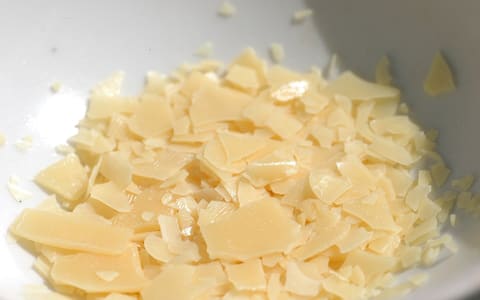
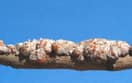
Photo: Simon A. Eugster · CC BY-SA 3.0
Additive identity
Possible source pathways
The finished molecule can be identical across feedstocks. The Halal ruling follows the pathway, not the code alone.
E902 Possible source pathways
- plant Halal Typical Botanical identity. No animal tissue is required for standard food grade.
What decides the answer
-
E902/E903/E905/E907/E914
Halal plant or mineral wax -
Beeswax, shellac, lanolin are separate pages
-
Unspecified 'confectioners glaze' may still be shellac
Where you'll find it
- Candy and fruit glaze
- Chocolate panning
Why this ruling
Candelilla wax (E902), carnauba wax (E903), microcrystalline wax (E905), hydrogenated poly-1-decene (E907) and oxidised polyethylene wax (E914) are glazing agents made from plants or minerals, and they are Halal.[3][5] They are the shine on sweets, the non-stick coating on gummies and the gloss on some fresh fruit.
Plant waxes and mineral waxes
- Carnauba (E903) is scraped from the leaves of a Brazilian palm, Copernicia prunifera. It is the hardest natural wax and the standard glaze on jelly beans, chocolate-coated nuts and dragées.[1][2]
- Candelilla (E902) comes from a desert shrub in northern Mexico and is used in chewing gum and sweet coatings.
- Microcrystalline wax (E905), E907 and polyethylene wax (E914) are refined from petroleum or made synthetically. They coat citrus fruit, some cheese rinds and chewing gum bases.
None of these involves an animal or an insect, which is why certifier E-number lists treat them as plant or mineral additives.[6]
The three glazes that are different
Three other glazing agents come from animals or insects and have their own pages:
- Beeswax (E901) – a bee product, like honey.
- Shellac (E904) – a resin secreted by the lac insect, which SANHA and MUI treat as Halal.
- Lanolin (E913) – from sheep's wool grease.
Reading the label
The words to watch for are "confectioner's glaze" and "glazing agent" without a code or name: in the US, confectioner's glaze is shellac. On sweets like jelly beans, a pack that names carnauba or candelilla has avoided the question entirely, which is why Halal-certified confectionery usually chooses them. On fresh apples and citrus, the coating is often not listed at all, so ask the retailer or peel the fruit if it matters to you.
How to verify
- Match E902, E903, E905, E907, E914, carnauba, or candelilla.
- Halal.
- Confectioners' glaze may still be shellac—read the name.
Quick checks
- Carnauba, candelilla, microcrystalline and polyethylene waxes are plant or mineral: Halal.
- Shellac (E904) and beeswax (E901) are different and have their own pages.
- A glazed sweet can still contain gelatin or carmine; read the rest.
Frequently asked questions
Is carnauba wax Halal?
Is carnauba the same as shellac?
Is candelilla wax Halal?
Is microcrystalline wax Halal?
Is glazing agent 903 the same as E903?
Scholarly view
Carnauba is the Halal-certified chocolate glaze most programmes prefer when shellac is refused. It is not an insect secretion.
Sources
Named Islamic, certifier, manufacturer, and regulatory sources used on this page. Inline markers like [1] jump here. Retrieval dates show when we last checked the live URL. Editorial methodology.
Certifier / jurisdiction
Regulatory / labelling
-
EFSA — Re-evaluation of carnauba wax (E903) and candelilla wax (E902)
European Food Safety Authority Retrieved
Substance identity—not a Halal certificate for a finished pack.
-
21 CFR § 184.1978 carnauba wax
U.S. eCFR Retrieved
U.S. identity / GRAS or colour-additive listing—not a Halal ruling.
-
Regulation (EC) No 1333/2008 on food additives
European Union Retrieved
Union-list identity—not a Halal certificate.
-
-
-
U.S. Food and Drug Administration Retrieved
US identity / labelling context—not a Halal ruling.
People also check
Related ingredients and products for this item.