Are Flaounes Halal?
It depends on what the label says.
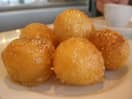
Flaounes are Cypriot Easter pastries of yeasted dough filled with cheese, eggs, mint and raisins and coated in sesame.
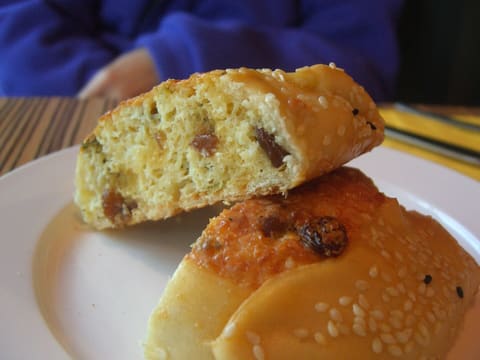
Photo: Alpha · CC BY-SA 2.0
How to verify
- The dough is flour, yeast, milk, eggs, mahlepi and mastic, usually with butter.
- Ask about the rennet in the flaouna cheese and halloumi.
- If a bakery uses shortening, ask what it is made from.
- Packs: look for microbial or vegetarian rennet on the label.
Quick checks
- The pastry, eggs, mint, raisins and sesame are Halal.
- Ask about the cheese's rennet: flaouna cheese and halloumi can be made with animal or microbial rennet.
- Turkish Cypriot pilavuna is the same pastry, with the same cheese check.
What decides the answer
-
Filling made with microbial-rennet or Halal-certified cheese
Halal -
Bakery flaounes with an unknown cheese
Halal if verified -
Cheese with animal rennet from an animal not slaughtered Islamically
Scholarly difference -
Dough made with lard
Haram
Why this ruling
Flaounes are the Easter pastries of Cyprus: yeasted dough, scented with mahlepi (ground cherry kernels) and mastic, folded around a thick filling of grated cheese, eggs, fresh mint and often raisins, brushed with egg and pressed into sesame seeds before baking.[2] Greek Cypriot families bake them together on Good Friday or Holy Saturday and eat them after the midnight Easter service, when the Lenten fast ends. The cheese is traditionally a special flaouna cheese, a firm sheep's and goat's milk cheese, mixed with halloumi.[1]
What decides it
| Part | Usually | Halal? |
|---|---|---|
| Dough | Flour, yeast, milk, eggs, mahlepi, mastic | Yes |
| Fat in the dough | Butter, or vegetable shortening in bakeries | Yes |
| Cheese filling | Flaouna cheese and halloumi | Depends on the rennet |
| Eggs, mint, raisins, semolina | Egg and plant | Yes |
| Sesame seeds on top | Plant | Yes |
The dough, eggs and mint are Halal. The question is the cheese.[3] Traditional Cypriot cheeses are set with animal rennet; many halloumi makers now use microbial rennet, and their packs say so. Rennet is Halal when it is microbial or from an animal slaughtered Islamically, not Halal when it is from pork, and a point of scholarly difference when it is from a lamb, kid or calf not slaughtered Islamically. Butter is the usual dough fat; if a bakery uses a shortening, ask what it is made from.
Pilavuna in the north
Turkish Cypriots bake the same pastry as pilavuna, filled with hellim (halloumi), mint and raisins and coated in sesame, and eat it all year, often at breakfast. Made with Halal-certified or microbial-rennet hellim, it is Halal; Turkish Cypriot bakeries in the north and in London sell it.
Buying them
Around Easter, bakeries and supermarkets across Cyprus, and Cypriot bakeries abroad, sell flaounes by the dozen. Ask about the cheese's rennet, or look for a pack that lists microbial or vegetarian rennet. At home, a microbial-rennet halloumi and a firm sheep's cheese made with microbial rennet give the right texture. For the cheese itself, see halloumi; for other Cypriot sweets, loukoumades and the Cyprus guide.
Frequently asked questions
Are flaounes Halal?
What is pilavuna?
Are flaounes only made at Easter?
Scholarly view
The pastry, eggs, mint and sesame are Halal. Cheese rennet: microbial or from a Halal-slaughtered animal is Halal, pork rennet is not, and rennet from an animal not slaughtered Islamically is a point of scholarly difference.
Sources
Named Islamic, certifier, manufacturer, and regulatory sources used on this page. Inline markers like [1] jump here. Retrieval dates show when we last checked the live URL. Editorial methodology.
Islamic / scriptural
Context / background
-
Wikipedia Retrieved
Culinary identity: Cheese-filled Easter bake from Cyprus, often with raisins and sesame seeds. Identity context, not a Halal certificate.
-
Browse this topic
Open the parent category hub for more foods in the same group.