How to verify
- Ask species and Halal slaughter/source for the minced topping.
- Prefer named Halal-certified suppliers or clear Muslim-kitchen sourcing when available.
- Re-check resort hotels and abroad franchises.
- Vegetarian toppings are an option when unsure.
Quick checks
- Ask what the mince is (usually lamb or beef) and whether it comes from a Halal source.
- Outside Muslim-majority countries, look for a Halal certificate or ask which supplier the kitchen uses.
- Hotels and resorts with international menus deserve the same question as anywhere else.
What decides the answer
-
Named Halal-certified or verified Halal-sourced mince
Halal -
Unverified mince at any kitchen (Türkiye or abroad)
Halal if verified -
Confirmed non-Halal meat or pork
Haram
Why this ruling
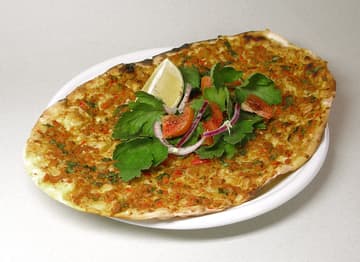
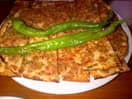
Lahmacun – lahm bi ajeen in Arabic, "meat on dough" – is a paper-thin round flatbread spread with a paste of finely minced lamb or beef, onion, tomato, pepper, parsley and spices, then baked for a few minutes in a very hot oven. It is eaten rolled around parsley, sumac-dressed onion and a squeeze of lemon, often with a glass of ayran. Gaziantep and Şanlıurfa in south-east Turkey are its best-known homes, and Armenian and Levantine bakeries make their own versions.[1]
The regional styles differ in heat and texture more than in ingredients. Antep lahmacun is thin, crisp and made with a lot of garlic; Urfa lahmacun is spicier, with the dark, smoky isot pepper; Armenian lahmajoun often adds more tomato. In Lebanon and Syria, lahm bi ajeen usually means smaller, thicker rounds, closer to what is also sold as sfiha.
What decides it
| Part | Usually | Halal? |
|---|---|---|
| Dough | Flour, water, yeast, salt | Yes |
| Topping | Onion, tomato, pepper, parsley, garlic, spices | Yes |
| Pepper paste | Peppers and salt | Yes |
| Mince | Lamb, beef, or a mix | Needs Halal slaughter |
| Oven | Stone or wood-fired | No issue |
Everything except the mince is plant-based, so the minced meat is the whole question.[2] It must be lamb or beef from Halal slaughter. Pork is not used in traditional lahmacun, and packaged versions name the meat on the label.
In Turkey and abroad
In Turkey, meat served in restaurants overwhelmingly comes from Muslim slaughter, and Türkiye also has a state Halal accreditation body for those who want formal certification.[3] A Turkish dish name alone is not a certificate, though. In resorts, hotel buffets and Turkish restaurants outside Turkey, ask whether the mince is Halal, or look for a certificate.
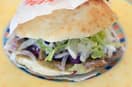
Germany, the Netherlands and the UK have many Turkish bakeries and grill houses, and in Germany lahmacun is often sold as Türkische Pizza at döner shops. Most of these buy Halal meat, but ask, especially in shops that also sell other cuisines. Frozen lahmacun sold in European supermarkets lists its meat, and Halal brands carry a mark.
How to eat it
Lay a lahmacun flat, cover it with parsley, onion and a squeeze of lemon, then roll or fold it up and eat it by hand. It is usually served as a starter or a light lunch before kebabs, with ayran or tea. A meat-free version, topped only with the vegetable and pepper paste, exists but is rare; ask a bakery if you want one.
Its relatives
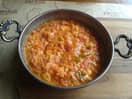
The boat-shaped pide uses the same dough with a thicker filling; see pide. For other dishes from the same grill houses, see döner kebab and menemen, and the Türkiye guide.
Frequently asked questions
Is lahmacun Halal?
Is lahmacun the same as pide?
Is lahmacun in Türkiye automatically Halal?
Is there a meat-free lahmacun?
Sources
Named Islamic, certifier, manufacturer, and regulatory sources used on this page. Inline markers like [1] jump here. Retrieval dates show when we last checked the live URL. Editorial methodology.
Islamic / scriptural
Context / background
-
Wikipedia Retrieved
Culinary identity: Flatbread topped with minced meat, most commonly beef or lamb, vegetables and herbs, then baked. Identity context, not a Halal certificate.
-
Halal Accreditation Agency (HAK) — Türkiye
Halal Accreditation Agency Retrieved
National Halal accreditation framework in Türkiye—shows formal Halal systems exist, but does not certify any specific lahmacun plate.
Halal-conscious recipes
A substitution-led recipe that uses this analysis.