
Is Marmite Halal?
Yes — this one is Halal.
Marmite's UK FAQ says the entire Marmite range is Halal and certified by the Halal Food Authority, and that any alcohol in the yeast evaporates during manufacture.
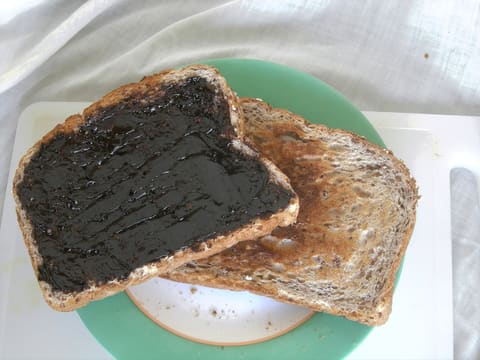
Photo: TheJackal · CC BY-SA 3.0
What decides the answer
-
UK Marmite range: certified Halal by the Halal Food Authority, per Marmite's UK FAQ
-
Other countries: read the local jar; don't carry the UK certificate across
-
Flavoured limited editions: re-read ingredients
-
Following the view that brewer's yeast extract is impermissible: avoid
Where you'll find it
- Thin spread on toast, crackers, or crumpets
- Umami boost in stews, gravies, and soups
- Dissolved in hot water as a savoury drink
- Glazes and savoury baking
Why this ruling
Marmite is the British yeast-extract spread: dark, sticky, salty, and divisive on toast. For Halal readers, three facts matter: what it is made from, what the brand says about certification, and where scholars differ.
What the brand says
Marmite's UK FAQ answers the questions directly:[1]
- What it is: "a dark, thick, yeast extract spread", made from "concentrated yeast extract, which is a by-product from brewing beer".
- Alcohol: "Any alcohol in the yeast evaporates off during the Marmite-making process."
- Halal: "The entire Marmite range is halal – and certified by the Halal Food Authority."
- Vegan: the range is vegan, certified by the European Vegetarian Union, except the 70g jar, which is currently vegetarian.
Unilever Food Solutions' page for the 600g foodservice tub lists its ingredients (yeast extract, salt, vegetable juice concentrate, vitamins, natural flavouring) and a Certified Halal flag.[2]
That settles the ingredient and certification question for UK Marmite. It does not cover other countries: Marmite sold elsewhere, and sister yeast spreads, are separate products with their own labels.
Where scholars differ: brewer's yeast
The remaining question is the yeast itself.
- IslamWeb (fatwa 334939) holds that foods containing brewer's yeast are lawful in principle, and that even if the yeast were impure, it becomes permissible once it has been transformed into another substance.[3]
- Darul Uloom Trinidad and Tobago (Hanafi, Mufti Waseem Khan) holds that yeast extract made from baker's yeast is permissible, but "If it is made from brewer's yeast, then it will not be permissible."[4]
Marmite says its yeast extract is a brewing by-product, so the second view would exclude it. This page's Halal answer follows the certification and the permissive view; if you follow the stricter one, avoid Marmite.
Market and variant nuance
- UK range: certified by the Halal Food Authority, per the brand.
- Other countries: read the local jar and look for a local certificate.
- Limited editions: re-read that jar's ingredients.
Practical kitchen note
Marmite dissolves into hot water or onions as an umami shortcut. That use is fine in a Halal kitchen, for those who accept it, when the rest of the dish (meat, stock, wine) is Halal. It does not make a beef stew made from non-zabiha meat Halal.
How to verify
- UK Marmite: the brand's FAQ says the entire range is certified Halal by the Halal Food Authority.
- Outside the UK, read the local jar and look for a local certificate; products can differ by country.
- Limited editions: read that jar's ingredients.
- If you follow the view that brewer's yeast extract is not permissible, avoid it whatever the certificate says.
Quick checks
- UK Marmite: range certified by the Halal Food Authority, per the brand.
- Outside the UK: read the local jar.
- Brewer's yeast extract: scholars differ; follow your own.
Frequently asked questions
Is Marmite Halal?
Is Marmite alcoholic because it comes from brewing?
Do scholars agree on brewer's yeast extract?
Is yeast Halal?
Is Marmite vegan?
Is Australian or other-market Marmite the same?
Can I use Marmite in cooking for a Halal kitchen?
Scholarly view
The certification answers the ingredient question for UK Marmite; the fiqh question is brewer's yeast. IslamWeb (fatwa 334939) holds that foods containing brewer's yeast are lawful in principle, and that even if the yeast were impure, it is permissible once transformed into another substance.
Darul Uloom Trinidad and Tobago (Mufti Waseem Khan) holds that autolysed yeast extract made from baker's yeast is permissible but that made from brewer's yeast is not. Marmite says its yeast extract is a by-product of brewing beer, so follow your own scholar.
Sources
Named Islamic, certifier, manufacturer, and regulatory sources used on this page. Inline markers like [1] jump here. Retrieval dates show when we last checked the live URL. Editorial methodology.
Islamic / scriptural
-
Brewer's yeast is lawful (fatwa 334939)
IslamWeb Retrieved
1 November 2016. Holds foods containing brewer's yeast lawful in principle, and permissible even if impure once transformed into another substance (citing al-Buhuti and Ibn Taymiyyah).
-
Can a person use products with autolyzed yeast extract?
Darul Uloom Trinidad and Tobago (via IslamQA.org) Retrieved
Hanafi. Mufti Waseem Khan: permissible if made from baker's yeast; "If it is made from brewer's yeast, then it will not be permissible."
Manufacturer / product
-
Marmite (Unilever UK) Retrieved
Says Marmite is made from concentrated yeast extract, a by-product from brewing beer; any alcohol in the yeast evaporates during manufacture; "The entire Marmite range is halal – and certified by the Halal Food Authority"; and the range is vegan (EVU) except the 70g jar.
-
Marmite Yeast Extract 600g tub
Unilever Food Solutions UK Retrieved
Foodservice tub. Lists yeast extract, salt, vegetable juice concentrate, vitamins and natural flavouring (celery), and dietary flags including Certified Halal.