Additive identity
Possible source pathways
The finished molecule can be identical across feedstocks. The Halal ruling follows the pathway, not the code alone.
E1205 Possible source pathways
- synthetic Halal Typical Synthetic or mineral identity. No animal tissue in the finished additive.
What decides the answer
-
E1205–E1209
Halal synthetic coats -
Gelatin capsules remain a separate check
Where you'll find it
- Enteric tablet coatings
- Moisture-barrier films
Why this ruling
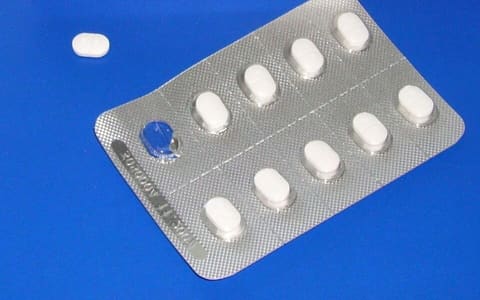
E1205 to E1209 are synthetic polymers used to coat tablets and capsules in food supplements. They are made by chemical synthesis, with no animal or alcohol source, and they are Halal.[2][4] Certifier lists put them with the additives that need no check.[5]
What each one is
| Code | Name | What it does |
|---|---|---|
| E1205 | Basic methacrylate copolymer | Moisture-protective coat; masks bitter tastes |
| E1206 | Neutral methacrylate copolymer | Controls how slowly a tablet releases |
| E1207 | Anionic methacrylate copolymer | Enteric coat: stays intact in the stomach and dissolves in the gut |
| E1208 | Polyvinylpyrrolidone–vinyl acetate copolymer | Binder and film-former |
| E1209 | Polyvinyl alcohol–polyethylene glycol graft copolymer | Quick-dissolving film coat |
EFSA assessed basic methacrylate copolymer for use in food supplements.[1] You will see these codes on vitamin, mineral and probiotic packs, often described as "coating agent" or "glazing agent".
Checking a supplement
The coating is rarely the issue. What to look at on a supplement label:
- Capsule shell – gelatin, which may come from pork or non-Halal cattle, or HPMC, which is plant-based; see gelatin and cellulose (E460).
- Lubricant – magnesium stearate, which has a fat-source question; see E572.
- Other glazes – some tablets use shellac (E904) instead of a synthetic coat; see shellac.
- Vitamin D3 – often made from lanolin; see lanolin (E913).
A Halal or vegan certification on the supplement covers all of these at once.
How to verify
- Match E1205–E1209 or methacrylate copolymer.
- Halal.
- Check whether the shell is gelatin or HPMC.
Quick checks
- Methacrylate and vinyl coating copolymers are synthetic: Halal.
- The coating is not the capsule: check whether the shell is gelatin or plant-based HPMC.
- Fish oil, magnesium stearate and flavourings in the same supplement need their own checks.
Frequently asked questions
Is methacrylate copolymer Halal?
Why are tablets coated?
Is the PVA-PEG coating (E1209) Halal?
Does a Halal coating make the supplement Halal?
Scholarly view
A synthetic film coat is not an animal capsule. Shoppers should still read 'capsule' versus 'tablet' on the product.
Sources
Named Islamic, certifier, manufacturer, and regulatory sources used on this page. Inline markers like [1] jump here. Retrieval dates show when we last checked the live URL. Editorial methodology.
Certifier / jurisdiction
Regulatory / labelling
-
EFSA — Basic methacrylate copolymer (E1205)
European Food Safety Authority Retrieved
Substance identity—not a Halal certificate for a finished pack.
-
Regulation (EC) No 1333/2008 on food additives
European Union Retrieved
Union-list identity—not a Halal certificate.
-
-
-
U.S. Food and Drug Administration Retrieved
US identity / labelling context—not a Halal ruling.
People also check
Related ingredients and products for this item.