
Additive identity
Possible source pathways
The finished molecule can be identical across feedstocks. The Halal ruling follows the pathway, not the code alone.
E475 Possible source pathways
- plant Halal Typical Fatty acids from palm, soy, sunflower, coconut, or other vegetable oils.
- animal Halal if verified The same esters can be split from tallow or lard. Pork or non-zabiha fat is haram; audited zabiha tallow is accepted after audit.
- undisclosed Halal if verified Typical Most labels print only the E-number or US chemical name. Treat as mashbooh until a plant, vegan, or Halal claim settles the fat.
How to verify
- Match E475, INS 475, or polyglycerol esters of fatty acids.
- This is not PGPR (E476).
- Vegetarian/Halal marks settle the fat.
Quick checks
- E475 is polyglycerol bonded to fatty acids; both can be plant or animal.
- A vegetarian, vegan or Halal mark settles it; without one it is Halal if verified.
- It is not PGPR (E476), which is made from castor oil.
What decides the answer
-
Plant-fat grade, or vegetarian/vegan claim
Halal -
Halal-certified product
Halal -
Pork or non-zabiha fat
haram -
Unspecified lot
Halal if verified
Why this ruling
Polyglycerol esters of fatty acids – E475, INS 475, sometimes "PGE" – are emulsifiers used in cake mixes, whipped toppings, margarine and chocolate. They are Halal if verified, because both halves of the molecule can come from plant or animal fat.[1][2]
How E475 is made
The additive is built in two steps. First, glycerol is heated until its molecules link into short chains, polyglycerol. Then that backbone is joined to fatty acids from an edible fat or oil. Glycerol is a by-product of soap and biodiesel making, which can start from vegetable oils or from tallow, and the fatty acids can likewise be palm, soy or rapeseed, or beef or pork fat. The finished emulsifier looks the same whichever route was used, so the label cannot tell you.[4]
What it does in food
- Sponge cakes and cake mixes – helps batter hold air so it rises evenly.
- Whipped toppings and mousses – keeps foams stable.
- Margarine and low-fat spreads – stops water and fat separating.
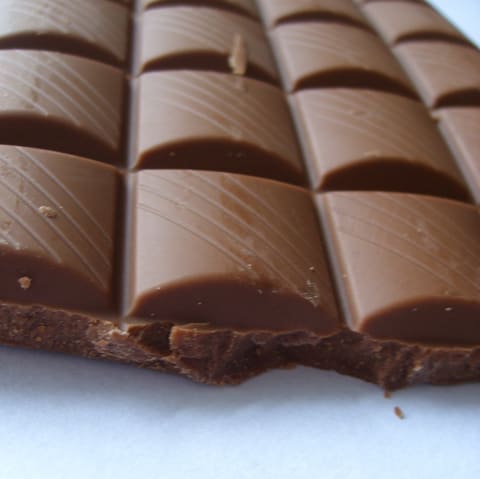
- Chocolate and coatings – helps control how the fat crystallises.
Not the same as PGPR
E476, polyglycerol polyricinoleate (PGPR), is a close relative made specifically with ricinoleic acid from castor beans, a plant source. It has its own page, E476. Do not copy its answer onto an unlabelled E475, which may use any fat.
How to settle a pack
Certifier lists treat unspecified E475 as a doubtful code to check, alongside E471.[5] Any one of these settles it:
- a Halal certificate on the product;
- a vegetarian or vegan claim, which rules out animal fats;
- a manufacturer statement that the E475 is plant-based.
Without one of them, the product stays Halal if verified. Plant sources dominate in many markets, but that is a likelihood, not proof.
Where you'll find it
- Margarine and bakery fats
- Chocolate and compound coatings
Frequently asked questions
Is E475 Halal?
Where is E475 used?
Is E475 the same as PGPR?
How do I check E475?
Is emulsifier 475 the same as E475?
Scholarly view
E475 is mixed fatty-acid polyglycerol esters. E476 is specifically polyricinoleate from castor. Do not copy the PGPR ruling onto unlabeled E475.
Sources
Named Islamic, certifier, manufacturer, and regulatory sources used on this page. Inline markers like [1] jump here. Retrieval dates show when we last checked the live URL. Editorial methodology.
Certifier / jurisdiction
-
SANHA Retrieved
Source-dependent additives listed mashbooh pending origin.
Regulatory / labelling
-
Regulation (EC) No 1333/2008 on food additives
European Union Retrieved
Union-list identity—not a Halal certificate.
-
EFSA — Polyglycerol esters of fatty acids (E475)
European Food Safety Authority Retrieved
Polyglycerol plus fatty acids of vegetable or animal origin.
-
-
People also check
Related ingredients and products for this item.