
Additive identity
Possible source pathways
The finished molecule can be identical across feedstocks. The Halal ruling follows the pathway, not the code alone.
E476 Possible source pathways
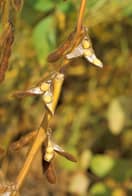
- plant Halal Typical Ricinoleic acid is from castor oil (Ricinus communis). Polyglycerol is polymerised glycerol; commercial PGPR for chocolate is specified from castor.
- animal Halal if verified Glycerol used to build polyglycerol can theoretically be animal-fat derived. That residual is why unspecified PGPR is still worth a plant/Halal check, even though the ricinoleate side is castor.
How to verify
- Match PGPR, polyglycerol polyricinoleate, or E476 / INS 476: castor-oil polyricinoleate joined to polyglycerol.
- Halal-certified chocolate settles it.
- Ask confectioners whether PGPR is castor oil / vegetable glycerol.
- Still check lecithin, E471, and milk ingredients on the same bar.
What decides the answer
-
Castor-oil PGPR with vegetable or synthetic glycerol, or Halal-certified chocolate
Halal -
Unspecified PGPR / E476
Halal if verified (confirm glycerol/PGPR spec) -
Animal-glycerol PGPR from pork or non-zabiha fat
haram
Why this ruling
PGPR—polyglycerol polyricinoleate, E476, INS 476—is the emulsifier chocolate makers use to thin molten chocolate and spare cocoa butter. US labels say PGPR; EU labels say E476. Same additive.[1]
EFSA identifies E476 as polyglycerol esters of polycondensed fatty acids from castor oil. Ricinoleic acid is a castor (plant) marker, which is why PGPR is not the same coin-flip as E471. The other half of the molecule is polyglycerol, built from glycerol—and glycerol can be vegetable, synthetic, or animal.[2][4]
This site therefore keeps unspecified PGPR as Halal if verified: ask whether the PGPR is a castor/vegetable grade, or buy Halal-certified chocolate. E476 is not automatically Haram, and it is not the same as E475 (polyglycerol esters of mixed fatty acids), which behaves like the E471 family.
A bar that lists PGPR can still fail for other reasons—E471, gelatin fillings, alcohol flavour, or milk from a non-issue dairy line you personally avoid. Read the whole list.
Two halves of the molecule
| Part | Source | Halal effect |
|---|---|---|
| Ricinoleic fatty acids | Castor oil | Plant; no issue |
| Polyglycerol | Vegetable, synthetic or animal glycerol | Needs confirming |
Where you will find it
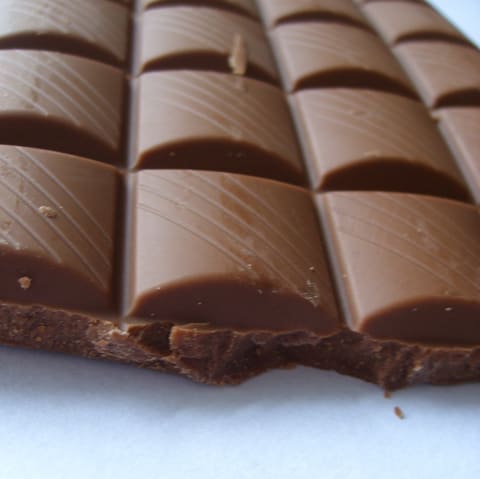
PGPR is used mainly in chocolate bars, chocolate coatings and spreads, where a fraction of a percent lets the maker use less cocoa butter and keeps the chocolate flowing in the moulds. It also appears in some low-fat spreads and salad dressings.
Halal or haram: E476 next to its neighbours
People searching "E476 halal or haram" usually have E471 in mind, because that is the emulsifier with the pork reputation. The three look alike on a label but differ in where the fat comes from:
| Code | Name | Fatty-acid side | Default here |
|---|---|---|---|
| E471 | Mono- and diglycerides | Any fat, plant or animal | Halal if verified |
| E475 | Polyglycerol esters of fatty acids | Any fat, plant or animal | Halal if verified |
| E476 | PGPR | Castor oil | Halal if verified, on the glycerol only |
So E476 is the narrowest of the three questions: only the polyglycerol half can have an animal route. It is neither automatically Haram nor automatically clear.
What to ask the maker
One question covers it: "Is the PGPR in this product made from vegetable or synthetic glycerol?" A written yes, a Halal mark on the pack, or a Halal certificate that names the product settles E476. A reply that talks only about castor oil answers the half that was never in doubt.
Frequently asked questions
Is PGPR Halal?
Is E476 the same as E475?
Why is PGPR in cheap chocolate?
Is emulsifier 476 the same as E476?
Scholarly view
Unlike E471, the defining fatty acid in PGPR is ricinoleic acid from castor oil—not a tallow/lard coin-flip. Certifier practice still asks about glycerol origin. Unlabelled PGPR is neither automatically Halal nor as doubtful as E471: the castor-oil part is plant-based, and the glycerol part is the remaining check.
Sources
Named Islamic, certifier, manufacturer, and regulatory sources used on this page. Inline markers like [1] jump here. Retrieval dates show when we last checked the live URL. Editorial methodology.
Regulatory / labelling
-
Regulation (EC) No 1333/2008 on food additives
European Union Retrieved
Union-list identity for E476.
-
EFSA — Re-evaluation of polyglycerol polyricinoleate (E476)
European Food Safety Authority Retrieved
Identity: polyglycerol esters of polycondensed fatty acids from castor oil. Safety opinion, not Halal.
-
-
People also check
Related ingredients and products for this item.