
Is E483 (Stearyl tartrate) Halal?
It depends on what the label says.
E483 is stearyl alcohol esterified with tartaric acid.
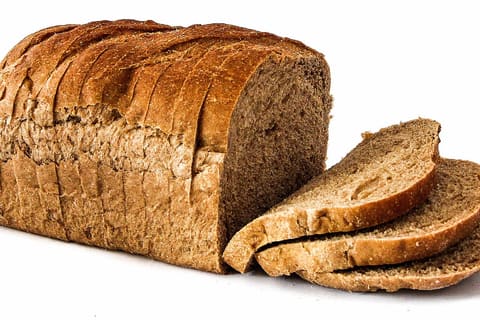
Photo: FranHogan · CC BY-SA 4.0
Additive identity
Possible source pathways
The finished molecule can be identical across feedstocks. The Halal ruling follows the pathway, not the code alone.
E483 Possible source pathways
- plant Halal Typical Fatty acids from palm, soy, sunflower, coconut, or other vegetable oils.
- animal Halal if verified The same esters can be split from tallow or lard. Pork or non-zabiha fat is haram; audited zabiha tallow is accepted after audit.
- undisclosed Halal if verified Typical Most labels print only the E-number or US chemical name. Treat as mashbooh until a plant, vegan, or Halal claim settles the fat.
How to verify
- Match E483, INS 483, or stearyl tartrate.
- Same fat logic as sodium stearoyl-2-lactylate.
- Open the stearoyl-lactylate compare view.
Quick checks
- E483 is stearyl alcohol bonded to tartaric acid; the stearyl part can be palm or tallow.
- A vegetarian, vegan or Halal mark settles it; without one it is Halal if verified.
- It shares its fat question with E481 and E482.
What decides the answer
-
Plant-fat grade, or vegetarian/vegan claim
Halal -
Halal-certified product
Halal -
Pork or non-zabiha fat
haram -
Unspecified lot
Halal if verified
Why this ruling
Stearyl tartrate – E483, INS 483 – is made by joining stearyl alcohol, a fatty alcohol, to tartaric acid. It is a dough improver, used in small amounts in some bakery products to strengthen dough and give a finer crumb.[1][2] It is one of the rarer additives on European labels.
Where the question is
Tartaric acid is Halal; see E334. The word "alcohol" in stearyl alcohol is chemistry, not drink: it is a waxy fatty compound, not an intoxicant.
The stearyl part is the question. It is made from fatty acids that can come from palm and other vegetable oils or from animal fat such as tallow. So the ruling follows the fat, as for E481 and E482:
- From vegetable fat → Halal.
- From a Halal-slaughtered animal → Halal.
- From pork or non-Halal slaughter → not Halal.
- Not stated → Halal if verified.
Certifier lists put unsourced stearyl tartrate in the doubtful group.[5]
Not to be confused with
- DATEM, E472e, is another dough improver made from mono- and diglycerides and tartaric acid.
- Stearoyl lactylates, E481 and E482, are the common bread improvers made with lactic acid.
All three raise the same fat-source question, and a vegan claim or a Halal certification on the bread settles all of them. For fatty acids in general, see E570.
Where you'll find it
- Bakery fats and dough conditioners
Frequently asked questions
Is E483 the same as E481?
Is tartaric acid Haram?
Where is E483 used?
How do I check E483?
Scholarly view
Stearyl tartrate is not DATEM (E472e) and not SSL (E481), but all three inherit a stearic/stearyl source question. Unspecified lots are mashbooh.
Sources
Named Islamic, certifier, manufacturer, and regulatory sources used on this page. Inline markers like [1] jump here. Retrieval dates show when we last checked the live URL. Editorial methodology.
Certifier / jurisdiction
-
SANHA Retrieved
Source-dependent additives listed mashbooh pending origin.
Regulatory / labelling
-
Regulation (EC) No 1333/2008 on food additives
European Union Retrieved
Union-list identity—not a Halal certificate.
-
EFSA — Stearyl tartrate (E483)
European Food Safety Authority Retrieved
Stearyl alcohol plus tartaric acid; stearyl moiety may be vegetable or animal.
-
-
People also check
Related ingredients and products for this item.