
Are Polyols Like Xylitol and Erythritol Halal?
Yes — this one is Halal.
Mannitol, isomalt, maltitol, xylitol, and erythritol are hydrogenated plant sugars or fermentation polyols.
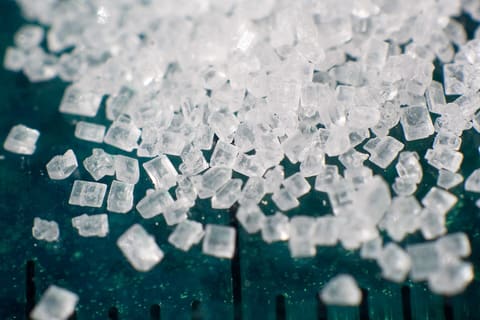
Photo: Lauri Andler (Phantom) · CC BY-SA 3.0
Additive identity
Possible source pathways
The finished molecule can be identical across feedstocks. The Halal ruling follows the pathway, not the code alone.
E421 Possible source pathways
- plant Halal Typical Botanical identity. No animal tissue is required for standard food grade.
What decides the answer
-
E421/E953/E965–E968
Halal polyols -
Lactitol is dairy (Halal unless you avoid milk)
-
Sorbitol is a sister page
-
Gum still needs gelatin/flavour
Why this ruling
Polyols, also called sugar alcohols, are sweeteners made by hydrogenating sugars or by fermentation. They taste sweet, have fewer calories than sugar and do not cause tooth decay, which is why they fill sugar-free sweets and gum. As additives, all of them are Halal.[3][5] Certifier lists put them with the additives that need no check.[6]
The family
| Code | Name | Usually made from |
|---|---|---|
| E421 | Mannitol | Glucose or fructose |
| E953 | Isomalt | Sugar beet sucrose |
| E965 | Maltitol | Maltose from corn or wheat starch |
| E966 | Lactitol | Lactose (milk sugar) |
| E967 | Xylitol | Birch wood or corn cobs |
| E968 | Erythritol | Glucose, by fermentation |
Sorbitol (E420) belongs to the same family and has its own page: see sorbitol. Mannitol is listed in US rules as a food substance with set limits.[1]
"Sugar alcohol" is not alcohol
The name is chemistry, not drink. A polyol has a different structure from the ethanol in wine and beer, it does not intoxicate, and it is not khamr. The only milk-derived one, lactitol, is dairy and Halal like milk; people avoiding dairy for allergy reasons may want to skip it.
Where you will find them
- sugar-free chewing gum and mints (xylitol, sorbitol, maltitol, isomalt),
- sugar-free and "no added sugar" chocolate (maltitol),
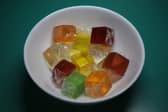
- hard sweets and cake decorations (isomalt, which is also used for sugar sculpture),
- low-sugar drinks, baking and table-top sweeteners (erythritol),
- toothpaste and some medicines.
EU labels on foods with more than 10% added polyols must warn that eating a lot may have a laxative effect. That is a health note, not a Halal one.
What else to check
A sugar-free sweet is not automatically Halal. Gummies and chewy sweets may be set with gelatin, and flavourings and glazes have their own questions. For the other sugar substitutes, see stevia and intense sweeteners.
How to verify
- Match E421, E953, E965–E968 or the polyol name.
- Halal.
- Sorbitol is E420. Chewing gum still needs a gelatin and flavour read.
Quick checks
- Mannitol, isomalt, maltitol, xylitol and erythritol are plant or fermentation polyols: Halal.
- Lactitol (E966) is made from milk sugar; still Halal.
- “Sugar alcohol” is a chemistry term; these are not ethanol.
Frequently asked questions
Is xylitol Halal?
Is erythritol Halal?
Is maltitol Halal?
Are sugar-free sweets with polyols Halal?
Scholarly view
A sugar alcohol is not khamr. Lactitol is milk-sugar based—Halal like other dairy, not a slaughter issue.
Sources
Named Islamic, certifier, manufacturer, and regulatory sources used on this page. Inline markers like [1] jump here. Retrieval dates show when we last checked the live URL. Editorial methodology.
Certifier / jurisdiction
Regulatory / labelling
-
U.S. eCFR Retrieved
U.S. identity / GRAS or colour-additive listing—not a Halal ruling.
-
21 CFR § 184.1835 sorbitol (related polyol identity)
U.S. eCFR Retrieved
U.S. identity / GRAS or colour-additive listing—not a Halal ruling.
-
Regulation (EC) No 1333/2008 on food additives
European Union Retrieved
Union-list identity—not a Halal certificate.
-
-
-
U.S. Food and Drug Administration Retrieved
US identity / labelling context—not a Halal ruling.
People also check
Related ingredients and products for this item.