How to verify
- Confirm the meat is lamb or goat.
- Ask whether it is from Halal slaughter; in Greek Cypriot and most Greek kitchens it is not.
- Ask whether white wine went into the pot.
- In Greek versions with feta, check the rennet.
Quick checks
- Ask whether the lamb or goat is Halal-slaughtered.
- Ask whether white wine went into the pot.
- Turkish Cypriot and Muslim-run kitchens are the easiest places to find a Halal version.
What decides the answer
-
Halal lamb or goat, no wine
Halal -
Taverna kleftiko from lamb of unknown slaughter
Halal if verified -
Pork kleftiko
Haram -
Kleftiko cooked with wine
Haram
Why this ruling
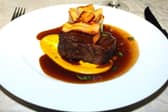
Kleftiko is lamb cooked so slowly that it falls from the bone. The name comes from the klephts, mountain bandits of the Ottoman era, who are said to have cooked stolen lamb in sealed pits so that no smoke would give them away. In Cyprus, lamb or goat on the bone is rubbed with lemon, oregano and bay, packed into a clay pot or wrapped in parchment and foil, often with potatoes, and baked for hours in an outdoor wood-fired oven, the fournos, sealed shut.[2] Greek mainland versions add garlic, peppers, tomatoes and sometimes feta, all wrapped together in parchment. Some Greek cooks make it with pork, which is Haram.[1]
What decides it
| Part | Usually | Halal? |
|---|---|---|
| Meat | Lamb, or goat, on the bone | Only from Halal slaughter |
| Lemon, oregano, bay, garlic | Plant | Yes |
| Potatoes, peppers, tomatoes | Plant | Yes |
| White wine, in some recipes | Alcohol | No |
| Feta, in some Greek versions | Cheese | Depends on the rennet |
Lamb and goat can be Halal, and a traditional Cypriot kleftiko adds little else, so the main question is slaughter.[3] In Greek Cypriot tavernas, and in Cypriot and Greek restaurants in Britain and Australia, the lamb is not Halal unless the menu or the owner says so. Some recipes pour a glass of white wine into the pot before it is sealed; ask.
Where it can be Halal
In the north of Cyprus, Turkish Cypriot cooks make the same slow-baked lamb, and there the meat is usually from Halal slaughter. In London, some Turkish Cypriot and Muslim-run restaurants serve Halal kleftiko. Elsewhere, ask the kitchen directly.
At home
Use a Halal lamb shoulder or leg on the bone. Rub it with lemon juice, oregano, garlic and salt, lay it on potatoes with bay leaves, wrap tightly in parchment and foil, and bake at a low heat for four hours or more, without wine. For the meat, see lamb; for the rest of the Cypriot table, halloumi and souvlaki, and for the island's pork sausage, sheftalia.
Frequently asked questions
Is kleftiko Halal?
Where does the name come from?
Does kleftiko have wine in it?
Scholarly view
Lamb and goat need Islamic slaughter. Wine is Haram even when it is cooked into the dish. Feta depends on its rennet.
Sources
Named Islamic, certifier, manufacturer, and regulatory sources used on this page. Inline markers like [1] jump here. Retrieval dates show when we last checked the live URL. Editorial methodology.
Islamic / scriptural
Context / background
-
Wikipedia Retrieved
Culinary identity: Slow-roasted marinated meat, traditionally lamb or goat but also pork, usually cooked en papillote with potatoes. Identity context, not a Halal certificate.
-