

5 Label Ingredients to Verify for Halal Shopping
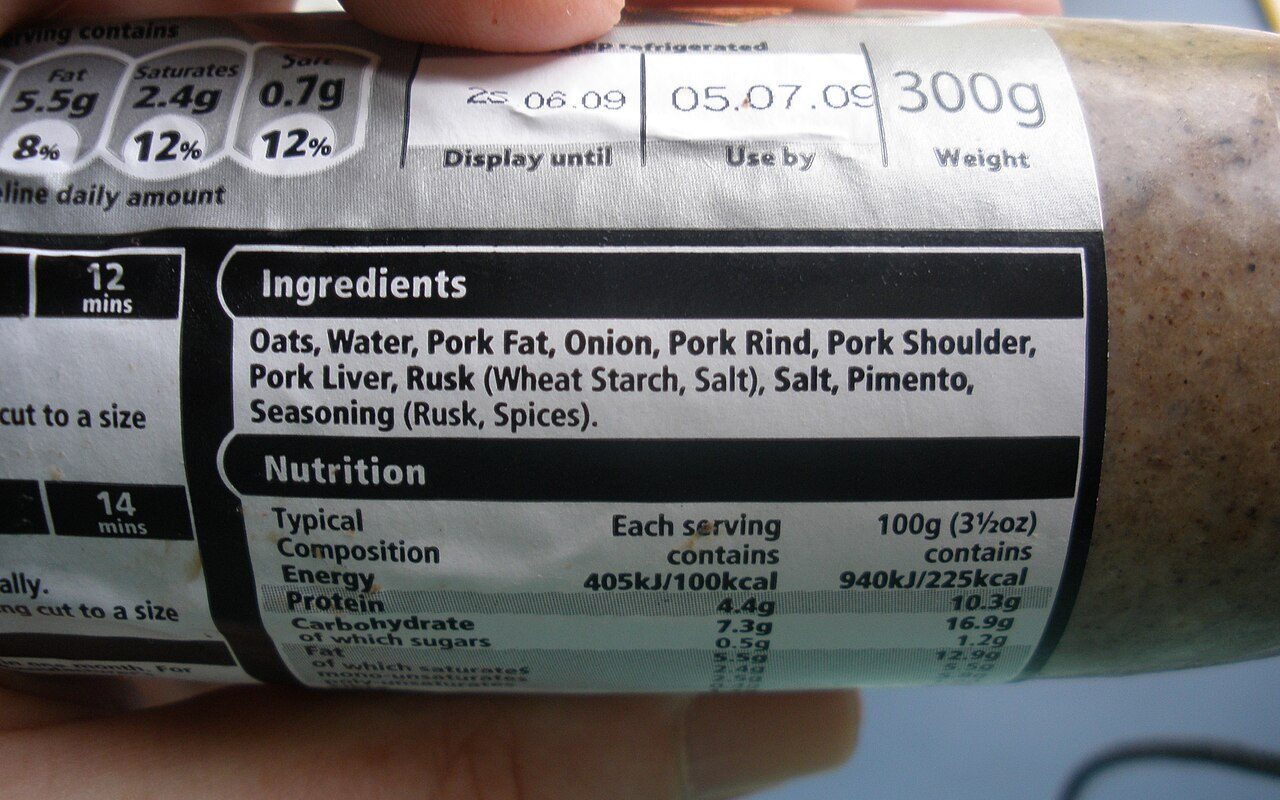
Photo: O'Dea · CC BY-SA 4.0

Gelatin, L-cysteine, E471, rennet and alcohol-based flavourings: when each is Halal if verified, a scholarly difference or Haram, with named sources.
Some label words are always Haram when the source is clear (pork gelatin; drinking alcohol). Most “hidden ingredient” lists fail by turning conditional checks into blanket Haram, inventing prevalence statistics, or citing outdated E-codes. This article is a label-reading checklist for five ingredient names—gelatin, L-cysteine, E471, rennet, and alcohol-carried flavours—using the same framework as our food pages: Halal if verified, Scholarly difference, or Haram when the source is known. For which foods may not be Halal (marshmallows, cheese, chocolate, ice cream, and more), see 10 Everyday Foods That May Not Be Halal — What to Check.
For how we assign badges and conditions, see our editorial methodology.
1. Gelatin (sometimes nicknamed “E441”)
Framework: Halal if verified until species or a Halal mark is known. Pork gelatin → Haram. Fish gelatin → Halal (mainstream). Halal-slaughtered beef gelatin → Halal when audited.
Gelatin is collagen from skins/bones (pig, cattle, or fish). Qur’an 5:3 forbids swine (quran.com/5/3, retrieved 12 August 2026). Major food Halal bodies require a permissible source; they do not rely on istihalah for pork gelatin in food (IFANCA, JAKIM MYeHALAL, retrieved 12 August 2026).
About “E441”: Under current EU law, edible gelatin is not authorised as an Annex II food additive with an official E-number. Regulation (EC) No 1333/2008 excludes edible gelatin from the food-additive definition (EUR-Lex, retrieved 12 August 2026). Gelatine/collagen are regulated as foods of animal origin under Regulation (EC) No 853/2004 (retrieved 12 August 2026). Treat “E441” as a legacy/informal nickname still seen in some databases—not as proof of a current EU pack code. Packs usually say “gelatin” or “gelatine.”
Named product example: Kraft Heinz Jell-O Zero Sugar Strawberry Gelatin lists gelatin without a Halal species claim (retrieved 12 August 2026)—a verification case, not a global “majority pork” statistic.
Where it appears: gummies, marshmallows, some yoghurts/ice creams, dessert jellies, capsule shells.
Decision steps: (1) Find species or fish/Halal wording. (2) Prefer plant gels (agar, pectin, carrageenan) or fish gelatin. (3) For medicines, ask for HPMC capsules.
2. L-cysteine (E920)
Framework: Halal if verified when the source is undisclosed.
E920 is a dough conditioner. Synthetic and microbial routes are widely accepted; feather-derived forms are often accepted after audit; human-hair routes are rejected by most certifiers; porcine routes are Haram (Askimam 19249, retrieved 12 August 2026). EU/US additive literacy: EFSA, FDA Food (retrieved 12 August 2026).
Where it appears: industrial soft bread, some pizza bases, rolls—not every loaf.
Decision steps: (1) Scan for E920 / L-cysteine. (2) Email: synthetic vs microbial vs feather vs other? (3) Prefer short-ingredient or Halal-certified bakery bread.
3. Mono- and diglycerides (E471, and related E472 esters)
Framework: Halal if verified when the fat source is undisclosed.
E471 can be plant (palm, soy, sunflower) or animal fat. Plant/synthetic → Halal; pork or non-zabiha animal fat → Haram under certifier practice; Halal-slaughtered animal fat can be Halal when audited. A UK/EU vegetarian/vegan suitability claim is a strong plant-source signal. Most E471 is not animal: palm and soy dominate many supply chains for cost and market reasons, but animal-sourced supply still exists, which is why verification matters (Codex additive context; FDA ingredients, retrieved 12 August 2026).
Where it appears: bread, margarine, ice cream, chocolate coatings, many processed foods.
Decision steps: (1) Halal mark, vegetarian/vegan claim, or manufacturer plant-source letter. (2) Treat bare “mono- and diglycerides” as unverified. (3) Clear household staples once; do not re-litigate every product from scratch.
4. Rennet (and vague “enzymes” on cheese)
Framework: Halal if verified for opaque labels; scholarly difference on animal rennet from non-zabiha calves.
Microbial rennet and fermentation-produced chymosin (FPC) are widely accepted when audited. Plant coagulants are Halal. Certifier practice rejects conventional calf rennet without Halal slaughter. Classical Hanafi discussion can permit non-pig animal rennet even without Islamic slaughter in the leading Abu Hanifa view (SeekersGuidance; Askimam 965, retrieved 12 August 2026). Other schools and many certifiers are stricter. Do not write “animal rennet = automatically Haram.”
Where it appears: cheddar, mozzarella, Swiss, Parmesan-style hard cheeses; some soft and processed cheeses.
Decision steps: (1) Prefer “microbial,” “vegetarian rennet,” or Halal mark. (2) Treat bare “enzymes” as unverified. (3) Follow your school on animal rennet.
5. Alcohol-carried flavourings and extracts
Framework: Scholarly difference for foods containing trace extract alcohol; drinking the extract itself is Haram.
US law defines pure vanilla extract as vanilla in at least ~35% ethanol (21 CFR Part 169, retrieved 12 August 2026). IslamQA 177030, citing Ibn Uthaymin’s absorption principle, permits foods flavoured with such extract when no intoxicating effect or discernible alcohol trace remains (islamqa.info/en/answers/177030, retrieved 12 August 2026). A stricter view avoids any deliberate alcohol-extracted flavour—use glycerin-based alcohol-free vanilla or synthetic vanillin. Real liquor centres and drinking extracts remain Haram for all. See also the alcohol hub.
Where it appears: baking extracts, some confectionery, sauces, ice cream flavours—and separately, spirit-filled chocolates (different ruling).
Decision steps: (1) Distinguish trace food flavour from beverage alcohol. (2) Follow your school, or buy alcohol-free vanilla. (3) Reject products that list wine, rum, or spirit fillings as ingredients meant to remain alcoholic.
How to use this checklist (without overstating risk)
- Read the full ingredient list — order is by weight, but any pork or intoxicant still matters.
- Map the word to a framework — Halal if verified / Scholarly difference / Haram—not “hidden = Haram.”
- Prefer primary signals — species, vegetarian claim, Halal certificate scope/expiry (certification guide).
- Ask manufacturers — source questions for E471 and E920 are routine.
- Avoid prevalence myths — replace “many/most” with a named product or regulator/certifier rule.
Cross-contamination and shared lines are facility-control questions for certifiers—not automatic Haram for every product from a plant that also makes non-Halal items, unless you have evidence for that product’s controls.
Conclusion
These five ingredients earn attention because labels often hide the source, not because every occurrence is Haram. Gelatin, L-cysteine, E471, rennet, and alcohol-carried flavours become actionable once you name the source or the scholarly rule you follow. For the everyday foods those names show up in, use the 10 everyday foods guide. Use our search tool and the linked food pages for claim-level detail.
Sources
- Qur’an 5:3 — quran.com/5/3 (retrieved 12 August 2026)
- EU — Regulation (EC) No 1333/2008 (retrieved 12 August 2026)
- EU — Regulation (EC) No 853/2004 (gelatine/collagen) (retrieved 12 August 2026)
- Kraft Heinz — Jell-O Zero Sugar Strawberry Gelatin (retrieved 12 August 2026)
- IFANCA — ifanca.org (retrieved 12 August 2026)
- JAKIM — MYeHALAL (retrieved 12 August 2026)
- Askimam 19249 — L-cysteine (retrieved 12 August 2026)
- FDA — Food ingredients & packaging (retrieved 12 August 2026)
- Codex Alimentarius — fao.org/fao-who-codexalimentarius (retrieved 12 August 2026)
- SeekersGuidance — Rennet in cheese (retrieved 12 August 2026)
- Askimam 965 — Animal rennet conditions (retrieved 12 August 2026)
- U.S. eCFR — 21 CFR Part 169 (vanilla) (retrieved 12 August 2026)
- IslamQA 177030 — Vanilla extract (retrieved 12 August 2026)
- EFSA — efsa.europa.eu (retrieved 12 August 2026)