How to verify
- Confirm chicken, mutton, beef, or vegetable.
- Require Halal slaughter for any meat.
- Ghee is dairy; yoghurt is dairy.
- Ask whether the pot is shared with non-Halal meat.
- Prefer a Muslim or Halal-certified kitchen.
Quick checks
- Ask which meat it is (chicken, mutton, goat, beef or prawn) and whether it is Halal-slaughtered.
- In a mixed restaurant, ask whether pots and ladles are shared with non-Halal curries.
- Vegetable and egg biryani are usually fine; ask whether they were cooked in meat stock.
What decides the answer
-
Halal-slaughtered chicken, mutton, or beef, Halal ghee
Halal -
Vegetable biryani, plant or dairy fat
Halal -
Unverified restaurant pot
Halal if verified -
Non-Halal meat biryani
not Halal
Why this ruling
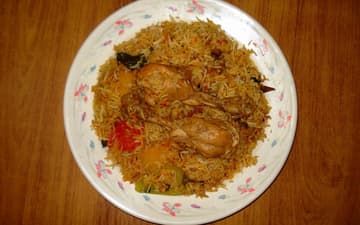
Biryani is rice and meat cooked together in layers: long-grain basmati, meat marinated in yoghurt and spices, fried onions, ghee, saffron soaked in milk, mint and a few drops of kewra or rose water, sealed in a pot and slow-cooked so the rice takes in the flavour of the meat.[1] It is eaten across South Asia, the Gulf and the diaspora, and in many Muslim homes it is the celebration dish.
What decides it
Everything except the meat is Halal: rice, yoghurt, ghee, spices, saffron, onions, mint. Kewra water and rose water are distilled flower waters with no alcohol in them. So the question is the meat: chicken, goat, mutton or beef must come from Halal slaughter.[2]
Where to be careful
- Restaurants that are not Muslim-run. In India, many Hindu- and Sikh-run restaurants use jhatka meat, killed with a single blow without the Islamic slaughter. It is not Halal. Ask whether the meat is Halal, not just whether it is fresh.
- Western restaurants and ready meals. In Britain, most Indian and Pakistani restaurants use Halal meat, but not all; ask, or look for a certificate. Supermarket biryanis show a Halal mark if they have one.
- Vegetable biryani needs no meat check. Ask only whether it was cooked with meat stock.
Regional styles
| Style | What makes it different |
|---|---|
| Hyderabadi kacchi | Raw marinated meat layered with part-cooked rice and cooked together |
| Lucknowi (Awadhi) | Meat and rice cooked separately, then layered; delicate and fragrant |
| Kolkata | Lighter spices, with potato and boiled egg |
| Sindhi and Karachi | Hot, with potatoes, dried plums and plenty of chilli |
| Malabar (Thalassery) | Short-grain kaima rice, cashews and raisins |
All of them turn on the same single question: the meat.
For dishes that come with it, see yoghurt (for raita), naan and ghee, and for the Gulf's rice-and-meat cousin, kabsa.
Where you'll find it
- South Asian home and restaurant biryani
- Hyderabadi, Lucknowi, and Sindhi styles
- Vegetable biryani
Frequently asked questions
Is biryani Halal?
Is vegetable biryani Halal?
Does kewra or rose water matter?
Are biryani spice mixes Halal?
Scholarly view
Chicken, goat, and beef need Islamic slaughter. Rice, saffron, and yoghurt do not certify the meat.
Sources
Named Islamic, certifier, manufacturer, and regulatory sources used on this page. Inline markers like [1] jump here. Retrieval dates show when we last checked the live URL. Editorial methodology.
Islamic / scriptural
Context / background
-
Biryani — layered South Asian rice
Wikipedia Retrieved
Culinary identity: spiced layered rice with meat (chicken, goat, beef) or vegetables, yoghurt, and ghee. Identity context, not a Halal certificate.


Halal-conscious recipes
A substitution-led recipe that uses this analysis.
Browse this topic
Open the parent category hub for more foods in the same group.