Are Luqaimat Halal?
It depends on what the label says.
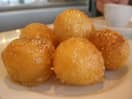
Luqaimat are Gulf dumplings of yeasted flour batter with cardamom and saffron, fried in vegetable oil and drizzled with date syrup and sesame.

Photo: Flickr.com user "avlxyz" · CC BY-SA 2.0
How to verify
- The batter is flour, yeast, sugar, milk or water, cardamom and saffron.
- They are fried in vegetable oil; outside the Gulf, ask whether the fryer is shared.
- Date syrup, honey and sesame are Halal.
- Read the label of any chocolate spread, and check the rennet in a cheese filling.
Quick checks
- Traditional luqaimat are flour, yeast, sugar, cardamom and saffron, fried in vegetable oil: Halal.
- Outside the Gulf, ask whether the fryer is shared with meat or pork.
- Modern fillings and spreads such as chocolate, cheese or biscuit spread need their own label check.
What decides the answer
-
Traditional luqaimat with date syrup and sesame
Halal -
Fried outside the Gulf in an unknown fryer
Halal if verified -
Chocolate or cheese toppings
check the product -
Fried in oil shared with pork
Haram
Why this ruling
Luqaimat, "little bites", are the sweet dumplings of the Gulf: small balls of yeasted batter, deep-fried until golden and crisp outside and soft inside, then drizzled with date syrup (dibs) and scattered with sesame seeds.[2] The batter is flour, yeast, sugar and milk or water, scented with cardamom and often saffron. They are a fixture of Ramadan evenings across the UAE, Saudi Arabia, Kuwait, Qatar, Bahrain and Oman, of Eid gatherings, and of the food stalls at winter festivals.[1]
What decides it
| Part | Usually | Halal? |
|---|---|---|
| Batter | Flour, yeast, sugar, milk or water, cardamom, saffron | Yes |
| Frying oil | Vegetable oil | Yes |
| Date syrup (dibs), honey or sugar syrup | Plant or honey | Yes |
| Sesame seeds | Plant | Yes |
| Chocolate, cheese or Nutella toppings at modern stalls | Various | Check the product |
Traditional luqaimat have nothing in them that needs a question. In the Gulf they are made in Muslim homes and kitchens and are Halal. The only checks come outside the region, or with modern toppings: a shared fryer that also cooks pork or non-Halal meat, a spread whose label you have not read, or a cheese filling that depends on its rennet.[3]
Cousins around the Mediterranean
The same fried dough is made far beyond the Gulf. In Turkey it is lokma, in Greece loukoumades, in the Levant awameh or zalabia. The Greek and Turkish versions are also yeasted and soaked in honey or syrup; the checks there are a café fryer shared with pork, and the occasional modern syrup or topping made with liqueur.
At home
Mix flour, a little sugar, instant yeast, cardamom and saffron with warm milk or water to a loose, sticky batter, and leave it for an hour until bubbly. Squeeze small balls from your fist into hot oil, fry until golden, and drain. Drizzle with date syrup and sesame. For the region's food, see the Gulf guide; for another Ramadan staple, harira.
Frequently asked questions
Are luqaimat Halal?
Are luqaimat the same as loukoumades?
Why are luqaimat eaten in Ramadan?
Scholarly view
Flour, sugar, spices, date syrup and sesame are Halal. Modern fillings follow their own ingredients, and cheese depends on its rennet.
Sources
Named Islamic, certifier, manufacturer, and regulatory sources used on this page. Inline markers like [1] jump here. Retrieval dates show when we last checked the live URL. Editorial methodology.
Islamic / scriptural
Context / background
-
Wikipedia Retrieved
Culinary identity: Leavened, deep-fried dough balls soaked in syrup or honey; described in the 13th century as luqmat al-qadi. Identity context, not a Halal certificate.
-
Browse this topic
Open the parent category hub for more foods in the same group.