Is Tim Tam Halal?
Scholars differ on this one.
Arnott's Tim Tam Original lists 'food colours (caramel III, beet red, cochineal, annatto)'.
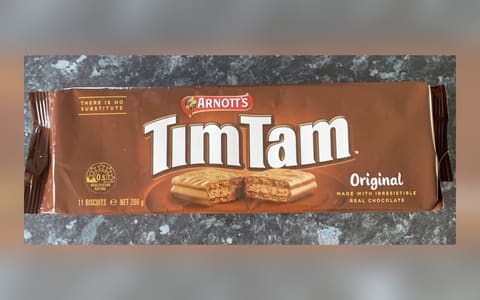
Photo: Open Food Facts contributors · CC BY-SA 3.0
Scholarly differences
Cochineal is the sticking point. Darul Ifta Birmingham, answering about Tim Tams directly, said cochineal 'is not suitable for a halal diet', and IslamWeb treats carmine as impermissible on the majority view that insects are not eaten.
Indonesia's MUI permits cochineal colouring when it is beneficial and not harmful, and Jordan's Iftaa Department permits E120 on the ground of transformation. On the alcohol-based flavours Arnott's mentioned, Mufti Ebrahim Salejee said 'we will not say that it is haraam', though refraining is better as a matter of taqwa.
What decides the answer
-
Tim Tam Original
lists cochineal; follow your school -
Tim Tam Dark
no cochineal listed -
Alcohol-based flavours (per Arnott's)
not haram per Mufti Online; refraining is more cautious
How to verify
- Read the colours: Tim Tam Original lists cochineal; Tim Tam Dark lists caramel colour only.
- Follow your view on cochineal (carmine, E120).
- The other ingredients, milk chocolate, soy lecithin and E476, are plant or milk based.
- Flavours change, so read each pack.
Quick checks
- Original and Double Coat: cochineal listed.
- Dark: no cochineal listed.
- Follow your school on cochineal (E120).
Why this ruling
Tim Tams are Arnott's chocolate-coated biscuits from Australia. The Halal question comes down to one ingredient.
The cochineal
Tim Tam Original lists "food colours (caramel III, beet red, cochineal, annatto)".[1] Tim Tam Double Coat lists cochineal too.[3] Cochineal, also called carmine or E120, is a red colour made from insects. Asked about Tim Tams directly, Darul Ifta Birmingham said cochineal "is not suitable for a halal diet",[4] and IslamWeb takes the same view.[6] Indonesia's MUI permits cochineal colouring,[8] and Jordan's Iftaa Department permits E120 on the ground of transformation.[7]
Tim Tam Dark lists only caramel colour, with no cochineal.[2] The chocolate's emulsifiers are soy lecithin and E476, both plant based.
The flavourings
A customer who asked Arnott's was told that small amounts of alcohol-based flavours, like vanilla essence, are added to sweet biscuits and are believed to evaporate during baking. Mufti Online answered: "We will not say that it is haraam, but at the level of taqwa if someone refrains it is better."[5]
Where you'll find it
- Chocolate-coated biscuits from Arnott's, Australia
- Dark, double coat and flavoured editions
Frequently asked questions
Are Tim Tams Halal?
Do Tim Tams contain cochineal?
Do Tim Tams contain alcohol?
Are Tim Tams Halal-certified?
Sources
Named Islamic, certifier, manufacturer, and regulatory sources used on this page. Inline markers like [1] jump here. Retrieval dates show when we last checked the live URL. Editorial methodology.
Islamic / scriptural
-
Are Arnotts biscuits halal (Fatwa ID 02440)
Darul Ifta Birmingham (Mufti Muhammad Adnan) Retrieved
19 March 2018. 'Timtam original contain cochineal which is derived from insects and is not suitable for a halal diet. Scotch finger original and scotch finger chocolate have nothing in the ingredients provided that is haram... one must check the ingredients regularly.'
-
Eating products with alcohol based flavours
Mufti Online (Mufti Ebrahim Salejee), via IslamQA.org Retrieved
Quotes Arnott's reply about Tim Tams: 'Small amounts of alcohol based flavours (like vanilla essence) are added to sweet biscuits... we believe the alcohol is evaporated during baking.' Answer: 'We will not say that it is haraam, but at the level of taqwa if someone refrains it is better.'
-
The ingredient carmine (Fatwa 90369)
IslamWeb Retrieved
Treats carmine as impermissible under the majority view that insects are not eaten (also notes alcohol treatment concerns in processing).
-
Ruling of Sharia on using Carmine E120 (Fatwa 3240)
Jordan General Iftaa' Department Retrieved
Permits E120 subject to transformation (istiḥālah), need/no suitable alternative, limited use, and no harm to health—while noting the majority classical insect prohibition.
-
MUI cochineal fatwa decision (Fatwa No. 33/2011 context)
Majelis Ulama Indonesia (MUI) / LPPOM Retrieved
States food and drink colouring from cochineal is Halal when beneficial and not harmful.
Manufacturer / product
-
Open Food Facts Retrieved
Ingredients include milk chocolate (38%) (sugar, milk solids, cocoa butter, cocoa mass, vegetable oil, emulsifiers (soy lecithin, E476), flavour), wheat flour, sugar, vegetable oil, golden syrup, 'food colours (caramel III, beet red, cochineal, annatto)', cocoa powder, salt, baking powder, emulsifier (soy lecithin), flavour. No Halal label recorded.
-
Open Food Facts Retrieved
Dark chocolate (38%), wheat flour, sugar, vegetable oil, golden syrup, cocoa powder, 'food colour (caramel)', salt, baking powder, emulsifier (soy lecithin), flavour. No cochineal listed.
-
Open Food Facts Retrieved
Food colourings listed include beetroot red and cochineal.
People also check
Related ingredients and products for this item.
Browse this topic
Open the parent category hub for more foods in the same group.