What decides the answer
-
Fruit or sweets served alongside, without raki
Halal -
Tsikoudia or Cretan raki
Haram -
Rakomelo (raki with honey)
Haram -
Desserts soaked or flambéed with raki
Haram
Why this ruling
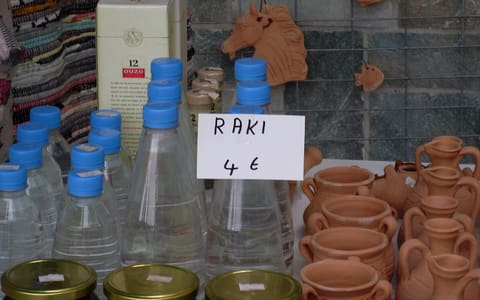
Tsikoudia, which Cretans usually just call raki, is a clear spirit distilled from grape pomace: the skins, stems and seeds left in the press after the wine is made.[3] Every autumn, villages fire up their copper stills for the kazanemata, days of distilling that are also days of eating and music. The result is strong, often around 40% alcohol or more, and unlike Turkish rakı it has no aniseed.[1]
Why it is not Halal
Tsikoudia is a distilled alcoholic drink, made to intoxicate, and falls under the Qur'anic prohibition of intoxicants.[2] There is no Halal version of the drink itself; a bottle labelled tsikoudia or Cretan raki is alcohol.
| Form | What it is | Halal? |
|---|---|---|
| Tsikoudia, Cretan raki | Grape-pomace spirit | No |
| Rakomelo | Raki warmed with honey, cinnamon and clove | No |
| Desserts soaked or flambéed with raki | Alcohol added to food | No |
| Fruit or small sweets served with it | Usually no alcohol | Ask |
At a Cretan taverna
Tsikoudia is the island's welcome and its goodbye. Many tavernas bring a small carafe and glasses, with fruit or a few sweets, when you sit down or when the bill arrives, free of charge. It is a gesture of hospitality, and it is fine to decline: a simple "no thank you" and a request for tea, coffee or juice is understood. The fruit or sweets that come with it are usually fine on their own.
In winter, rakomelo, raki warmed with honey and spices, is served as a remedy for colds. It keeps its alcohol; warming it briefly does not drive it off.
For the food that tsikoudia is served alongside, see dakos and the Crete guide. For the grape drinks it comes from, see wine and brandy.
How to verify
Check labels carefully for alternate names or derivatives linked to tsikoudia, and choose clearly Halal or plant-based alternatives instead.
Quick checks
- Tsikoudia and rakomelo are spirits: do not drink them.
- Ask whether desserts are soaked or flambéed with raki.
- A polite refusal is fine when it is offered free after a meal.
Frequently asked questions
Is tsikoudia Halal?
Is Cretan raki the same as Turkish rakı?
Is rakomelo less alcoholic?
How do I decline it at a taverna?
Sources
Named Islamic, certifier, manufacturer, and regulatory sources used on this page. Inline markers like [1] jump here. Retrieval dates show when we last checked the live URL. Editorial methodology.
Islamic / scriptural
Context / background
-
Wikipedia Retrieved
Culinary identity: Cretan grape pomace brandy of 40 to 65 per cent alcohol by volume. Identity context, not a Halal certificate.
-