How to verify
- Ask pork, chicken, prawn, or tofu.
- Refuse pork.
- For chicken, require Halal slaughter.
- Fish sauce (nam pla) is fermented fish—usually acceptable as seafood.
- Dried shrimp: follow your shellfish practice.
- Ask whether the wok cooks pork pad Thai between orders.
Quick checks
- Ask which protein: pork, chicken, prawn or tofu.
- Ask whether the wok is also used for pork, and whether lard is used.
- Fish sauce and dried shrimp are seafood; ask to leave out the dried shrimp if you avoid shrimp.
What decides the answer
-
Halal-slaughtered chicken or prawn/tofu, pork-free wok
Halal (dried shrimp per school) -
Unverified street wok
Halal if verified -
Pork pad Thai or pork-fat wok
Haram
Why this ruling
Pad Thai is Thailand's best-known noodle dish: flat rice noodles stir-fried in a very hot wok with egg, tofu, bean sprouts and spring onion, in a sauce of tamarind, palm sugar and fish sauce, finished with crushed peanuts, chilli and lime. It is usually made with prawns, chicken or dried shrimp, and sometimes pork.[1]
Ingredient by ingredient
| Ingredient | Halal? |
|---|---|
| Rice noodles, tamarind, palm sugar, peanuts, lime | Yes |
| Egg, tofu, bean sprouts | Yes |
| Fish sauce (nam pla) | Yes; see fish sauce |
| Prawns, dried shrimp | Yes for most scholars; see below |
| Chicken | Only from Halal slaughter |
| Pork, pork fat | No[2] |
| Oyster sauce, in some recipes | Usually yes; see oyster sauce |
Prawns and dried shrimp
Most scholars treat prawns and shrimp as permissible seafood, but not all do, which is why the shrimp page is marked as a scholarly difference. If you follow that view, ask for tofu or chicken and for the dish without dried shrimp, which is often added to the sauce or the garnish without being named on the menu.
The wok
At street stalls and in most Thai restaurants outside Muslim areas, one wok cooks every dish, including pork. A quick wipe between orders does not remove pork fat. Ask whether the wok is used for pork, or eat at a Halal Thai restaurant. In southern Thailand, and in Malaysia and Singapore, Halal Thai food is easy to find.
Ordering it
- Ask for prawn, tofu or Halal chicken pad Thai.
- Ask for a pork-free wok, or choose a Halal kitchen.
- If you avoid shrimp, say no dried shrimp.
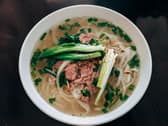
For other Thai dishes you may order with it, see satay, and for the noodle soup from next door in Vietnam, phở.
Where you'll find it
- Thai street-food woks
- Diaspora Thai restaurants
- Tofu or prawn pad Thai
Frequently asked questions
Is pad Thai Halal?
Is fish sauce Halal?
What about dried shrimp?
Can I find Halal pad Thai in Thailand?
Scholarly view
Pork is Haram. Chicken needs Islamic slaughter. Fish sauce is seafood for most Sunni practice. Dried shrimp follows your crustacean school. A Thai dish name is not a certificate.
Sources
Named Islamic, certifier, manufacturer, and regulatory sources used on this page. Inline markers like [1] jump here. Retrieval dates show when we last checked the live URL. Editorial methodology.
Islamic / scriptural
Context / background
-
Pad Thai — stir-fried rice noodles
Wikipedia Retrieved
Culinary identity: Thai rice noodles with tamarind, fish sauce, palm sugar, egg, bean sprouts, tofu, dried shrimp, and optional meat or prawn. Identity context, not a Halal certificate.
Browse this topic
Open the parent category hub for more foods in the same group.