
Is Whiskey Halal?
No — this one is Haram.
Whiskey (including Scotch whisky, Irish whiskey, bourbon, and rye) is a distilled alcoholic intoxicant.
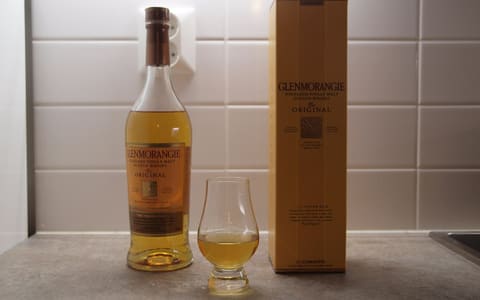
Photo: JIP · CC BY-SA 3.0
Why it is Haram
The prohibition is on intoxicating drink as a category (khamr/intoxicants), not on the grain species used. Barley, corn, rye, and wheat are Halal foods; fermenting and distilling them into whiskey is what makes the beverage Haram.
Diluting a shot into soda, cooking it into gravy, or calling a product 'craft' does not reverse the ruling on drinking intoxicants. Dealcoholized whiskey-style products need a separate label reading: some retain alcohol traces; others are only flavourings.
Where it shows up
- Neat or on-the-rocks drinks
- Cocktails (Old Fashioned, Manhattan, Whiskey Sour)
- Whiskey sauces and marinades
- Desserts and ice creams flavoured with whiskey
- Barrel-aged beers and soft drinks (alcohol-related processes)
What decides the answer
-
All standard whiskey/whisky spirits for drinking
Haram -
Scotch whisky legally requires minimum 40% ABV at bottling (UK regulations)
-
Cooking with whiskey: still an alcohol ingredient—prefer non-alcohol recipes
-
Non-alcoholic whiskey alternatives: verify residual alcohol and process on that product
Why this ruling
Looking for Scotch, bourbon, rye, Irish whiskey, or Japanese whisky? Same ruling as whiskey — regional styles change the grain bill, not the Haram intoxicant category.
Whiskey (often spelled whisky outside the United States and Ireland) is a distilled alcoholic spirit made from fermented grain mash—commonly barley, corn, rye, or wheat—then aged in wood. Scotch, Irish whiskey, bourbon, rye, Canadian whisky, and Japanese whisky are regional styles of the same Haram category: intoxicating drink.
Why the ruling is Haram, not doubtful
Islam prohibits khamr and intoxicants. Whiskey is manufactured, taxed, marketed, and legally defined as an alcoholic beverage. It is not a grey-area additive like an unspecified emulsifier; it is the product Muslims mean when they ask whether hard liquor is allowed. Grain ingredients start Halal; fermentation and distillation into a spirit change the ruling of the drink.
Major commercial styles are bottled well into intoxicating strength. The Scotch Whisky Association's public FAQs state that Scotch Whisky is a distilled spirit made from cereals, water and yeast, and that by law the minimum bottling strength is 40% alcohol by volume (Scotch Whisky FAQs, retrieved 20 July 2026). The UK's Scotch Whisky Regulations 2009 define Scotch Whisky with that same minimum 40% ABV requirement (Regulation 3, retrieved 20 July 2026). Bourbon and other whiskey categories are likewise sold as spirits, not as soft drinks.
Spelling and style are irrelevant to Halal
- Whiskey vs whisky — spelling convention, not a religious distinction.
- Single malt, blended, bourbon, rye — flavour and law-of-origin differences only.
- Cask strength vs 40% — still intoxicating alcohol.
Non-alcoholic whiskey myths
Marketing now includes "non-alcoholic whiskey," whiskey aromas, and zero-proof cocktails. These are not automatically Halal copies of the spirit:
- Some are dealcoholized whiskey and may retain traces.
- Some are never-fermented flavour mixes (water, acids, oak extract, caramel).
- Scholars differ on resembling khamr even at 0.0%—personal practice varies; the label still must be read.
Do not assume a zero-proof bottle inherits permissibility from "it tastes like whiskey." Judge the actual product.
Cooking and residual alcohol
Recipes that flambé whiskey into steak sauce or soak cakes in bourbon deliberately add an intoxicant. Popular claims that "all the alcohol burns off" are unreliable for Halal decision-making. Prefer recipes that never add the spirit. Smoke, toasted oak flavouring sold as a food additive, apple juice, and vinegar can mimic some flavour notes without pouring whiskey into the pan.
Practical takeaway
Bottled whiskey for drinking is Haram. Spend verification effort on lookalike NA products and on restaurant sauces—not on finding a Halal-certified Scotch.
Category clarity vs nearby ingredients
Keep whiskey distinct from:
- Grain foods — oatmeal, corn chips, and wheat bread stay Halal; they are not whiskey.
- Vanilla extract and some flavourings — may use ethanol as a solvent; that is a separate additive question, not permission to drink bourbon.
- Non-alcoholic beer and dealcoholized wine — parallel "looks like alcohol" debates; still product-by-product, and still not a path to sipping 40% ABV whiskey.
- Barrel-aged soft drinks — marketing may mention whiskey barrels; read whether alcohol remains.
If a dessert menu lists "bourbon caramel" or "whiskey glaze," ask whether real spirit was added. Many pastry kitchens use the spirit itself; a few use only smoke or imitation flavour. Without a clear answer, skip the dish.
How to verify
Check labels carefully for alternate names or derivatives linked to whiskey, and choose clearly Halal or plant-based alternatives instead.
Quick checks
- Spirit whiskey/whisky/bourbon on a drinks shelf = Haram intoxicant.
- Do not treat cooking or 'just a splash' as a Halal workaround.
- Judge non-alcoholic whiskey mimics by residual alcohol and process, product by product.
Frequently asked questions
Is whiskey Haram even in small amounts?
Is Scotch, bourbon, or Irish whiskey different for Halal?
Does cooking burn off the whiskey so the food becomes Halal?
Are non-alcoholic whiskey drinks Halal?
Is whiskey vinegar or whiskey-barrel cola the same ruling?
What proves whiskey is legally an alcoholic spirit?
Sources
Named Islamic, certifier, manufacturer, and regulatory sources used on this page. Inline markers like [1] jump here. Retrieval dates show when we last checked the live URL. Editorial methodology.
Islamic / scriptural
-
-
Sahih Muslim 2003a — every intoxicant is khamr
Sahih Muslim (sunnah.com) Retrieved
Every intoxicant is khamr and every intoxicant is forbidden: the ruling covers spirits made from grain, grapes or anything else.
Manufacturer / product
-
Retrieved
Regulatory / labelling
-
Retrieved
People also check
Related ingredients and products for this item.